

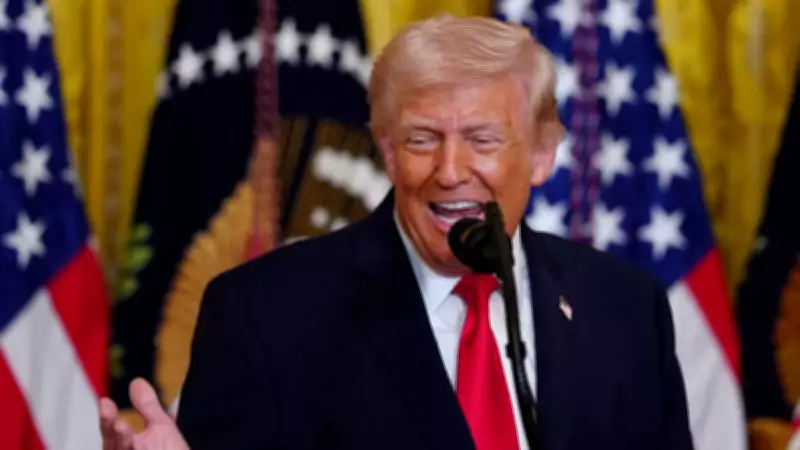
Trump Calls for International Naval Deployment to Secure Strait of Hormuz
In a significant development, former United States President Donald Trump has publicly urged China, the United Kingdom, and other global powers to send warships to the Strait of Hormuz. This strategic waterway, located between the Persian Gulf and the Gulf of Oman, is a critical chokepoint for international oil shipments, handling approximately one-fifth of the world's petroleum trade. Trump's call aims to ensure the free and open passage of vessels through this region, which has been a flashpoint for geopolitical tensions in recent years.
Background and Context of the Strait of Hormuz
The Strait of Hormuz is a narrow maritime passage that serves as a primary conduit for oil exports from major producers like Saudi Arabia, Iran, and the United Arab Emirates. Its importance to the global economy cannot be overstated, as disruptions here can lead to significant spikes in oil prices and supply chain issues worldwide. Historically, the area has witnessed numerous incidents, including naval confrontations and attacks on commercial ships, often linked to regional conflicts and international rivalries.
Trump's Proposal and Its Implications
Donald Trump's appeal for a multinational naval presence represents a bold move to address security concerns in the Strait of Hormuz. By involving nations such as China and the UK, he seeks to foster a collaborative approach to maritime security, potentially reducing the burden on the United States and promoting shared responsibility among key stakeholders. This initiative could signal a shift in how global powers manage critical shipping lanes, emphasizing diplomacy and collective action over unilateral measures.

Experts note that such a deployment could enhance stability in the region, deterring hostile actions and ensuring the uninterrupted flow of oil. However, it also raises questions about the logistics of coordination among diverse naval forces and the potential for increased military presence to escalate tensions further. The response from China and the UK, as well as other nations, will be crucial in determining the feasibility and impact of Trump's proposal.
Global Reactions and Future Prospects
Initial reactions to Trump's statement have been mixed, with some analysts praising the idea as a pragmatic solution to a persistent problem, while others express skepticism about its implementation. The involvement of China, in particular, is seen as a strategic move, given its growing naval capabilities and economic interests in the region. Similarly, the UK's role could reinforce its commitment to global security post-Brexit.
As this story develops, it highlights the ongoing challenges in maintaining open sea lanes amidst geopolitical rivalries. The success of any multinational effort in the Strait of Hormuz will depend on diplomatic negotiations, trust-building among participating countries, and a clear framework for operational cooperation. Ultimately, Trump's call underscores the need for innovative approaches to safeguard vital international waterways in an increasingly interconnected world.






