

Trump Proposes US Control of Iranian Oil, Invokes 'Winner Takes All' Business Principle
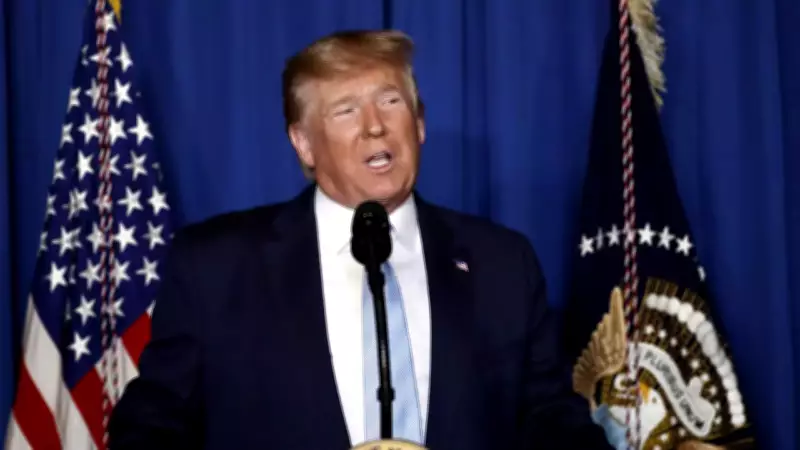
Amid escalating tensions in the Middle East, US President Donald Trump has floated the idea that the United States could assert control over Iran's oil reserves. Speaking from the White House, Trump framed the potential move through a starkly commercial lens, asserting that "the spoils belong to the winner." This statement comes as the regional crisis enters its sixth week, severely disrupting global energy supplies and raising fears of broader conflict.
Business First: Trump's Rationale for Seizing Resources
When questioned about securing Iranian oil, President Trump emphasized his identity as a businessman above all else. "If I had my choice, I'm a businessman first," he declared. He drew a parallel to US actions in Venezuela, noting, "We are a partner with Venezuela, and we've taken hundreds of millions of barrels." This reference underscores a pattern of resource-focused foreign policy under his administration.
Trump elaborated on his philosophy of gaining from warfare, a concept he feels has been neglected by the US. "You know that to the winner belong the spoils. Go for the spoils," he urged. "I've said why don't we use it—to the victor go the spoils. We haven't had that in this country, probably in a hundred years. We didn't have it with the Second World War. We helped rebuild all those countries." This commentary highlights a shift toward a more transactional approach to international conflicts.

Criticism of Allies and Praise for Gulf Partners
President Trump did not hold back in criticizing traditional US allies for their lack of support in the ongoing confrontation with Iran. He specifically named Japan, Australia, South Korea, and NATO, stating, "Japan didn't help us, Australia didn't help us, South Korea didn't help us, and then you get to NATO, NATO didn't help us." He contrasted this with the substantial US military presence in Asia, pointing out, "We've got 50,000 soldiers in Japan to protect them from North Korea; we have 45,000 soldiers in South Korea to protect us from Kim Jong Un."
In stark contrast, Trump offered effusive praise for several Persian Gulf nations, describing Saudi Arabia, Qatar, the United Arab Emirates, Bahrain, and Kuwait as "excellent." This dichotomy underscores the administration's realignment of partnerships in the region, favoring Gulf states over some long-standing allies.
Military Threats and Escalating Conflict
The President issued a stark warning regarding Iran's vulnerability, suggesting the country could be "taken out" in a single night, potentially as early as Tuesday. He bolstered this threat with claims of extensive US military operations, asserting that American forces have conducted over 10,000 combat flights and struck more than 13,000 targets in the past 37 days alone.
These developments are set against the backdrop of a deepening Middle East crisis that began on February 28, when Israel and the US launched joint strikes against Iran. In retaliation, Iran choked the crucial Strait of Hormuz, a vital maritime chokepoint, effectively disrupting oil supply flows across the globe. The ongoing conflict has not only heightened geopolitical risks but also triggered significant volatility in global energy markets, with supply chains facing unprecedented strain.
The situation remains fluid, with Trump's comments signaling a potential intensification of US strategy that prioritizes economic gains and military dominance. As the world watches, the implications for international diplomacy, energy security, and regional stability continue to unfold, marking one of the most volatile chapters in recent Middle Eastern history.






