Former United States President Donald Trump has declared that he and the American military are currently evaluating "strong options" in response to Iran's recent aggressive actions. This statement comes in the wake of a significant drone and missile attack launched by Iran against Israel, marking a dangerous escalation in regional hostilities.
Trump's Stern Warning to Iran
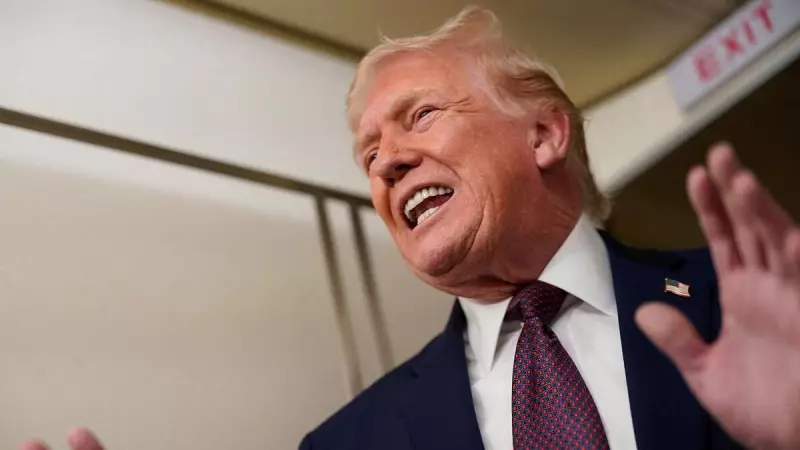
Speaking at a campaign rally in Pennsylvania on Saturday, Trump issued a direct and forceful message. He emphasized that the current situation would not have occurred if he were still in the White House, suggesting his administration's policies effectively deterred such aggression. The former president explicitly stated, "We are now weighing our options, and I know Israel just attacked... we are weighing our options with Israel right now." This indicates a potential coordination of military or strategic responses between the US and its key ally in the Middle East.
Trump's rhetoric focused heavily on the perceived weakness of the current Biden administration, framing it as an invitation for adversaries like Iran to act. He painted a picture of a world becoming more volatile and dangerous due to a lack of forceful American leadership. His comments are clearly aimed at drawing a sharp contrast between his prospective foreign policy and that of President Joe Biden as the 2024 election campaign heats up.

The Context: Iran's Unprecedented Strike
Trump's warnings are not made in a vacuum. They are a direct reaction to a major military event that unfolded just a day prior. On Saturday, Iran launched a massive barrage involving over 300 drones and missiles towards Israeli territory. This attack was reportedly in retaliation for an alleged Israeli airstrike earlier in April on Iran's embassy compound in Damascus, Syria, which killed several Iranian military commanders.
The Israeli military, with support from the United States, the United Kingdom, France, and Jordan, successfully intercepted the vast majority of the incoming projectiles. This coordinated defense prevented widespread damage and casualties, but the symbolic and strategic impact of the direct attack from Iranian soil is profound. It shatters longstanding precedents and opens a new, more direct phase of conflict between the two nations.
Implications for Global and Regional Stability
The combination of Iran's direct assault and Trump's bellicose response signals a period of extreme volatility. The situation places the current Biden administration in a difficult position, needing to demonstrate firm support for Israel while desperately trying to prevent a full-scale regional war that could draw in the United States. Global markets, particularly oil prices, are nervously watching the developments, fearing disruption to supplies from the Persian Gulf.
Furthermore, Trump's active commentary on military options as a private citizen, while referencing coordination with the US military, is unusual and adds a complex domestic political layer to an international crisis. It underscores how the upcoming US presidential election is intrinsically linked to global security dynamics. The world now watches to see if Israel will launch a counter-strike against Iran and how Washington will navigate the twin challenges of diplomacy and domestic politics in the days ahead.
In conclusion, the Middle East stands on a knife's edge. The direct Iran-Israel confrontation, amplified by the forceful political narrative from a leading US presidential candidate, creates a perfect storm of military and political uncertainty. The choices made by governments in Jerusalem, Tehran, and Washington in the coming hours and days will have far-reaching consequences for international peace and stability.