

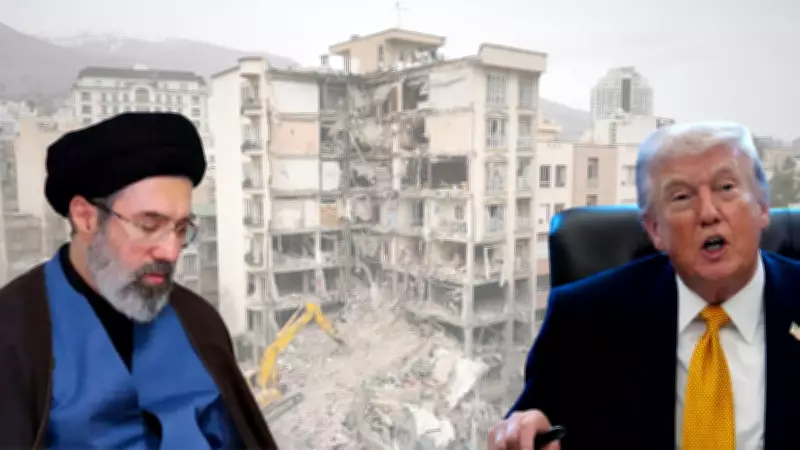
Trump Issues Ultimatum to Iran as Middle East Conflict Nears One-Month Mark
Former US President Donald Trump has delivered a blunt warning to Iranian leadership, urging them to "get serious soon" in ceasefire negotiations with the United States as the Middle East war approaches its fourth week of intense fighting. In a post on his Truth Social platform, Trump characterized Iranian negotiators as "very different" and "strange," alleging they were privately "begging" for a deal while publicly presenting a contradictory stance.
'No Turning Back' Warning from Former President
"They better get serious soon, before it is too late... there is NO TURNING BACK, and it won't be pretty!" Trump wrote in his social media message. The 45th and 47th President of the United States also directed pointed criticism toward NATO partners, accusing them of insufficient burden-sharing and mishandling the ongoing crisis. His comments suggest a willingness to escalate pressure unilaterally, even as diplomatic channels remain uncertain and fragile.
Iran Tightens Grip on Vital Oil Passageway
On the ground, the conflict shows minimal signs of de-escalation. Iran has moved decisively to strengthen its control over the strategically crucial Strait of Hormuz, a narrow maritime passage through which approximately one-fifth of global oil and gas supplies flow. Reports indicate Tehran is effectively operating the strait as a controlled corridor, restricting vessels it deems hostile while permitting limited traffic under stringent conditions.

Gulf officials have accused Iran of implementing a fee system for safe passage through the waterway, with some ships reportedly making payments in Chinese yuan rather than traditional currencies. This development highlights the economic dimensions of the conflict and Iran's efforts to circumvent international financial systems.
Israeli Military Campaign Intensifies
Meanwhile, Israel has significantly escalated its military operations against Iranian targets. Defense officials confirmed that a recent precision strike eliminated Alireza Tangsiri, the Revolutionary Guard naval commander who was closely associated with Iranian operations in the Strait of Hormuz. Iran has not formally acknowledged Tangsiri's death, maintaining its usual opacity regarding military casualties.
The security situation remains tense across the region, with air raid sirens continuing to sound in Israeli cities as missile threats persist. In the Gulf region, missile interceptions have resulted in casualties, including incidents reported in Abu Dhabi that underscore the expanding geographical reach of the conflict.
US Military Reinforcement Signals Readiness
The United States is simultaneously bolstering its military posture in the region. A substantial strike group led by the amphibious assault ship USS Tripoli is advancing closer to the conflict zone, accompanied by thousands of Marines and paratroopers prepared for potential deployment. While US officials have not confirmed plans for imminent ground action, these strategic deployments clearly signal readiness for broader intervention if circumstances require escalation.
US Central Command has claimed significant degradation of Iran's military capabilities, reporting that thousands of targets have been successfully struck since hostilities commenced. This assessment suggests sustained pressure on Iran's defense infrastructure despite Tehran's public defiance.
Contradictory Signals on Negotiation Prospects
Despite Trump's insistence that Iran "wants to make a deal so badly," Tehran has publicly rejected suggestions that formal negotiations are currently underway. Iranian Foreign Minister Abbas Araghchi stated unequivocally that no talks are planned, dismissing indirect messages from Washington as insufficient grounds for establishing formal diplomatic dialogue.
This contradiction between private signals and public positions creates substantial uncertainty about potential diplomatic pathways forward. The situation remains fluid as military actions continue alongside these diplomatic maneuvers, with regional stability hanging in the balance as the conflict enters its most critical phase yet.






