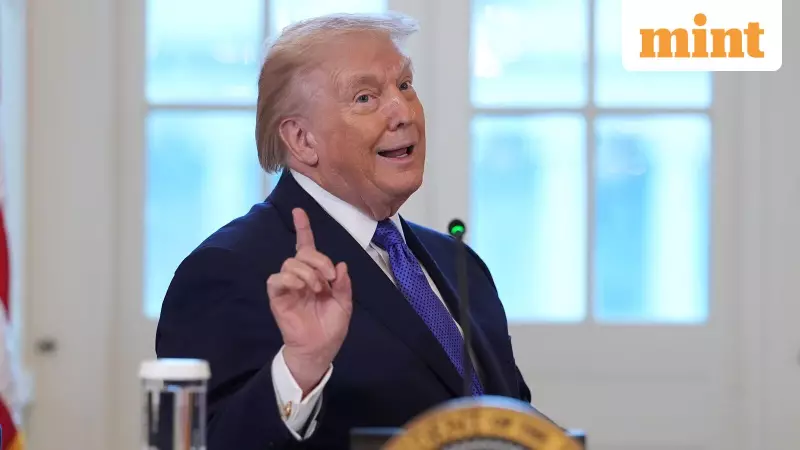
In a significant strategic pivot, President Donald Trump has unveiled a series of major domestic policy initiatives for 2026, moving away from the tariff-centric focus of his early term to a more people-oriented economic agenda. This shift comes as the United States gears up for the crucial November 3 midterm elections, which the President has directly linked to his political survival.
Midterm Pressure and a Pivot to Domestic Concerns
The President's apparent change in strategy coincides with the approaching midterm elections. At a recent retreat for Republican lawmakers in Washington, Trump issued a stark warning, stating, "You gotta win the midterms 'cause, if we don't win the midterms, it's just gonna be - I mean, they'll find a reason to impeach me." He expressed frustration with the historical trend where the party in power loses ground in midterms, questioning the public's mindset.
With his approval ratings under pressure, Trump has been urging his allies in the narrowly Republican-controlled House of Representatives to unite. Concurrently, his aggressive tariff policy, including promised $2,000 per person "stimulus checks" linked to tariffs, has taken a backseat. While international tensions persist with Venezuela, Iran, and Greenland, the domestic policy focus has sharpened on American households.

Key Policy Announcements: Housing and Credit Relief
The centrepiece of Trump's new domestic push is a two-pronged assault on high living costs, targeting housing affordability and credit card debt.
Firstly, on housing, Trump announced he is directing the purchase of $200 billion in mortgage bonds. He stated this is a direct effort to reduce housing costs. Federal Housing Finance Agency director Bill Pulte confirmed the President's instruction for Fannie Mae and Freddie Mac to execute these purchases.
In a post on Truth Social, Trump claimed this action drove mortgage rates down to 5.7%, a drop from what he described as rates around 8% under the Biden administration. He credited his prior decision not to sell the two mortgage giants for allowing them to amass the necessary cash. "This will drive Mortgage Rates DOWN, monthly payments DOWN, and make the cost of owning a home more affordable," he wrote, framing it as restoring affordability destroyed by the previous administration.
Secondly, on consumer credit, Trump proposed a dramatic one-year cap on credit card interest rates at 10%, effective from January 20, 2026. He announced this on Truth Social, targeting what he called predatory rates of 20-30%. "We will no longer let the American Public be ripped off by Credit Card Companies," he declared. The move, while popular with consumers, has reportedly drawn backlash from the credit card industry, a traditional ally.
The Federal Reserve Factor and Future Implications
Underpinning these announcements is Trump's ongoing pressure on the Federal Reserve to lower interest rates. Since the start of his second term, he has consistently demanded rate cuts and has been critical of Fed Chair Jerome Powell. Trump has already voted to oust Powell before his term ends in May 2026.
The President and his aides have signalled that a new Fed chair would lower rates, a move they argue will further curb inflation and benefit millions of Americans. This creates a broader economic context where the administration seeks to use both direct intervention (mortgage bond buys, rate caps) and monetary policy influence to stimulate the economy and reduce costs for voters.
This suite of policies marks a clear attempt to address voter wallets directly ahead of an election that Trump frames as critical for his presidency's continuity. The success of these measures, and the political response to them, will likely define the political narrative leading up to the November 3 midterms.