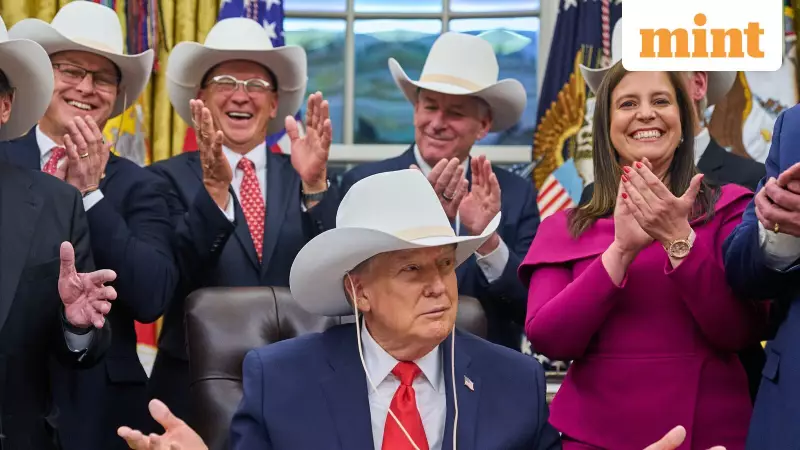
In a significant move, President Donald Trump has issued an executive order granting United States federal employees two extra days off around Christmas this year. The order, signed on Thursday afternoon, extends the holiday period to include 24 December (Christmas Eve) and 26 December, effectively creating a four-day break for most government workers when combined with the standard federal holiday on 25 December.
What the Christmas Holiday Executive Order Entails
The directive excuses most federal personnel from duty on both Christmas Eve and the day after Christmas. However, the White House clarified that this holiday extension is not universal. The order specifies that agencies responsible for national security, defense, or other critical public needs can require staff to report for work. The final authority to mandate attendance rests with individual agency and department heads, ensuring essential services remain uninterrupted.
An Unusual Move Amidst Political Context
This decision marks a departure from recent presidential precedent. While it has become relatively routine for presidents to grant a half or full day off on Christmas Eve, adding 26 December as a non-working day is far less common. President Trump had given Christmas Eve off during his first term in 2018, 2019, and 2020. Former President Joe Biden also continued this tradition in 2024. However, a complete shutdown the day after Christmas is widely viewed as an unusual step.

The timing of the announcement is notable, coming shortly after federal workers endured a record-breaking 43-day government shutdown that ended last month. That event left many employees furloughed or working without pay for weeks. Many observers see the extended holiday as a symbolic gesture aimed at boosting morale within the federal workforce after a turbulent period. Such holiday decisions for government employees often set a trend for the private sector.
Contrast with Trump's Earlier Stance on Holidays
This generous holiday order sits in stark contrast to President Trump's public criticism earlier this year regarding the expansion of public holidays. In June, around the Juneteenth celebrations, Trump voiced his disapproval on Truth Social. He wrote that America has "too many non-working holidays" costing the country billions and claimed workers did not want them either. Juneteenth, marking the emancipation of enslaved people, was established as a permanent federal holiday by President Biden in 2022.
It is crucial to note that a US President's power to create holidays via executive action is limited to one-time designations for federal workers. The authority to establish permanent national holidays rests solely with Congress. Therefore, Trump's order applies only to the current year and does not create a lasting change to the official federal calendar.
Other Recent Policy Revisions
In related developments, the Trump administration has recently revised the list of free entrance days for the National Park Service. Martin Luther King Jr. Day and Juneteenth have been removed from the free-entry schedule. They have been replaced by Presidents Day, Memorial Day, Independence Day, the 110th Birthday of the National Park Service, Constitution Day, and Theodore Roosevelt's birthday. Notably, Flag Day on 14 July has also been added as a free-entry day, a date that coincides with President Trump's 80th birthday.