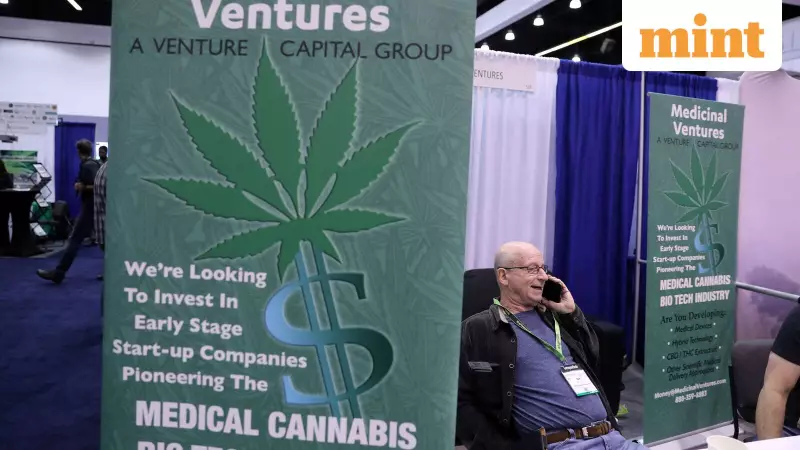
In a significant policy shift, former President Donald Trump has signed an executive order that promises to reshape America's sprawling cannabis landscape. The order moves marijuana from the strict Schedule I category—which includes drugs like heroin—to the less restrictive Schedule III, aligning it with substances like ketamine and codeine-spiked Tylenol.
A Long-Overdue Acknowledgement of Reality
This decision, announced on 23 December 2025, is seen by many as a pragmatic recognition of a market that has evolved dramatically over nearly three decades. The journey began in 1996, during Bill Clinton's presidency, when California became the first state to legalize medical cannabis. Since then, a patchwork of state laws has emerged, with dozens of states permitting the drug for medical or recreational use, spawning a multi-billion dollar legal industry of cafes, boutiques, and diverse products.
As noted by Bloomberg Opinion columnist Erika D. Smith, studies now indicate that more Americans regularly use cannabis than regularly drink alcohol. The reclassification, while not legalizing weed federally, aligns with public sentiment. A Pew Research poll shows that 64% of Americans support legalization for adult recreational and medical use.

What the Order Does and Does Not Do
It is crucial to understand the limits of this executive action. The order does not automatically decriminalize possession or sale in states like Texas and Georgia, where it remains illegal. Nor does it fully harmonize federal policy with the 24 states that have legalized adult use, leaving state-compliant businesses in a legal gray area regarding federal prosecution.
The change followed intense lobbying from the cannabis industry and builds upon groundwork from the Biden administration. However, it has faced criticism from within Trump's party, with some Republican senators arguing it hinders economic growth and healthy lifestyles.
Transformative Impacts: Research, Taxes, and Corporatization
Despite the limitations, the move is poised to be transformative. A major immediate impact will be on medical research. Schedule I status imposed heavy restrictions on scientists studying cannabis. As a Schedule III drug—deemed to have 'moderate to low' dependence potential—research into its long-term effects, benefits, and risks is expected to accelerate.
For the industry, a monumental financial burden is lifted. For the first time, cannabis companies can write off standard business expenses like rent and payroll, which was prohibited under Schedule I. This will improve profitability and attract more institutional investment.
Analysts predict the order will supercharge the industry's corporatization, favoring big brands and deep-pocketed investors. This has raised concerns about the fate of social equity entrepreneurs, particularly people of colour previously targeted during the war on drugs, who may struggle to compete in the coming boom.
After 29 years of a confusing regulatory patchwork, federal intervention was direly needed. While the debate continues on whether Trump's move went far enough, it undeniably marks a pivotal moment, acknowledging that legal cannabis is an entrenched, multi-billion dollar reality in the United States.