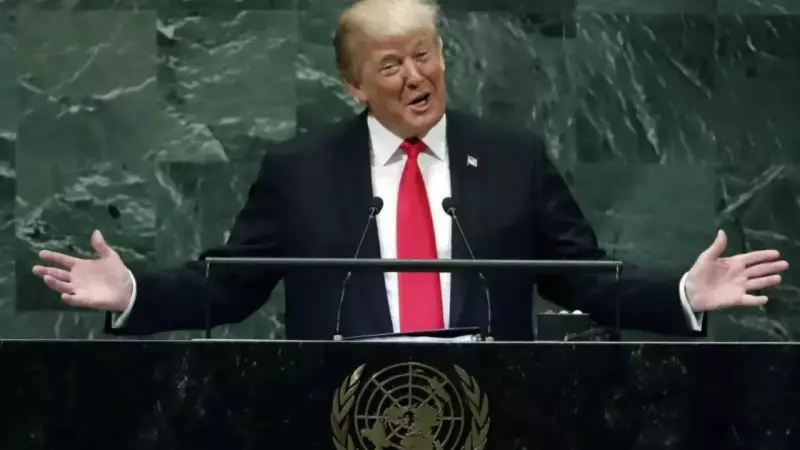
Former US President Donald Trump has stirred controversy by claiming that using the word "Indian" is no longer permitted in modern discourse. During a recent interaction with reporters, Trump made statements that have reignited discussions about cultural sensitivity and historical terminology.
The Controversial Statements
On Thursday, Trump explicitly stated that people are "not allowed" to use the term "Indian" anymore. He told a reporter: "You're not allowed to use the word 'Indian' anymore. The only ones that want you to do it are the Indians. I will never tell you to change."
The term "Indian" has been historically used to describe Native American communities, originating from Christopher Columbus's mistaken belief that he had reached India when he arrived in the Americas. While some tribal members continue to use the term, many consider it outdated and rooted in colonial-era racism.

History with Native American Communities
Trump's relationship with Native American tribes has been complex and often contentious. Despite frequently positioning himself as their defender, his actions and statements have frequently sparked controversy within indigenous communities.
In April this year, Trump threatened to block construction of a new stadium in Washington, DC, unless the local NFL team reverted to its former name, the Washington Redskins. The team had dropped the name in 2020 following years of complaints that it constituted a racial slur against Native Americans.
Trump declared on Truth Social: "I may put a restriction on them that if they don't change the name back to the original 'Washington Redskins,' and get rid of the ridiculous moniker, 'Washington Commanders,' I won't make a deal for them to build a Stadium in Washington. The team would be much more valuable, and the deal would be more exciting for everyone."
Mixed Reactions from Native Groups
The former president also pressured the Cleveland Guardians to revert to their previous name, the "Cleveland Indians," claiming that "Indian people" wanted the change. However, several prominent Native American organizations immediately challenged his assertions.
The Association on American Indian Affairs released a strong statement rejecting Trump's claims, arguing that such mascots reduce indigenous people to caricatures and disrespect their living cultures. "These mascots and names do not honor native people; they reduce us to caricatures. Our diverse people and cultures are not relics of the past or mascots for entertainment," the organization stated.
Contrasting this position, the Native American Guardians Association expressed support for Trump's stance, stating: "The Native American Guardians Association stands with the president of the United States in the call to return common sense and sanity back to our nation."
This disagreement highlights the ongoing debate within Native American communities about representation and cultural sensitivity.
Historical Context and Previous Controversies
Trump's history with Native American issues dates back decades. In 1993, he testified before Congress against Native American gaming operations. During that hearing, he made controversial remarks suggesting that some tribes "don't look like Indians to me" and questioned their authenticity.
He further escalated tensions by claiming he might have "more Indian blood than a lot of the so-called Indians" operating reservations. These comments resurfaced during his political career and continue to influence perceptions of his relationship with indigenous communities.
The current controversy comes at a time when discussions about cultural appropriation, historical accuracy, and respectful representation of indigenous peoples remain highly relevant in American society.