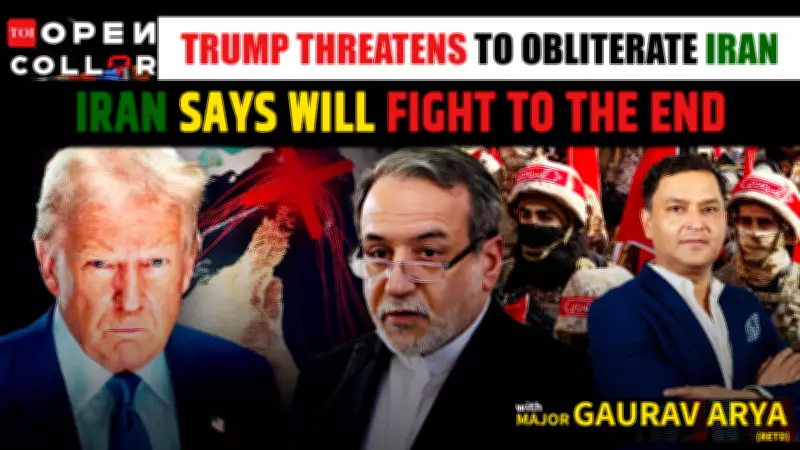
Trump's Conflicting Iran Rhetoric Ignites Global Alarm Over Imminent War Risk
In a dramatic escalation of geopolitical tensions, former U.S. President Donald Trump has issued a series of explosive and contradictory statements regarding Iran, threatening to "destroy Iran completely" within a mere two-week timeframe. This alarming rhetoric, analyzed in depth by Major Gaurav Arya on the OPEN COLLAR platform, has sent shockwaves through international diplomatic circles, raising urgent questions about Washington's true intentions in the Middle East.
From Ceasefire Promises to Stone Age Threats: A Dangerous Policy Whiplash
The situation has reached a perilous tipping point as Trump oscillates between advocating for a peaceful ceasefire and vowing to "bomb Iran back to the Stone Age." This stark policy whiplash is not merely rhetorical posturing; it represents a significant and confusing signal that has destabilized an already volatile region. Global observers and security analysts are now grappling with a critical dilemma: is the United States genuinely preparing for diplomatic peace, or is it covertly gearing up for a full-scale military confrontation?
The ambiguity in Trump's messaging has created a fog of uncertainty, complicating international response strategies and heightening the risk of miscalculation. Major Gaurav Arya's breakdown highlights how these mixed signals are being interpreted as either strategic bluster or a prelude to aggressive action, with neither scenario offering comfort to a world already weary of conflict.

Broader Regional Context and Escalating Hostilities
This latest development occurs against a backdrop of intensifying regional hostilities. Recent events include reported U.S.-Israel strikes on Iranian targets and retaliatory actions by Iran, such as attacks on the UAE. Furthermore, Israeli operations against Iranian gas fields and subsequent Iranian strikes in the Gulf have added layers of complexity to an already tangled web of alliances and enmities.
The potential for a wider Middle East war is palpable, with key players like Saudi Arabia and Israel deeply involved, and critical chokepoints like the Strait of Hormuz becoming flashpoints. The death of Iranian Supreme Leader Ayatollah Ali Khamenei has also introduced new variables, with speculation rife about whether Iran is preparing for an expanded conflict.
Global Implications and the Search for Stability
The implications of a U.S.-Iran war extend far beyond the Middle East, threatening global oil supplies, triggering economic shocks, and risking a broader international crisis. The situation underscores the perennial struggle for oil, power, and influence in a region that has historically been a crucible of conflict. As Trump's threats loom, the international community faces a pressing need to decipher American strategy and mount a coordinated effort to de-escalate tensions before they spiral into open warfare.
Ultimately, the coming weeks will be critical in determining whether diplomacy can prevail or if the world must brace for another devastating conflict. The contradictory signals from Trump have placed global security on a knife's edge, demanding vigilant analysis and proactive peacemaking from all concerned nations.