

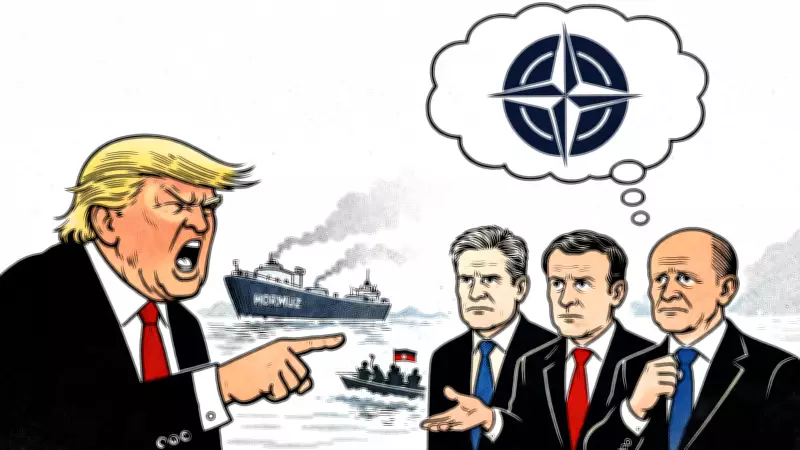
Examining the Feasibility of a US Exit from NATO Under Trump
The prospect of former President Donald Trump withdrawing the United States from the North Atlantic Treaty Organization (NATO) has sparked intense debate and concern among policymakers, analysts, and global leaders. This move, if attempted, would represent a seismic shift in international relations, challenging the foundational security architecture that has underpinned transatlantic stability since the Cold War. The discussion revolves around the legal mechanisms, political hurdles, and far-reaching implications of such a decision.
Legal Framework and Procedural Steps for Withdrawal
Under Article 13 of the NATO treaty, any member state can withdraw from the alliance by providing one year's notice to the United States government, which serves as the depository for the treaty. This means that, in theory, a US president like Trump could initiate the process by formally notifying the US Department of State of the intent to leave. However, the legal pathway is not as straightforward as it might seem.
First, the US Constitution does not explicitly grant the president unilateral authority to withdraw from treaties without congressional approval. Historical precedents, such as the US exit from the Paris Agreement or the Iran nuclear deal, involved executive actions that did not require Senate consent because those were executive agreements, not ratified treaties. NATO, in contrast, was established through the North Atlantic Treaty of 1949, which was ratified by the US Senate with a two-thirds majority. This raises significant legal questions about whether a president alone can nullify such a ratified commitment.

Legal experts are divided on this issue. Some argue that since the treaty includes a withdrawal clause, the president can invoke it as part of their executive power in foreign affairs. Others contend that withdrawing from a ratified treaty effectively amends US international obligations, necessitating congressional involvement, potentially through a joint resolution or Senate approval. This ambiguity could lead to protracted legal battles, with Congress or courts potentially challenging the president's authority, creating a scenario where the withdrawal process becomes mired in domestic political and judicial disputes.
Political and Diplomatic Hurdles
Beyond legal complexities, political factors pose substantial barriers. NATO enjoys broad bipartisan support in the US, with many lawmakers from both parties viewing it as a cornerstone of national security and global stability. A move to exit would likely face fierce opposition in Congress, which could respond by passing legislation to block funding for withdrawal efforts or reaffirming US commitment to the alliance. Public opinion also plays a role; polls have shown that a majority of Americans support NATO, which could influence political will and electoral considerations.
Internationally, such a step would strain relations with European allies, who rely on US military support and leadership within NATO. It could trigger diplomatic crises, with countries like Germany, France, and the United Kingdom urging the US to reconsider. The alliance might enter a period of uncertainty, with members scrambling to reassess their defense strategies and potentially seeking alternative security arrangements, such as enhanced EU defense cooperation or bilateral agreements with other powers.
Potential Global Consequences and Security Implications
If the US were to successfully withdraw from NATO, the repercussions would be profound and multifaceted. The immediate impact would be a significant reduction in the alliance's military capabilities, as the US contributes the largest share of NATO's defense spending and provides critical assets like nuclear deterrence, intelligence, and logistical support. This could embolden adversaries, particularly Russia, which might perceive a weakened NATO as an opportunity to assert influence in Eastern Europe or other regions.

Europe would face heightened security challenges, potentially leading to increased defense spending among member states and a shift toward greater self-reliance. However, this transition could be fraught with difficulties, given disparities in military budgets and capabilities across Europe. The global balance of power might shift, with China and other rising powers gaining more leverage in international affairs as US influence wanes in traditional alliances.
Moreover, the credibility of US commitments worldwide could be undermined, affecting other treaties and partnerships. Allies in Asia, such as Japan and South Korea, might question the reliability of US security guarantees, prompting them to explore independent defense postures or align more closely with other powers. This could lead to a more fragmented and competitive international system, with increased risks of conflicts and instability.
Conclusion: A Complex and High-Stakes Scenario
In summary, while Donald Trump has the theoretical ability to initiate a US withdrawal from NATO under Article 13, the process is encumbered by legal ambiguities, political resistance, and diplomatic fallout. The actual implementation would likely involve contentious debates in US courts and Congress, coupled with intense international pressure. The consequences, if realized, would reshape global security dynamics, potentially weakening transatlantic ties and altering the geopolitical landscape in ways that could have lasting effects on peace and stability. As such, any attempt to pull the US out of NATO remains a highly speculative yet critically important topic for ongoing analysis and vigilance.





