

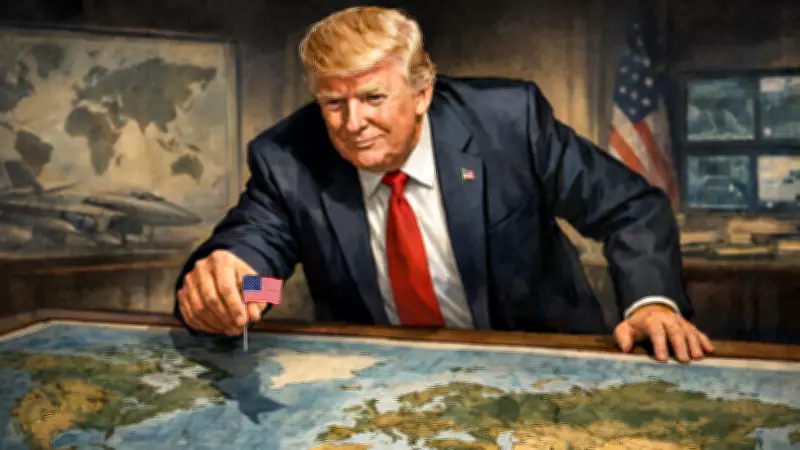
Trump's Neo-Colonial Wars Could Accelerate US Decline, Experts Warn
In a startling revelation aboard Air Force One, United States President Donald Trump outlined aggressive foreign policy plans that analysts fear could catalyze American decline through neo-colonial military interventions. The president's casual comments to reporters have ignited international concern about a new era of US expansionism.
"After Iran, We'll Do Cuba": Trump's Expansionist Vision
President Trump declared his intention to target Cuba following potential actions against Iran, stating matter-of-factly: "After Iran, we'll do Cuba." This statement reveals a systematic approach to foreign intervention that critics describe as reminiscent of colonial-era power projection. The presidential aircraft conversation provided unprecedented insight into Trump's strategic thinking about American military engagements.
The president elaborated on his Cuba plans with concerning nonchalance, adding with a shrug: "It may be a friendly takeover. It may not be a friendly takeover. It wouldn't matter." This dismissive attitude toward national sovereignty has alarmed diplomatic observers who warn that such approaches undermine international norms and could provoke widespread backlash against American interests globally.

Economic Justification for Military Intervention
Trump justified his proposed actions against Cuba with economic reasoning, stating: "They have no energy. They have no money. They are in deep trouble." This rationale suggests a troubling precedent where economic vulnerability becomes justification for military intervention rather than diplomatic engagement or economic assistance.
Foreign policy experts express deep concern that this approach represents a dangerous return to colonial-era thinking, where stronger nations justified domination of weaker ones based on perceived economic deficiencies. Such policies could:
- Alienate traditional US allies who value sovereignty principles
- Provoke retaliatory measures from other global powers
- Undermine America's moral authority in international affairs
- Create new security threats through resentment and resistance
The Neo-Colonialism Debate Intensifies
The term "neo-colonial wars" has gained traction among analysts examining Trump's foreign policy approach. Unlike traditional colonialism involving permanent settlement, neo-colonialism refers to indirect political and economic control, often enforced through military means when necessary. Trump's comments suggest a willingness to employ direct military force to achieve strategic objectives, blurring lines between traditional and neo-colonial approaches.
This policy direction comes at a precarious moment in global affairs, with multiple regions experiencing instability and great power competition intensifying. The potential for simultaneous conflicts in the Middle East (Iran) and Caribbean (Cuba) could stretch American military resources while damaging diplomatic relationships built over decades.
Long-Term Implications for US Global Standing
Historians note that empires often decline when they overextend militarily while losing moral authority. Trump's apparent embrace of neo-colonial tactics risks both outcomes simultaneously. The casual nature of the Air Force One conversation suggests these interventions are not emergency responses to imminent threats but calculated expansions of American influence through force.
As the international community processes these revelations, questions emerge about how traditional allies will respond and whether new alliances will form to counter perceived American aggression. The coming months may reveal whether Trump's statements represent rhetorical bluster or a genuine shift toward neo-colonial foreign policy that could indeed accelerate American decline on the world stage.






