

Trump's Pivot from Peacemaker to War President: The Psychological and Geopolitical Costs
When Donald Trump returned to power, he campaigned on a clear and repeated promise: the United States had spent too long fighting other people's wars. This pledge was central to his political identity, with Trump vowing to end conflicts in Ukraine and Gaza, broker stability across the Middle East, and put "America First" at home. He promised a return to what he called the country's "golden age," focusing heavily on domestic concerns like lowering costs, tackling the affordability crisis, and making everyday life cheaper for American families.
The Contrast with Campaign Promises
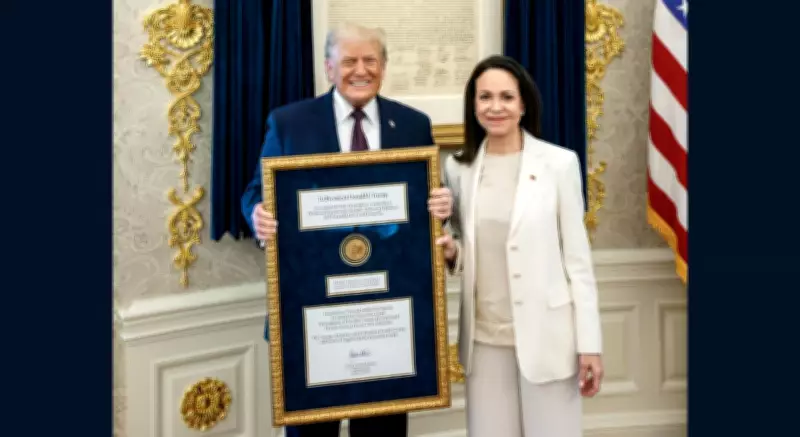
However, the launch of Operation Epic Fury, the large-scale US campaign against Iran, starkly contrasted with those promises. The internet quickly dubbed it "Operation Epstein Distraction," suggesting the war arrived at a remarkably convenient time for a president whose name had surfaced in discussions surrounding the Jeffrey Epstein files. Trump had often portrayed himself as a dealmaker who could restore global stability through negotiation and personality, even joking about winning the Nobel Peace Prize. In January 2026, Venezuelan opposition leader María Corina Machado handed him her Nobel medal at the White House in thanks for US operations that removed Nicolás Maduro from power, though the Nobel Committee clarified the prize cannot be transferred.
Shifting Rhetoric and Military Action
By late 2025, Trump's language began to change. He dismissed concerns about rising living costs as a "hoax" and expressed frustration with the Nobel Committee after being passed over for the Peace Prize, threatening tariffs against Norway and reviving demands for US control of Greenland. He stated he no longer felt obligated to "think purely of peace," insisting his priority was "saving lives." Within weeks, the US entered a direct military confrontation with Iran through Operation Epic Fury, targeting missile installations, naval bases, and strategic sites. The strikes killed Ayatollah Ali Khamenei, Iran's supreme leader, whom Trump later described as "one of the most evil people in History."

Human and Economic Toll
The war's human cost has mounted quickly. In Iran alone, over 1,255 people have been killed and more than 12,000 wounded, including at least 168 children. Retaliatory attacks have widened the conflict, with Israel reporting 13 deaths and nearly 1,929 injuries, eight US soldiers killed in the Gulf, and renewed Israeli operations in Lebanon leaving over 570 dead. Iran's drone and missile strikes across the Gulf have targeted sites in Saudi Arabia, the UAE, Bahrain, Jordan, Oman, Qatar, and Cyprus, compounding the toll. Economically, threats to choke off the Strait of Hormuz have sent energy markets into turmoil, pushing up fuel and LPG prices globally and contradicting Trump's campaign agenda of lowering costs.
Psychological Critique from Mary Trump
Among critics, Mary Trump, the president's niece and a trained psychologist, offers a unique perspective based on family dynamics. In her view, the war reflects a pattern in her uncle's behavior driven by a need to avoid humiliation and assert dominance, learned from a family culture she describes in her memoir Too Much and Never Enough: How My Family Created the World's Most Dangerous Man. She argues on her YouTube channel, Mary Trump Media, that the campaign is not motivated by concern for Iranians but by Trump's desperation to distract from personal troubles. "For Donald, there is one reason and one reason alone," she said. "He's in trouble, and he knows it."
Strategic Questions and Broader Consequences
Mary Trump challenges the war's strategic logic in a blog post titled "What Is It All For?", noting the shifting justifications from nuclear deterrence to regime change. She warns it will cost "untold lives and untold billions of dollars," damage US credibility with allies, and destabilize the volatile Middle East. She emphasizes that decision-makers are insulated from economic pressures, while ordinary Americans bear the brunt. "If you are struggling to pay your bills," she wrote, "understand this: none of this is accidental."

The shift from peacemaker to war president underscores deep contradictions in Trump's policies, with psychological and geopolitical ramifications that continue to unfold.





