

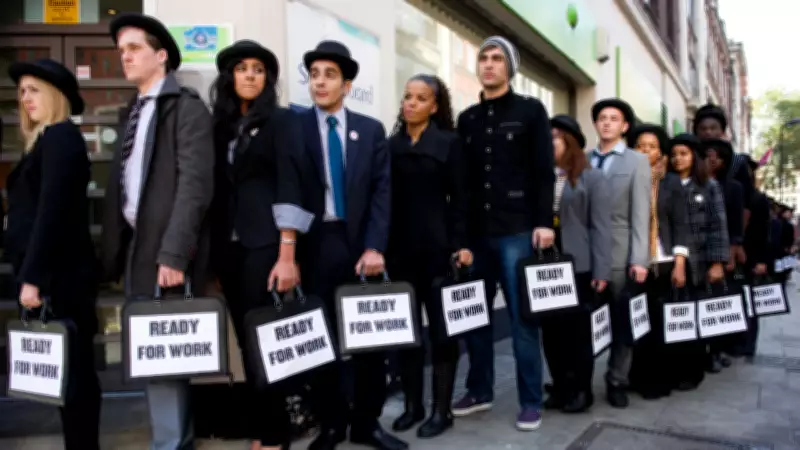
UK Youth Unemployment Crisis: Graduates Face AI Hiring Wall & Shrinking Opportunities
Charlotte Briggs, a 22-year-old business management graduate, believed her university degree would be a golden ticket to career success. Instead, she has spent months in a frustrating cycle of sending out hundreds of job applications with minimal results. "You have to work 10 times harder to secure a role that, a decade ago, you could have landed easily straight out of university," she explains to the BBC.
Her experience is stark: within just two months, she applied for 500 positions. "It's quite upsetting because I've worked really hard for the last three years to achieve a 2:1 degree, only to be rejected repeatedly for lacking experience," she says. While Charlotte's story may seem extreme, it reflects a broader, alarming trend affecting young people across the United Kingdom.
Rising Youth Unemployment: A National Concern
Latest data from the Office for National Statistics paints a grim picture. In London, 22.5% of individuals aged 16 to 24 are unemployed, the second-highest rate in the UK, trailing only the North East at 24.6%. The national average stands at 16.1%, marking the highest level in over ten years.

Specifically, in London alone, 125,000 young people were jobless in the last quarter of 2025—a significant increase of 22,000 compared to the same period the previous year. This group comprises just over half men and 45% women. Overall, London's unemployment rate of 7.6% exceeds the UK average of 5.2%, with economists noting early signs of a weakening labor market in the capital.
Avnee Morjaria from the Institute for Public Policy Research highlights several contributing factors: "You've got the hospitality and retail sector struggling, difficulty in entry points in the labor market, and the cost of employing young people."
'No Progression' in Available Jobs
For Charlotte, the challenge extends beyond merely finding work; it's about securing meaningful employment in her chosen field. Now relying on universal credit as a last resort, she is hesitant to accept roles outside her expertise, viewing entry-level positions in retail or hospitality as offering "no progression."
Her sentiment is shared by others. Theo dal Pozzo, a 23-year-old with a first-class master's degree in computer science, has faced similar rejection despite his qualifications. "I've applied for over 500 jobs and been rejected from all of them," he reveals. He points to technology as a double-edged sword: "There are so many people applying using AI, and job listings are scanned by AI—CVs, everything. It feels very difficult to differentiate myself."
Indeed, technology now shapes both sides of hiring. Applicants use tools for faster applications, while employers deploy automated systems to filter candidates, making it harder for young people to stand out. Compounding this, job opportunities are shrinking. In the hospitality sector alone, around 100,000 jobs have been lost across the UK since the October 2024 Budget due to rising costs, according to industry body UK Hospitality.
Chairwoman Kate Nicholls warns: "Younger and entry-level workers are typically the first to be affected as businesses struggle to sustain those positions. If pressure continues, we risk losing not just jobs, but a vital pathway into work for an entire generation of young Londoners."
Confidence and Mental Health Concerns
The impact of unemployment transcends financial strain, severely affecting young people's confidence and mental health. Charities report a sharp rise in anxiety among this demographic. Trina Rodden from youth unemployment charity The Shaw Trust observes: "It can be as extreme as young people who won't leave their bedroom. They become very isolated and totally disengaged."

Hadil Haidar, 22, who left university due to unforeseen circumstances and has been job-hunting since November 2025, echoes this. After applying for over 70 entry-level roles and handing out countless CVs, she says: "It can be really demoralizing. I'm fluent in three languages and creative, but sometimes I don't feel given a chance to showcase my skills." She believes the pandemic exacerbated challenges for her generation, with many missing work experience and struggling with the education-to-employment transition.
A Changing Approach to Work
With competition intensifying, some young people are forging alternative paths. LinkedIn data shows a 60% increase over the past year in young people adding "Founder" to their profiles. Gen Z in the UK are now twice as likely as millennials to freelance or start a business.
LinkedIn's chief economic opportunity officer, Aneesh Raman, advises adapting to the evolving job market by building AI skills, focusing on communication and problem-solving, and highlighting practical achievements over academic results alone.
What Is Being Done?
City leaders emphasize that tackling youth unemployment is a priority. A spokesperson for the mayor of London cited the Inclusive Talent Strategy, which includes £147.2 million in funding to enhance training and employment opportunities. Nationally, the government plans to offer companies £3,000 for each young person aged 18 to 24 they hire who has been on benefits for six months or more. Officials claim this broader package could create 200,000 jobs and support up to one million young people.
However, organizations argue more action is needed. Julia Evans from charity Spear stresses the focus should be on helping youth become job-ready. Morjaria adds that the goal should ensure young people can "earn or learn," suggesting measures like a youth allowance linked to training or job searches.
Looking Ahead: A Generation at Risk
Experts warn that long-term unemployment at a young age can have lasting effects on income, health, and future opportunities. Morjaria cautions: "Allowing young people to leave education and drift straight into the welfare system risks permanently scarring a generation."
Despite these daunting challenges, many young people remain hopeful. Hadil asserts: "We owe young people the chance to be happy, be themselves, and be productive members of society." Theo shares this optimism: "I'm looking forward to a future that I know will be better than now." Their resilience underscores the urgent need for effective solutions to this growing crisis.





