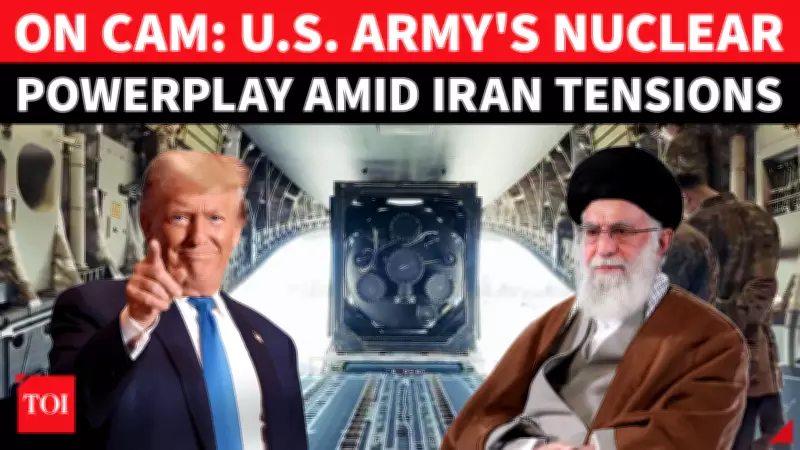
US Military Conducts Historic Airlift of Nuclear Microreactor Amid Regional Tensions
In an unprecedented military operation, the United States Department of Defense and Department of Energy have successfully transported a next-generation nuclear microreactor via a C-17 Globemaster III cargo aircraft. This landmark flight represents the first time such advanced nuclear equipment has been airlifted by the US military, signaling a major shift in strategic energy capabilities.
Groundbreaking Logistics Demonstration
The carefully orchestrated mission saw the nuclear microreactor travel from March Air Reserve Base in California to Hill Air Force Base in Utah. Developed by California-based defense contractor Valar Atomics, the reactor was transported without nuclear fuel as part of a comprehensive logistics and deployment exercise designed to test military readiness.
High-ranking officials including Energy Secretary Chris Wright and Undersecretary of Defense for Acquisition and Sustainment Michael Duffey were personally onboard the flight, underscoring the operation's strategic importance. Both leaders hailed the mission as a significant breakthrough for advanced nuclear deployment capabilities and military energy resilience.

Strategic Implications and Regional Context
This demonstration occurs against a backdrop of escalating tensions in the Middle East, particularly concerning Iran's nuclear ambitions and regional military activities. The successful airlift showcases the US military's ability to rapidly deploy advanced energy infrastructure to forward operating bases and remote locations, potentially reducing dependence on traditional fuel supply lines.
The nuclear microreactor technology represents a paradigm shift in military energy solutions, offering compact, transportable power generation that could support critical operations in austere environments. This capability becomes particularly relevant as global conflicts increasingly involve energy infrastructure as strategic targets.
Technical Specifications and Safety Protocols
The transported microreactor, while advanced in design, adhered to stringent safety protocols during the demonstration:
- No nuclear fuel was present during transportation
- Comprehensive security measures were implemented throughout the operation
- The C-17 aircraft was specially configured for this unique cargo
- Multiple government agencies coordinated the complex logistics
This successful test paves the way for future deployments of similar technology, potentially revolutionizing how military forces approach energy sustainability in conflict zones and remote installations. The demonstration also highlights growing collaboration between defense and energy sectors in developing next-generation military capabilities.