US Military Discloses Images of Airstrike Devastation at Iranian IRGC Plant
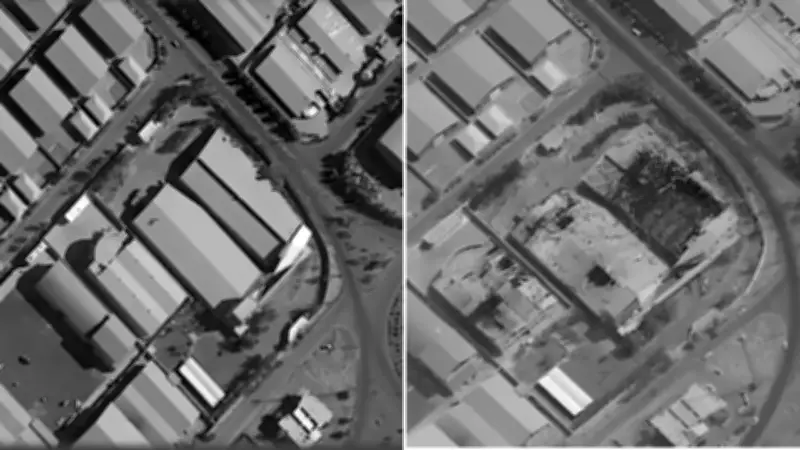
The United States Central Command (CENTCOM) has publicly released compelling before-and-after photographs that starkly illustrate the severe impact of American airstrikes on a critical Iranian facility under the control of the Islamic Revolutionary Guard Corps (IRGC). According to CENTCOM, the targeted site, known as the Qom Turbine Engine Production Plant, was completely destroyed. This facility specialized in manufacturing gas turbine engines essential for attack drones and various aircraft components utilized by the IRGC.
Visual Evidence of Destruction
In a detailed post on the social media platform X, CENTCOM provided two contrasting images to underscore the extent of the damage. The first photograph, dated March 6, 2026, depicts the plant in its operational state prior to the US military intervention. The second image, captured just three days later, reveals the aftermath of what CENTCOM described as a "devastating attack" by US forces, showing the facility in ruins with significant structural collapse and debris.
The conflict between the US-Israel alliance and Iran, which ignited following the assassination of Tehran's longest-serving leader, Ayatollah Ali Khamenei, has now persisted into its fourth week, heightening regional instability and international concerns.

International Diplomatic Efforts and Calls for Restraint
Amid these escalating hostilities, French President Emmanuel Macron engaged in a crucial conversation with Saudi Arabia's Crown Prince Mohammed bin Salman on Monday. Macron reaffirmed France's unwavering solidarity with Saudi Arabia and committed to assisting in bolstering the kingdom's air defence systems. This pledge comes in response to what Macron termed "repeated and unacceptable attacks" by Iranian missiles and drones targeting Saudi territory.
In his X post, Macron emphasized the urgent need for de-escalation, stating, "In the face of the risk of escalation spiralling out of control, it has become more necessary than ever for all warring parties to agree to a temporary halt to attacks on energy facilities and civilian infrastructure, and for Iran to restore freedom of navigation in the Strait of Hormuz."
He further stressed the importance of responsibility and restraint to pave the way for renewed dialogue, which he believes is essential for ensuring peace and security across the region. Macron highlighted the critical role of enhanced coordination between the G7 and the Gulf Cooperation Council, noting that France and Saudi Arabia are actively collaborating towards this objective.
Broader Regional Implications
The destruction of the IRGC facility marks a significant escalation in the ongoing conflict, potentially impacting Iran's military capabilities in drone warfare. Meanwhile, the diplomatic outreach by France underscores the international community's growing apprehension about the conflict's expansion and its effects on global energy security, particularly concerning the strategic Strait of Hormuz.
As tensions continue to mount, the situation remains fluid, with global leaders urging caution and advocating for diplomatic solutions to prevent further deterioration of regional stability.