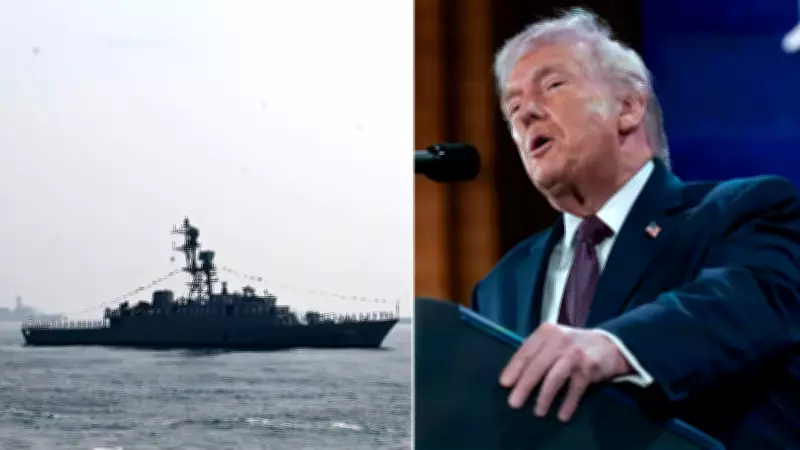
US Military to Enforce Naval Blockade on Iranian Ports Starting Monday
The United States military has declared it will initiate a comprehensive naval blockade targeting all Iranian ports in the Arabian Gulf and Gulf of Oman, effective Monday at 1400 GMT. This significant military action comes after nearly twenty hours of diplomatic negotiations between Washington and Tehran, facilitated by Pakistan in Islamabad, failed to yield any breakthrough regarding Iran's nuclear program.
Blockade Details and Strategic Implications
In an official statement released on Sunday via the social media platform X, US Central Command (CENTCOM) outlined the parameters of the blockade. The enforcement will be applied impartially to vessels of all nations that are entering or departing Iranian ports and coastal areas. This includes every Iranian port situated along the Arabian Gulf and the Gulf of Oman, marking a substantial escalation in regional tensions.
However, CENTCOM clarified a critical distinction that appears to moderate earlier rhetoric from President Donald Trump. "CENTCOM forces will not impede freedom of navigation for vessels transiting the Strait of Hormuz to and from non-Iranian ports," the command stated. This specification ensures that the strategically vital Strait of Hormuz, through which approximately one-fifth of the world's oil passes, remains open for international shipping not destined for Iran.

Trump's Rationale and Accusations Against Iran
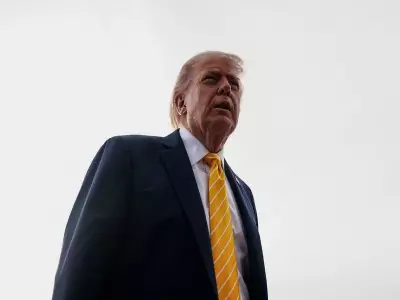
The decision follows a direct order from President Donald Trump, who announced the sweeping naval blockade after expressing frustration with the Islamabad talks. In a series of posts on Truth Social, Trump provided his assessment of the negotiations and the justification for the military response.
Trump asserted that the discussions "went well" and that "most points were agreed to," but he emphasized that Tehran remained "unyielding as to the single most important issue." The President declared unequivocally, "IRAN IS UNWILLING TO GIVE UP ITS NUCLEAR AMBITIONS!" This accusation forms the core of the US administration's rationale for implementing the blockade.
Furthermore, Trump accused Iran of backtracking on previous assurances to maintain open passage through the Strait of Hormuz. He claimed the situation had already generated "anxiety, dislocation, and pain to many people and Countries throughout the World." The President specifically referenced allegations that Iran has placed mines in the waterways, creating uncertainty that deters global shipping. "What ship owner would want to take the chance?" Trump questioned, framing the scenario as "WORLD EXTORTION" that necessitates an immediate and forceful US response.
Operational Directives and Warnings Issued
Outlining the operational scope, Trump stated that effective immediately, the United States Navy would commence the process of blockading any and all ships attempting to enter or leave the Strait of Hormuz bound for Iranian ports. He added that US forces would actively "seek and interdict every vessel in International Waters that has paid a toll to Iran," warning sternly that "no one who pays an illegal toll will have safe passage on the high seas."
The President also announced that US naval units would begin operations to clear mines allegedly deployed by Iran in the region. Accompanying this was a stark and unambiguous warning: "Any Iranian who fires at us, or at peaceful vessels, will be BLOWN TO HELL!" This language underscores the heightened risk of military confrontation.
Conditions for Lifting the Blockade and Diplomatic Context
Trump indicated that the blockade would remain in effect until free navigation is fully restored, labeling the current circumstances a violation of international norms. Simultaneously, he hinted at a potential diplomatic off-ramp, suggesting that "at some point, we will reach an 'ALL BEING ALLOWED TO GO IN, ALL BEING ALLED TO GO OUT' basis." However, he placed the responsibility for achieving this outcome squarely on Iran, blaming Tehran for preventing such a resolution.

The President noted he had been "fully debriefed" by Vice President JD Vance, Special Envoy Steve Witkoff, and his son-in-law Jared Kushner following the Pakistan-facilitated talks. This move represents one of the most direct military confrontations initiated by the US in the region in recent years, with significant implications for global energy markets, international maritime law, and geopolitical stability in the Middle East.