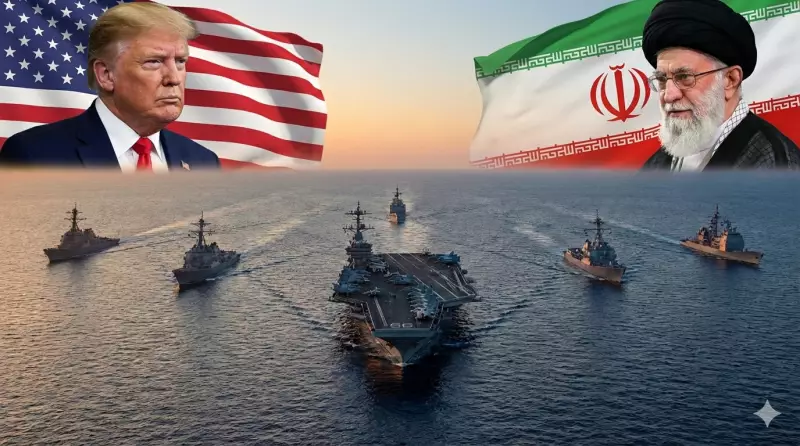
US Carrier Strike Group Heads to Middle East Amid Rising Iran Tensions
The United States is making a significant military move. It is redeploying a carrier strike group from the South China Sea to the US Central Command area. This region includes the Middle East. Sources at the Pentagon confirmed this strategic shift. Tensions between the Trump administration and Iran are escalating rapidly.
Strategic Military Movement
This redeployment involves a powerful naval force. News Nation reports the group centers on an aircraft carrier. Multiple warships support it, including at least one attack submarine. The USS Abraham Lincoln is likely the carrier heading to Centcom. It will take about a week to reach the designated area.
This marks a major shift in US military assets. It clearly reflects heightened readiness. Regional tensions are rising sharply. Centcom's responsibility covers a vast area. It spans over 4 million square miles across Northeast Africa, the Middle East, Central Asia and South Asia. This includes 21 countries like Egypt, Iraq, Afghanistan, Iran and Pakistan.

Context of Iranian Unrest
The move comes at a critical time. Iran is witnessing widespread anti-government protests. Soaring inflation and economic hardship drive these rallies. Public anger over governance is mounting daily. Washington is deliberating potential support for protesters. They challenge the Islamic Republic's ruling establishment.
Officials have not commented publicly on specific objectives. However, the backdrop is clear. Growing unrest in Iran influences these military calculations. The Trump administration is considering various options.
Heightened Security Measures
US forces are taking precautionary steps. CNN reports some personnel received advice to leave. This applies to the largest US military base in the Middle East. Al Udeid Air Base in Qatar is the location. A US official clarified this reflects security concerns, not an immediate threat.
The US Embassy in Saudi Arabia issued warnings too. It urged personnel to exercise increased caution. They should limit non-essential travel to military installations. Ensuring personal safety plans are in place is essential.
Regional Concerns and Broader Implications
Neighboring countries express growing worries. They fear any military strike could destabilize the entire region. Wider security and economic repercussions might follow. Regional governments are engaging directly with the Trump administration. They aim to address these pressing concerns.
On Monday, President Donald Trump received a detailed briefing. CBS News cited two Defense Department officials. The briefing covered a broad range of military and covert options against Iran. These options extend beyond conventional airstrikes. They include integrated military, cyber and psychological operations.
Protests Continue in Iran
Meanwhile, protests in Iran have entered their eighteenth day. The Human Rights Activist News Agency provides verified data. It records at least 617 protest events across 187 cities. Over 18,470 people face arrest. Authorities confirm 2,615 deaths so far. An ongoing communications blackout complicates the situation.
In an interesting development, Trump made a statement on Wednesday. He said the Iranian government appeared to have stopped killing protesters. He did not clarify implications for potential US military action. Washington will "watch and see" how the situation develops, he added.
The strategic redeployment underscores a volatile period in US-Iran relations. Military movements coincide with domestic turmoil in Iran. The international community watches closely as events unfold.