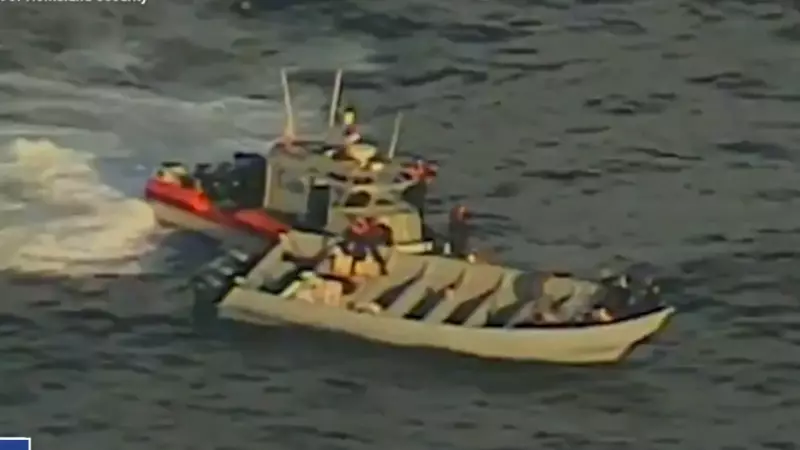
In a dramatic high-seas operation, the United States Coast Guard has executed its largest-ever cocaine seizure by a national security cutter, confiscating a staggering haul of over 20,000 pounds of the narcotic. The mission, which took place in the Eastern Pacific Ocean south of Mexico, involved a tactical team using helicopter sniper fire to disable a suspected drug-smuggling vessel.
Helicopter Sniper Takes Down Narco-Boat
The interception was captured on video, showing Coast Guard personnel from the elite Helicopter Interdiction Tactical Squadron (HITRON), based in Jacksonville, Florida, in action. A sniper aboard a helicopter targeted and fired upon the engines of a high-speed "go-fast" boat, successfully disabling it. This allowed Coast Guard cutters to move in and board the vessel safely. According to official statements, the seized cocaine represents more than 7.5 million potentially lethal doses.
Operation Pacific Viper Nets Historic Totals
This record-breaking bust was part of Operation Pacific Viper, a joint Coast Guard and Navy initiative launched in August as part of the current administration's intensified crackdown on Latin American drug-trafficking cartels. The operation has proven highly effective. By October, it had already led to the seizure of 100,000 pounds of cocaine in the eastern Pacific, averaging about 1,600 pounds per day.

The success is part of a broader record-setting trend. In November, the Coast Guard reported seizing nearly 510,000 pounds of cocaine in fiscal year 2025, the highest annual total in the service's history. Officials highlighted that this amount translates to roughly 193 million potentially lethal doses, which they stated is "enough to jeopardise more than half of the US population." This figure is more than three times the service's usual yearly average of about 167,000 pounds.
Legal Scrutiny and Continued Campaign
The aggressive tactics have not been without controversy. Separately, the administration has reportedly conducted at least 22 strikes against suspected drug vessels in Latin American waters since September. Some US lawmakers have raised questions about the legality of these strikes, particularly one instance that targeted a second vessel after the first strike left survivors. The White House has firmly asserted its authority to carry out such actions.
Meanwhile, political dynamics continue to evolve. On Wednesday, Senate Minority Leader Chuck Schumer and Senators Tim Kaine, Adam Schiff, and Rand Paul introduced a war-powers resolution aimed at blocking the president from using US armed forces for hostilities against Venezuela. Conversely, Defence Secretary Pete Hegseth has vowed an unwavering continuation of the campaign, declaring, "We've only just begun striking narco-boats and putting narco-terrorists at the bottom of the ocean because they've been poisoning the American people."
The use of HITRON snipers to disable engines has become a cornerstone tactic in curbing the maritime flow of narcotics. The Coast Guard credits this precise and forceful approach as a key factor in the overwhelming success of recent interdiction missions, signaling a sustained and escalating effort to disrupt transnational drug cartels in international waters.