

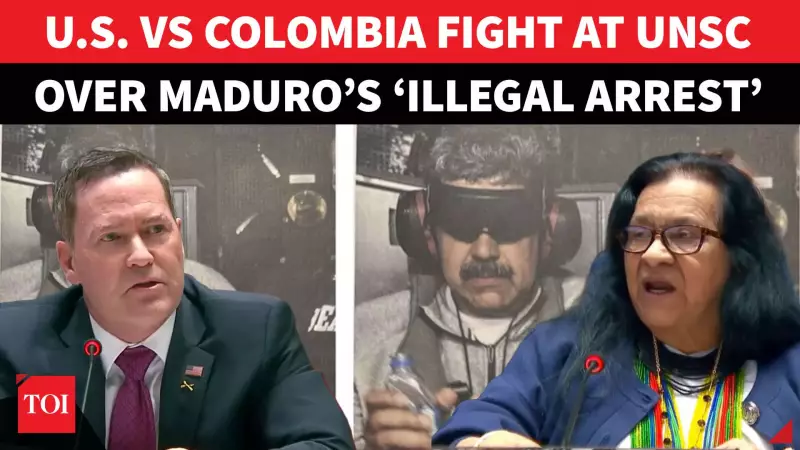
Tensions reached a boiling point at the United Nations Security Council on January 6, 2026, as the United States and Colombia engaged in a fierce diplomatic confrontation. The core of the dispute was the recent detention of Venezuelan President Nicolás Maduro by US forces, an action that has sharply divided international opinion.
A Clash of Narratives at the UN
The session quickly transformed into a heated showdown, exposing a deep rift between Washington's assertive foreign policy and the growing outrage across Latin America. US representative Mike Waltz staunchly defended the operation, framing it not as an act of war but as a "surgical law enforcement operation." This characterization was aimed at justifying the cross-border action as a targeted mission.
In stark opposition, Colombia's diplomats erupted with condemnation. They directly blasted the envoy of former President Donald Trump and vehemently denounced the raid. The Colombian delegation labeled the capture of Maduro as "illegal" and completely unjustified, arguing it was a blatant violation of Venezuela's sovereignty and international law.

Sovereignty and Power: The Core Debate
The debate descended into a fundamental argument over the principles of national sovereignty and the permissible limits of American power. Diplomats sparred intensely, with the US stance highlighting a doctrine of proactive intervention, while Colombia and sympathetic voices framed it as a dangerous precedent of unilateral force. The exchange laid bare the escalating tensions between the US administration's bold tactics and the political sentiments prevailing in South America.
Broader Implications and Regional Fallout
This diplomatic incident is not an isolated event but signals a significant escalation. The open hostility at the UNSC reflects wider regional anxieties about interventionism. The confrontation moves beyond the fate of Maduro, touching on raw nerves concerning self-determination, legal justifications for the use of force, and the reshaping of geopolitical alliances. The fallout from this session is likely to influence relations between the US and Latin American nations for the foreseeable future, potentially leading to further political and strategic realignments in the hemisphere.






