

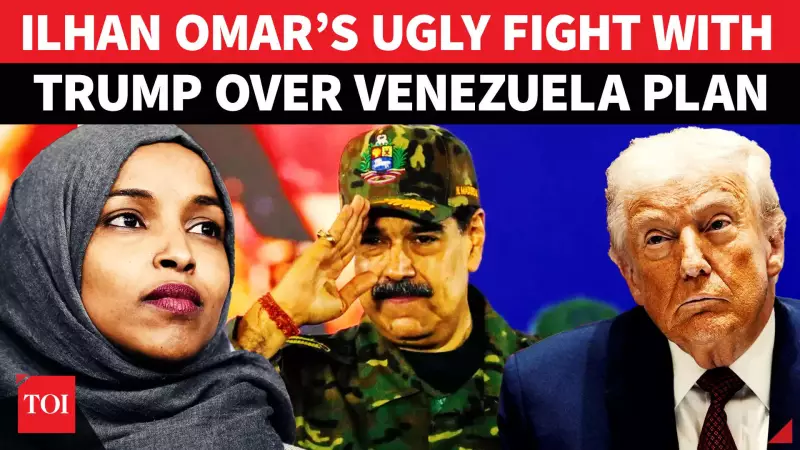
In a significant development highlighting deep political rifts, the United States House of Representatives has decisively rejected attempts to curb President Donald Trump's military authority concerning Venezuela. The vote came amidst escalating rhetoric and actions, including Trump's announcement of a "blockade" targeting sanctioned oil tankers, fueling speculation of a major escalation in the Caribbean region.
Heated Debate and a Close Vote
The legislative battle unfolded on December 18, 2025, on Capitol Hill. Lawmakers voted 216–210 against a resolution introduced by Gregory Meeks, the ranking member of the House Foreign Affairs Committee. The resolution sought to invoke the War Powers Resolution, a law designed to check the president's power to commit armed forces without congressional consent.
Specifically, the measure aimed to require congressional authorisation for any U.S. military action against organisations in the Western Hemisphere designated as terrorist by the president. The narrow defeat of the resolution underscores the intense partisan divisions in Washington over the administration's hardline strategy toward the South American nation.

Ilhan Omar's Fierce Condemnation
During the fiery debate, Democratic Congresswoman Ilhan Omar from Minnesota launched a no-holds-barred attack on the Trump administration's Venezuela policy. She accused the White House of pursuing an unlawful campaign of regime change under the pretext of counter-narcotics operations.
"Only Congress has the authority to declare war," Omar asserted, warning against executive overreach. Her comments reflect a broader concern among critics that the administration's actions, including the recent announcement of a maritime blockade on Venezuelan oil shipments, could draw the nation into a broader conflict without direct approval from the legislative branch.
Implications of the Congressional Stance
The House's rejection of the War Powers measure effectively leaves the Trump administration with a freer hand to pursue its stated objectives in Venezuela. The policy, which the administration frames as a mission to combat narcotics trafficking and restore democracy, is viewed by opponents as a risky intervention that could destabilise the region further.
This vote signals strong continuing support for President Trump's approach among Republican lawmakers, even as Democrats raise alarms about the constitutional process for war and the potential for mission creep. The focus now shifts to how the announced "blockade" will be implemented and whether it will trigger the larger military escalation that many analysts fear.
The situation remains fluid, with the U.S. military posture in the Caribbean under close watch. The debate in Congress is far from over, and further legislative challenges to the administration's Venezuela policy are expected as events develop.






