US Pushback on Zelensky's June Peace Deadline Sends Shockwaves Through Kyiv
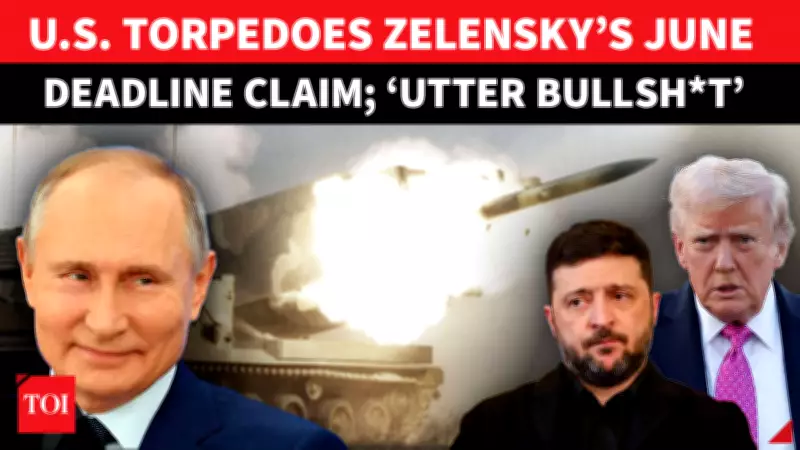
A single statement from Ukrainian President Volodymyr Zelensky sent immediate shockwaves through the ongoing Ukraine conflict, only to be met with a swift and public denial from Washington that has fundamentally reshaped diplomatic dynamics.
The Controversial Deadline Claim
President Zelensky suggested that the United States had established a clear deadline for ending the war, specifically pointing toward June as the target month for achieving a peace deal. This assertion, made during diplomatic discussions, created immediate international attention and raised expectations about potential conflict resolution timelines.
The Ukrainian leader's statement implied coordinated planning between Kyiv and Washington regarding war termination strategies, suggesting a shared understanding of when military operations might conclude through negotiated settlement.

Washington's Swift and Public Rejection
Within hours of Zelensky's remarks, the Trump administration delivered a forceful and unambiguous rejection through NATO envoy Matthew Whitaker. The administration flatly denied any existence of such a timeline, effectively erasing the proposed June deadline in real-time diplomatic discourse.
This public contradiction wasn't merely procedural—it represented a significant diplomatic moment where Washington openly disputed its ally's characterization of their strategic coordination. The speed and clarity of the denial underscored the administration's determination to control the narrative surrounding peace negotiation timelines.
Diplomatic Leverage and Perception Shifts
The reversal carries profound implications beyond simple diplomatic disagreement. When a major power publicly contradicts its wartime ally's statements, it fundamentally alters the perception of unity and shared strategic vision that Kyiv has carefully cultivated throughout the conflict.
As one analyst noted, "When Kyiv's words are contradicted publicly, Moscow pays attention." This dynamic creates immediate strategic consequences, as Russia monitors such divisions to assess potential weaknesses in the Western alliance supporting Ukraine.
In warfare, perception often shapes reality as much as military capabilities. The public disagreement over peace timelines may influence how all parties—Ukraine, Russia, and European allies—calculate their negotiating positions and military strategies moving forward.
Broader Implications for the Conflict
This diplomatic episode reveals underlying tensions in the U.S.-Ukraine relationship regarding war termination strategies. While Washington remains committed to supporting Ukraine's defense, the public disagreement suggests differing views on how and when to pursue diplomatic solutions.
The incident also highlights the complex communication challenges in coalition warfare, where public statements by one ally can create unintended consequences requiring immediate correction by partners. Such public corrections, while necessary for maintaining strategic clarity, inevitably create perceptions of disunity that adversaries may seek to exploit.
As the conflict continues, this exchange demonstrates how diplomatic messaging has become a critical battlefield in itself, with each public statement carrying weight not just for immediate negotiations but for long-term strategic positioning in what remains Europe's most significant military confrontation in decades.