

US Showcases B-2 Stealth Bomber Deployment as Iran Conflict Intensifies
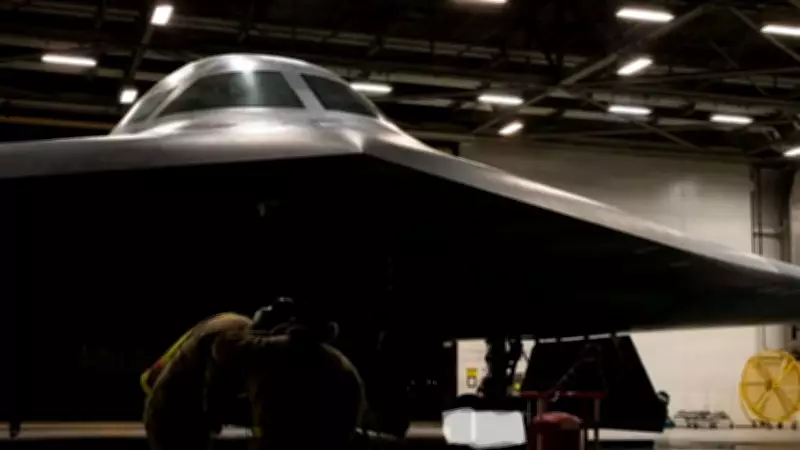
In a striking display of military readiness, the United States Central Command (CENTCOM) has released fresh images of pre-flight checks on the B-2 Spirit stealth bomber. This rare operational glimpse comes as the United States intensifies its air campaign against Iran, signaling that further escalation could be imminent. The visuals, shared on social media platform X, show ground crews meticulously inspecting the aircraft before deployment, highlighting the precision and preparation behind missions involving one of the world's most advanced bombers.
Trump's 48-Hour Deadline and Escalating Rhetoric
The timing of this release is highly significant, coinciding with rising tensions in West Asia. President Donald Trump has sharpened his stance against Iran, setting a firm 48-hour deadline linked to the reopening of the strategic Strait of Hormuz, a key global oil transit route. Speaking to reporters, Trump warned that Tehran must comply or face severe consequences. He expressed frustration over weapons allegedly sent to Iranian protesters earlier this year that never reached them, stating, "I am upset with a certain group of people and they will pay a big price."
On ceasefire efforts, Trump indicated that Iran had made an offer but dismissed it as inadequate. "It's a significant step. It's not good enough," he said, adding that the conflict could end quickly if Iran meets US conditions. Trump has also suggested that Iran could be "taken out" in a single night, underlining the scale of military options being considered. The deadline, set for Tuesday evening US time, has added urgency to an already volatile situation.

US Military Posture and Iran's Defiance
Pete Hegseth, reinforcing the administration's aggressive posture, warned that the scale of US strikes is set to increase further. "Per the president's direction, today will be the largest volume of strikes since day one of this operation. Tomorrow, even more than today. And then Iran has a choice. Choose wisely, because this president does not play around," Hegseth said. His remarks suggest that the US is preparing for sustained and possibly intensified bombardment if diplomatic efforts fail.
Trump claimed that US forces have already carried out over 10,000 combat flights and struck more than 13,000 targets in recent weeks, pointing to a large-scale and expanding air campaign. However, Iran has pushed back against US pressure, rejecting proposals for a temporary ceasefire and signaling readiness to continue the conflict. Foreign ministry spokesperson Esmaeil Baghaei said earlier US proposals were "extremely excessive and unusual and illogical," adding that Tehran had conveyed its own conditions through intermediaries.
Baghaei stressed that diplomacy cannot proceed under military pressure, stating, "Any diplomatic talks are 'absolutely incompatible with ultimatums, crimes, and threats to commit war crimes.'" Iranian officials have made it clear that they are not open to a temporary truce, arguing that such a pause would allow adversaries to regroup. Military spokespersons have also indicated that Iran is prepared for a prolonged conflict.
The Strategic Role of B-2 Stealth Bombers
Against this backdrop, the deployment of B-2 bombers has taken center stage in Washington's strategy. The aircraft has been used to target deeply buried missile facilities, signaling a shift towards dismantling Iran's strategic infrastructure. White House press secretary Karoline Leavitt recently confirmed that B-2 bombers had "dropped 2,000-pound bombs" on underground missile-related sites. "The United States military is now moving to dismantle Iran's missile production," she said.
While details of the strikes remain undisclosed, the use of B-2 bombers points to a focus on hardened targets that are otherwise difficult to destroy. The B-2 Spirit is among the most advanced aircraft ever built, designed to evade detection and operate deep within hostile airspace. Its flying-wing design and radar-absorbing materials reduce its visibility across multiple detection systems, allowing it to penetrate heavily defended zones.

With a crew of just two pilots, the aircraft can carry up to 40,000 pounds of ordnance and has an unrefuelled range of around 6,000 nautical miles. This enables it to carry out long-range missions directly from bases in the United States. A defining feature of the B-2 is its ability to carry the GBU-57 Massive Ordnance Penetrator, a powerful "bunker buster" designed to destroy underground facilities. These bombs penetrate deep below the surface before detonating, making them effective against fortified nuclear sites and missile storage facilities.
Historical Context and Future Implications
The B-2 has a long operational history, having been deployed in conflicts ranging from Kosovo to Afghanistan and Iraq. In recent operations involving Iran, the aircraft has reportedly been used to strike key sites such as Fordo, Natanz, and Isfahan, all known for their hardened structures. Its ability to deliver precise, high-impact strikes has made it a central asset in the US military's arsenal.
The release of pre-flight images, coupled with escalating rhetoric from US leadership, suggests that Washington is preparing for the next phase of its campaign. With deadlines issued, warnings intensified, and diplomatic efforts faltering, the possibility of expanded strikes appears increasingly likely. At the same time, the deployment of B-2 bombers sends a clear strategic message: the United States retains the capability to strike high-value targets deep inside hostile territory.
As tensions continue to rise, the coming days could prove decisive in determining whether the conflict escalates further or moves towards a negotiated settlement. The world watches closely as the US flexes its military muscle with advanced stealth technology, while Iran stands firm in its defiance, setting the stage for a critical juncture in international relations.





