

US Deploys Massive Naval Force to Enforce Maritime Blockade on Iran's Coast
The United States Central Command (CENTCOM) announced on Thursday a significant military deployment to enforce a maritime blockade specifically targeting Iran's ports and coastline. This operation involves a formidable force of more than 12 naval vessels and upwards of 100 aircraft, mobilizing over 10,000 service members to execute the mission.
Clarification on Blockade Scope
In a detailed post on the social media platform X, CENTCOM explicitly clarified the operational parameters. The command stated that this blockade applies strictly to Iranian ports and coastal areas and is not a blockade of the strategic Strait of Hormuz. This distinction is crucial for regional navigation and international trade routes.
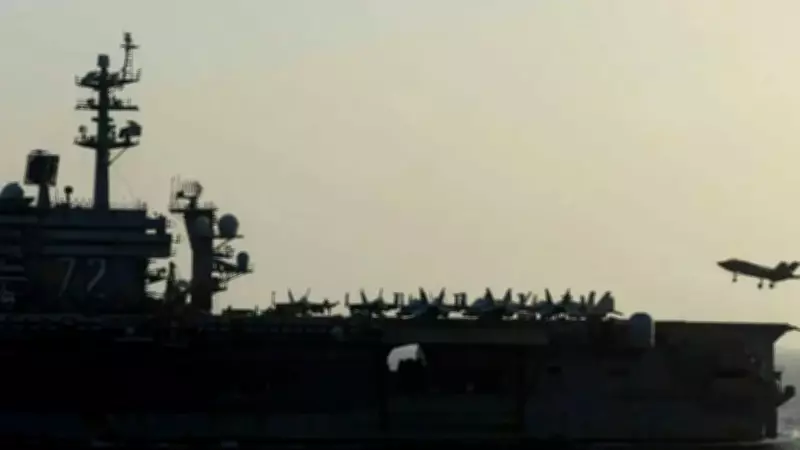
"USS Abraham Lincoln (CVN 72) transits the Arabian Sea as the United States blockades Iran's ports and coastline. U.S. forces are NOT blockading the Strait of Hormuz," CENTCOM's statement read, emphasizing the targeted nature of the operation.

Key Naval Assets and Deployment Details
The deployment is spearheaded by the nuclear-powered aircraft carrier USS Abraham Lincoln, which is currently operating in the Arabian Sea. This Nimitz-class carrier is accompanied by guided-missile destroyers, including the USS Delbert D. Black (DDG 119). These vessels are tasked with the critical roles of monitoring and intercepting ships within Iranian territorial waters.
The USS Abraham Lincoln (CVN-72) is a monumental warship, having entered service in November 1989. Measuring approximately 333 meters in length and displacing over 100,000 tonnes when fully loaded, it ranks among the largest warships ever constructed. Its propulsion system is powered by two Westinghouse A4W nuclear reactors, which drive four steam turbines to generate an impressive 260,000 horsepower.
Political and Military Statements
Former President Donald Trump commented on the ongoing operation, expressing confidence in its execution. "We're doing very well with the blockade. It's very routine for us. The Navy's incredible, and I think the blockade is doing very well. No ship is even thinking about entering. No ship is going past our Navy," he stated, underscoring the perceived effectiveness of the naval presence.
Air Force General Dan Caine, Chairman of the Joint Chiefs of Staff, provided further operational clarity to reporters. He confirmed that the blockade applies universally to all ships, regardless of their nationality, that are heading into or departing from Iranian ports.
"Let me be clear, this blockade applies to all ships, regardless of nationality, heading into or from Iranian ports. The US action is a blockade of Iran's ports and coastline, not a blockade of the Strait of Hormuz. Enforcement will occur inside Iran's territorial seas and in international waters," General Caine elaborated.
Enforcement Protocols and Readiness
General Caine added that the joint US force would actively pursue any Iranian-flagged vessels or any ships attempting to provide material support to Iran. This includes targeting so-called "dark fleet" vessels that carry Iranian oil while evading international sanctions and regulations.
He further emphasized that despite the current pause in hostilities, the US joint force remains on high alert and is fully postured to resume major combat operations "at literally a moment's notice." This statement highlights the ongoing tension and preparedness in the region.
Geopolitical Context
This maritime blockade follows the recent collapse of US-Iran negotiations in Pakistan and occurs amidst a fragile two-week ceasefire. The deployment represents a significant escalation in US military posture toward Iran, reflecting ongoing diplomatic strains and security concerns in the Middle East.
The operation underscores the United States' commitment to enforcing maritime security measures while carefully delineating its actions from broader regional chokepoints like the Strait of Hormuz, which is vital for global oil shipments.

