US House Erupts in Unprecedented Fury Over Alleged Sharia Law 'Push'
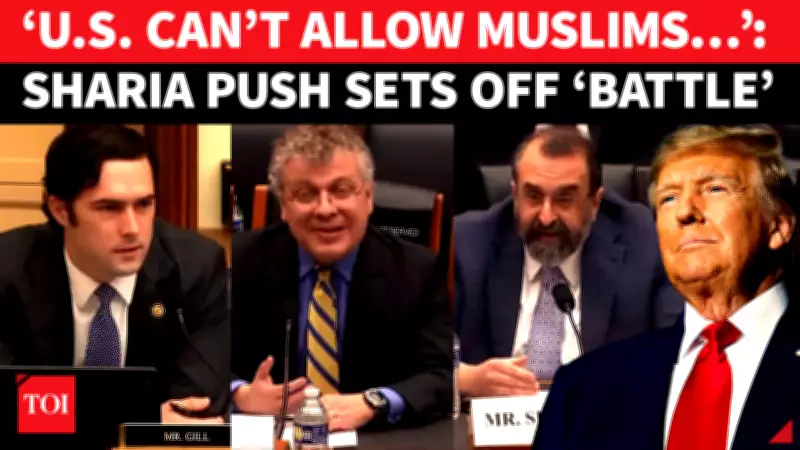
The chamber of the United States House of Representatives was thrown into chaos on February 16, 2026, as Texas lawmaker Brandon Gill delivered a blistering and highly controversial speech that ignited a fierce political firestorm. The address, titled "Sharia-Free America," warned in stark terms that political Islam and Sharia law pose a direct and imminent threat to the U.S. Constitution and the nation's foundational principles.
Fiery Speech Blames Immigration Policies
In his impassioned remarks, Representative Gill explicitly blamed recent U.S. immigration policies for what he described as importing "radical Islam" into the country. He argued that these policies have created a pathway for ideologies that are fundamentally incompatible with American democracy and the rule of law as established by the Constitution.
The speech was met with thunderous approval from his supporters in the chamber, who cheered and applauded the hardline stance. However, the reaction was not unanimous, sparking immediate and intense backlash from critics across the political spectrum.

Critics Condemn Speech as Divisive and Fear-Driven
Opponents and political adversaries swiftly condemned Gill's words, labeling them as dangerously divisive, fear-driven rhetoric that stokes Islamophobia and undermines national unity. They argued that the speech mischaracterizes the vast majority of Muslim Americans and immigrants, and unnecessarily inflames tensions without substantive evidence of a systemic threat.
The debate highlighted deep ideological rifts within Congress regarding national security, immigration reform, and religious freedom. The incident has quickly become a flashpoint in the ongoing cultural and political wars, with implications for upcoming legislative sessions and the broader national discourse on these critical issues.
This unprecedented fury in the House underscores the volatile nature of current U.S. politics, where discussions on immigration, religion, and constitutional integrity can erupt into highly charged confrontations with significant repercussions for domestic policy and international perceptions.