

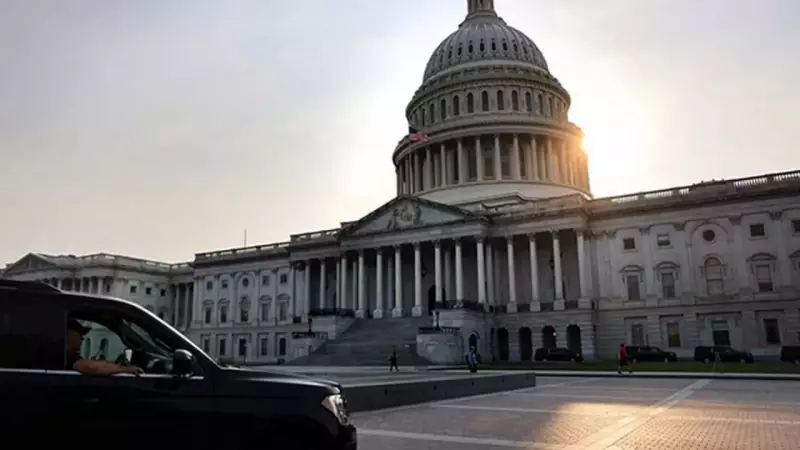
In a significant and closely contested move, the United States House of Representatives has approved a bill that seeks to impose a nationwide ban on gender-affirming medical treatments for minors. The legislation, which passed by a razor-thin margin, now moves to the Senate where its future remains uncertain.
A Narrow Victory for Republican-Backed Legislation
The bill, officially known as the "Protect Minors Act," was passed on Wednesday by a vote of 216 to 211. This narrow victory underscores the deep partisan divide on the issue. The legislation was championed by Republican Congresswoman Marjorie Taylor Greene, who argued it is necessary to protect children from making irreversible medical decisions.
"This important bill...will criminalize gender-affirming care on minors, not adults, on minors who have not yet grown up to make adult decisions," Greene stated before the crucial vote. She framed the measure as a fulfillment of campaign promises and a reflection of former President Donald Trump's policy direction.

What the Bill Specifically Proposes
The legislation takes a hardline stance against several medical procedures for transgender youth. It outlaws what it terms as "genital or bodily mutilation of a minor," a definition that broadly encompasses surgeries intended to align a minor's physical appearance with their gender identity, if it differs from their biological sex at birth.
Beyond surgical interventions, the bill also places restrictions on pharmacological treatments. It specifically targets the use of puberty blockers, a common part of gender-affirming care for adolescents. The penalties for violating this proposed law are severe. Any healthcare professional found performing or facilitating these banned procedures could face up to 10 years in federal prison alongside substantial financial penalties.
Interestingly, the bill explicitly criminalizes female genital mutilation but, as critics point out, continues to allow non-consensual surgeries on intersex children—a point of major contention for LGBTQ+ advocacy groups.
Political Backdrop and Strong Opposition
The bill's passage is seen as a direct extension of the cultural and political battles being waged around transgender rights in America. Former President Donald Trump campaigned aggressively against transgender-inclusive policies during the 2024 election cycle. His administration has already taken steps to roll back federal recognition of diverse gender identities and limit transgender participation in areas like military service and school sports.
The response from Democratic lawmakers and transgender rights advocates has been swift and fierce. Sarah McBride, the first openly transgender person elected to Congress, condemned the bill. "All Republican politicians care about is making the rich richer and attacking trans people," the Delaware representative told reporters outside the Capitol.
Advocacy group Advocates for Trans Equality (A4TE) issued a strong statement, accusing the legislation of stripping away bodily autonomy. "The bill is not about protecting children -- it is about enforcing outdated ideas of sex and gender through coercion and violence," said A4TE health policy analyst Sinead Murano-Kinney.
The bill's journey is far from over. While it has cleared the Republican-controlled House, its fate in the Senate is highly uncertain, making it a pivotal issue to watch in the ongoing US political discourse.






