

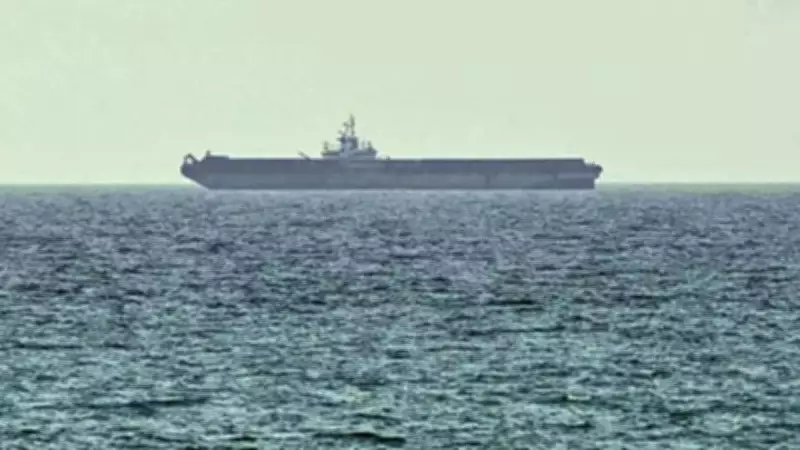
US Navy Reports Intercepting 10 Iranian Vessels Amid Gulf Blockade
In a significant development, the US military announced on Thursday that it had successfully turned back 10 vessels attempting to depart from Iranian ports during the initial 48 hours of its naval blockade. This enforcement action comes as part of a broader strategy to increase pressure on Tehran, even as maritime tracking data introduces complexities to the official account.
Official Statement and Enforcement Details
US Central Command, in a post on social media platform X, stated, "Ten vessels have now been turned around, and ZERO ships have broken through since the start of the US blockade on Monday." The latest interception involved an Iranian-flagged cargo vessel that was redirected by the guided-missile destroyer USS Spruance (DDG-111) after it attempted to evade the blockade on Wednesday.
According to military officials, this cargo vessel had departed from Bandar Abbas, exited the strategic Strait of Hormuz, and was transiting along Iran's coastline before being compelled to turn back. CENTCOM had previously reported nine vessels being intercepted before adding this tenth case, underscoring the ongoing enforcement efforts.

Maritime Tracking Data Reveals Discrepancies
However, data from maritime analytics firm Kpler complicates the US military's narrative. Tracking information from Tuesday indicated that at least three ships sailing from Iranian ports crossed the Strait of Hormuz, with some later reversing course. These vessels were among at least seven Iran-linked ships that transited the waterway after the blockade officially commenced at 1400 GMT on Monday.
US officials have clarified that the blockade is enforced beyond the strait, specifically in the Gulf of Oman. This means vessels may pass through the chokepoint but still face interception later, potentially explaining the discrepancies between the military's reports and the tracking data.
Background and Strategic Implications
The full maritime blockade was announced by the Trump administration following failed negotiations in Islamabad, with the primary aim of halting sea trade linked to Iran. US Central Command emphasized that the blockade is being enforced "impartially against all vessels of all nations" entering or leaving Iranian ports, with naval forces prepared to compel compliance through necessary measures.
Since the conflict involving Iran, the United States, and Israel began on February 28, Tehran's forces have largely restricted maritime traffic through the Strait of Hormuz, a critical energy chokepoint. This has occurred amid escalating regional tensions, further complicating global trade routes.
Diplomatic Efforts Amid Ongoing Tensions
According to reports from the New York Post, diplomatic talks between the US and Iran aimed at ending the conflict, which is currently under a fragile ceasefire, could resume later this week in Pakistan. These discussions are set to take place even as the naval blockade remains in effect and tensions continue to flare, highlighting the delicate balance between military enforcement and diplomatic outreach.
The situation underscores the broader geopolitical stakes in the region, with the US leveraging naval power to curb Iranian maritime activities while navigating complex tracking data and international diplomacy. As events unfold, the effectiveness and implications of this blockade will be closely monitored by global observers.

