US Defence Secretary Pete Hegseth has declined to confirm whether the Pentagon will release video footage from a controversial military operation in the Caribbean that resulted in the deaths of eleven people. The September 2 strike on an alleged drug-smuggling vessel has come under intense scrutiny following reports that a second missile was fired at survivors of the initial attack.
"We're Reviewing the Process," Says Defence Secretary
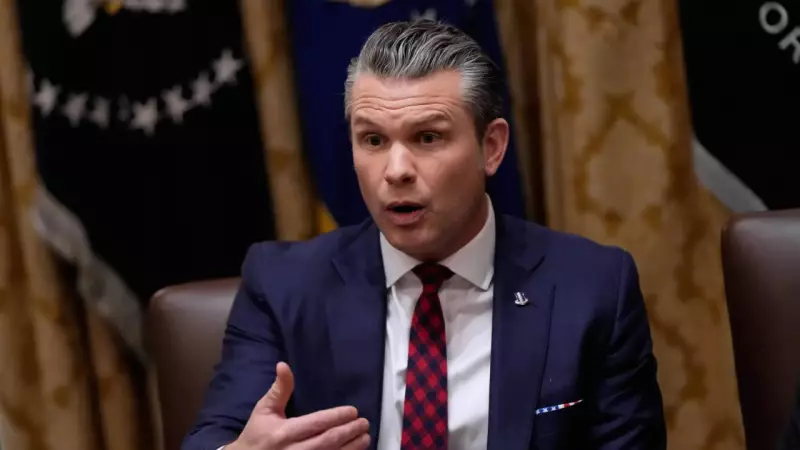
Speaking at a defence forum hosted by the Ronald Reagan Presidential Library in California on Saturday, Hegseth was non-committal about releasing the footage. "We're reviewing the process, and we'll see," Hegseth stated during a Q&A session. He emphasised that any decision to release the video would require careful consideration, adding, "Whatever we were to decide to release, we'd have to be very responsible about reviewing that right now."
This stance comes despite an earlier assurance from President Donald Trump, who said on Wednesday, "I don't know what they have, but whatever they have we'll certainly release, no problem." Hegseth maintained that the review is ongoing.

The Controversial Second Strike and Conflicting Accounts
The operation's controversy centres on the second missile strike. According to a report by The Washington Post last week, two survivors who were attempting to climb back onto the damaged vessel were hit by a follow-up missile. The White House has confirmed this second strike occurred.
However, both the White House and Hegseth deny that the Defence Secretary ordered it. Hegseth reiterated that the authority for the second missile lay with Navy Admiral Frank “Mitch” Bradley, who led the operation. "In this particular case, it was well within the authorities of Adm. Bradley," Hegseth asserted.
Lawmakers were shown the video of the incident in a closed-door briefing on Thursday. Following the session, Senator Tom Cotton and Representative Jim Himes told the press that Admiral Bradley stated he had not been ordered to "leave no survivors." This contradicts a Post report, citing an anonymous source, which claimed Hegseth issued an order that "everyone on the boat be taken out."
Hegseth forcefully rejected this allegation on Saturday. "You don't walk in and say 'Kill them all.' It's just patently ridiculous," he said, characterising the report as an attempt to create a caricature of his decision-making. Nevertheless, he expressed full support for the strike, stating he "would have made the same call myself."
Legal Scrutiny and the Broader Campaign
Sources familiar with the video content told CBS News that the two survivors were waving their arms overhead before the second impact. This gesture could have been interpreted as either a call for help or a warning, raising serious legal questions. Some international legal experts have questioned whether the second strike could constitute a war crime.
The September 2 attack was the first in an ongoing series of vessel strikes targeting suspected drug smugglers in the Caribbean and Eastern Pacific. Pentagon figures indicate at least 87 people have been killed in 22 such strikes. The administration has yet to publicly release concrete evidence proving the targeted vessels were carrying narcotics.
In his speech, Hegseth vigorously defended the broader military campaign. "We've been clear, if you're working for a designated terrorist organization, and you bring drugs into this country in a boat, we will find you and we will sink you," he declared. He framed the mission in stark terms, adding, "We are killing them. We will keep killing them so long as they are poisoning our people with narcotics so lethal they're tantamount to chemical weapons."
As the Pentagon continues its internal review, the decision on whether to release the video footage remains pending, leaving critical questions about the operation's conduct unanswered in the public domain.