US Revokes Green Cards of Slain Iranian Commander Qasem Soleimani's Relatives
The United States has taken a significant step in escalating tensions with Iran by revoking the green cards of two relatives of the late Iranian commander Qasem Soleimani. This action underscores the ongoing friction between Washington and Tehran, which has intensified since Soleimani's death in a US drone strike in 2020.
Details of the Revocation and Custody
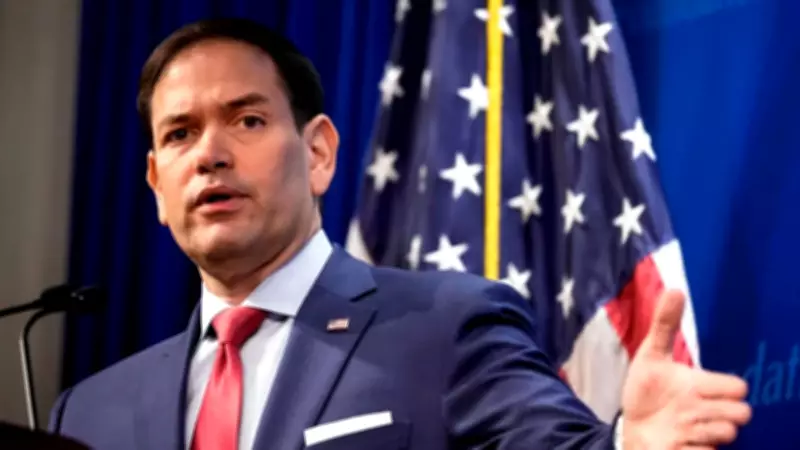
US Secretary of State Marco Rubio announced that Hamideh Soleimani Afshar, identified as Soleimani's niece, and her daughter have been taken into custody by Immigration and Customs Enforcement (ICE). They are now facing deportation from the United States. Rubio stated that this decision is part of the Trump administration's broader strategy to increase pressure on Iran amid ongoing conflicts in the Middle East.
In a statement, Rubio accused Afshar of actively supporting the Iranian government while residing in the US. "While living in the United States, she promoted Iranian regime propaganda, celebrated attacks against American soldiers and military facilities in the Middle East, praised the new Iranian Supreme Leader, denounced America as the 'Great Satan,' and voiced her unflinching support for the Iranian Revolutionary Guard Corps, a designated terror organization," the statement reads.

Lifestyle and Social Media Evidence
Rubio further highlighted that Afshar had been living a lavish lifestyle in Los Angeles while expressing these views. "Afshar Soleimani pushed this propaganda for Iran's terrorist regime while enjoying a lavish lifestyle in Los Angeles, as attested to by her frequent posting on her recently deleted Instagram account," he continued. In a post on X, Rubio emphasized, "Until recently, Hamideh Soleimani Afshar and her daughter were green card holders living lavishly in the United States. This week, I terminated both Afshar and her daughter's legal status and they are now in ICE custody, pending removal from the United States."
He added a firm stance from the administration: "The Trump Administration will not allow our country to become a home for foreign nationals who support anti-American terrorist regimes."
Background and Fraudulent Claims
According to the Department of Homeland Security (DHS), the two women entered the US separately in 2015. Afshar arrived on a tourist visa, while her daughter came on a student visa. Afshar later applied for naturalization in 2025 and disclosed multiple trips to Iran during this process.
Acting Assistant Homeland Security Director Lauren Bis commented on this, stating, "Her trips to Iran illustrate her asylum claims were fraudulent." She reinforced the principle behind the revocation: "It is a privilege to be granted a green card to live in the United States of America. If we have reason to believe a green card holder poses a threat to the US, the green card will be revoked."
Broader Context of US-Iran Tensions
This action occurs against a backdrop of rising tensions between the US and Iran. US President Donald Trump recently issued a warning to Tehran, demanding a ceasefire deal and the reopening of the Strait of Hormuz. This strategic passage carries approximately 20 percent of the world's oil, and restrictions have already contributed to higher global fuel prices.
In a social media post, Trump declared, "Remember when I gave Iran ten days to MAKE A DEAL or OPEN UP THE HORMUZ STRAIT." He added with urgency, "Time is running out — 48 hours before all Hell will reign down on them. Glory be to GOD!" This rhetoric highlights the volatile nature of current US-Iran relations, with the green card revocation serving as another flashpoint in this ongoing geopolitical struggle.