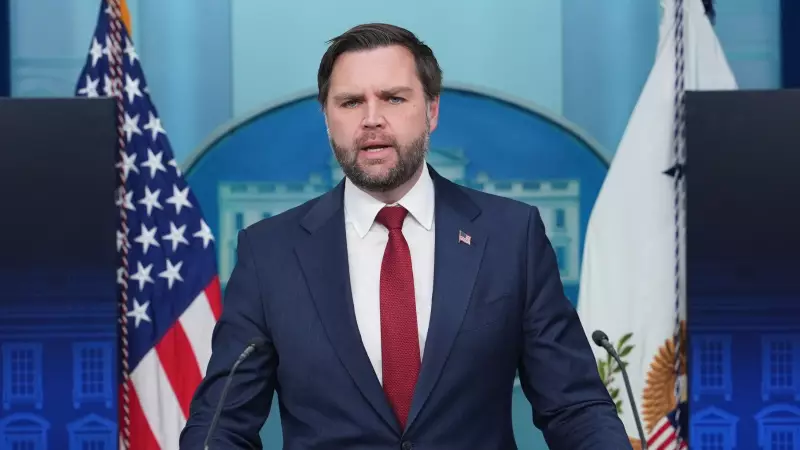
US Senator JD Vance, a prominent Republican and close ally of former President Donald Trump, has levelled serious allegations against the United Arab Emirates (UAE). Vance claims the Gulf nation exerted pressure on a leading British university to restrict funding for academic research focused on the Muslim Brotherhood.
The Core Allegation: Foreign Influence on Academic Freedom
The controversy centres on the University of Bristol in the United Kingdom. According to Senator Vance, the UAE used its financial leverage to influence the university's decisions regarding which research projects received support. The specific target was a proposed study into the Muslim Brotherhood, a transnational Islamist movement founded in Egypt.
Vance made these claims during a session of the Senate Banking Committee, which was discussing a broader bill concerning the US International Development Finance Corporation. He argued that this incident is a clear example of how foreign governments can compromise academic independence in Western institutions. The senator stated his intention was to highlight potential risks to intellectual freedom, not to single out the UAE exclusively.

Context and the University's Response
The Muslim Brotherhood, designated as a terrorist organisation by several countries including the UAE, Saudi Arabia, and Egypt, remains a contentious subject. However, it is not universally banned; many nations and scholars approach it as a political movement. This discrepancy makes research into its ideology and activities both sensitive and valuable.
In response to the allegations, a spokesperson for the University of Bristol issued a statement. The university firmly denied that any donor, including the UAE, had ever dictated or interfered with its research agenda. The spokesperson emphasised that all research funding is accepted strictly in accordance with the university's robust governance policies and its unwavering commitment to academic freedom. The university did not comment on the existence or status of the specific research project mentioned by Vance.
Broader Implications for Geopolitics and Academia
This incident throws a spotlight on the complex intersection of geopolitics, foreign funding, and university research. Vance's allegations suggest a scenario where a nation's political stance on a group could indirectly shape scholarly inquiry abroad through financial channels.
The debate raises critical questions for academic institutions worldwide:
- How can universities safeguard their research independence while securing essential international funding?
- What protocols are necessary to ensure donor relationships do not create subtle or overt pressure on scholarly pursuits?
- Should there be greater transparency about the sources of major research grants and the conditions attached to them?
While the University of Bristol has defended its integrity, the story, amplified by a US senator's platform, fuels an ongoing global conversation. It underscores the challenges institutions face in maintaining open intellectual inquiry in an era of complex international partnerships and geopolitical tensions. The outcome of this discussion could influence policies on research funding and academic cooperation for years to come.