

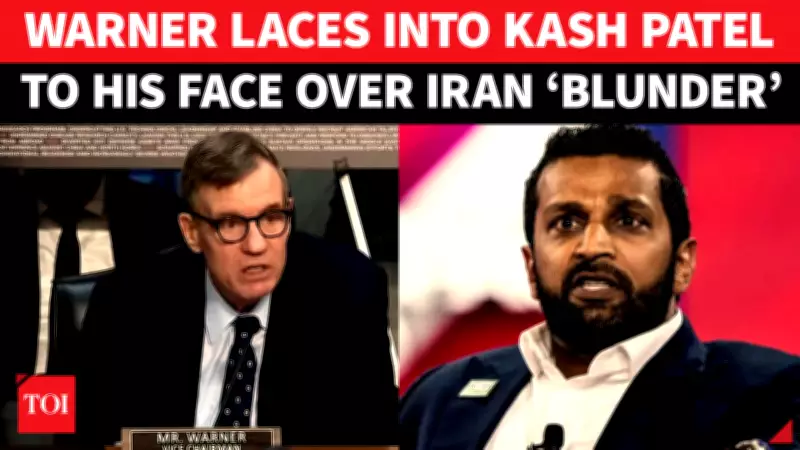
Senator Warner Confronts FBI and Intelligence Chiefs in Explosive Senate Hearing Over Iran War
In a dramatic and tense Senate hearing, U.S. Senator Mark Warner engaged in a fierce clash with FBI Director Kash Patel and Director of National Intelligence Tulsi Gabbard. The exchange highlighted significant national security concerns and partisan divisions as lawmakers scrutinized the handling of threats from Iran, election-related issues, and the escalating conflict in the region.
Warner Blasts Patel Over FBI Agent Firings Before Iran Conflict
Senator Warner launched a sharp critique against FBI Director Kash Patel, accusing him of making a critical misstep by dismissing FBI agents with specialized expertise in Iran just prior to the outbreak of the war. Warner argued that this move severely compromised the United States' ability to assess and respond to Iranian threats effectively. "Firing key personnel with Iran knowledge at such a crucial juncture was a disaster for our national security," Warner stated during the hearing, emphasizing the timing of these actions as particularly detrimental.
Gabbard Pressed on Intelligence Assessments Regarding Tehran
Director of National Intelligence Tulsi Gabbard faced intense questioning from Senator Warner regarding the intelligence community's assessments of Tehran's capabilities and intentions. Warner pressed Gabbard for detailed explanations on how these evaluations were conducted and whether any warnings were overlooked or underestimated in the lead-up to the conflict. The scrutiny underscored ongoing concerns about the accuracy and timeliness of intelligence reports in preventing or mitigating the war's escalation.

Deep Partisan and National Security Fault Lines Exposed
The hearing revealed deep-seated partisan divides and national security fault lines, with lawmakers from both sides demanding accountability and transparency. Key issues discussed included:
- The impact of personnel changes at the FBI on counter-Iran operations.
- The role of intelligence assessments in shaping U.S. policy towards Iran.
- Election security concerns linked to foreign interference.
- The broader implications of the widening war for global stability.
These discussions highlighted the complex challenges facing U.S. agencies in managing international conflicts and domestic security simultaneously.
Context of Escalating Iran War and Regional Tensions
The hearing took place against a backdrop of escalating violence in the Middle East, with recent reports detailing:
- Iranian missile attacks targeting locations in Dubai, Doha, and other Gulf states.
- Retaliatory strikes by Iran following the assassination of key figures like Larijani.
- Explosions at the U.S. Embassy in Baghdad from rocket and drone assaults.
- Claims of significant American and Israeli casualties and military resource depletion.
These events added urgency to the lawmakers' inquiries, as they sought to understand how intelligence and law enforcement failures may have contributed to the current crisis.
Conclusion: The explosive Senate hearing underscored critical failures in U.S. intelligence and law enforcement preparedness regarding Iran. As Senator Warner and other lawmakers continue to demand answers, the focus remains on improving coordination and expertise to prevent future national security disasters in an increasingly volatile global landscape.






