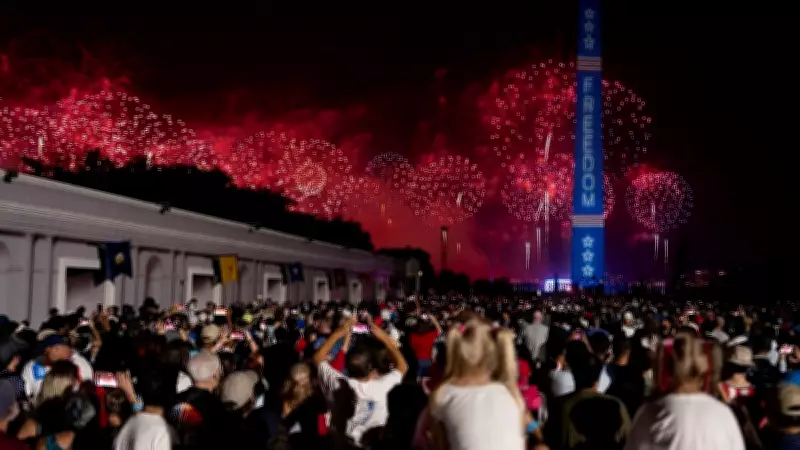
Washington's air quality deteriorated sharply on Sunday, July 5, 2026, after record-breaking Independence Day fireworks displays. The Air Quality Index (AQI), monitored by the Environment Protection Authority, reached 171 for the national capital, more than double the reading recorded on Saturday. This level is classified as unhealthy for sensitive groups, including children, the elderly, and individuals with respiratory conditions.
Record Fireworks Drive Pollution Spike
The surge in air pollution is directly linked to the extensive fireworks shows held across the city to celebrate Independence Day. Fireworks release fine particulate matter (PM2.5), sulfur dioxide, and other pollutants that can linger in the air for hours. According to the Environment Protection Authority, the AQI of 171 on Sunday contrasts sharply with Saturday's reading, which was below 85, indicating moderate air quality. The spike highlights the environmental cost of large-scale pyrotechnic displays.
Health Advisories Issued
Local health officials have advised residents, especially those with asthma, heart disease, or other chronic conditions, to limit outdoor activities and keep windows closed. The Washington Department of Health stated that exposure to such elevated PM2.5 levels can cause coughing, throat irritation, and shortness of breath. Schools and daycare centers have been urged to cancel outdoor playtime until air quality improves.

Comparison with Previous Years
This year's fireworks were described as record-breaking in terms of both scale and duration. An official from the National Park Service noted that the number of fireworks shells launched was 20% higher than in 2025. Historical data shows that AQI spikes after Independence Day are common, but the 2026 reading of 171 is among the highest recorded in the past decade. In 2025, the AQI on July 5 was 145, while in 2024 it was 132.
Environmental Groups Call for Alternatives
Environmental advocacy groups have renewed calls for cleaner alternatives to traditional fireworks, such as drone light shows or laser displays. "The celebration should not come at the cost of public health," said a spokesperson for the Sierra Club. They emphasized that vulnerable populations bear the brunt of the pollution. However, many residents still favor traditional fireworks, citing cultural significance and spectacle.
Weather Conditions Worsen Impact
Meteorologists reported that calm winds and a temperature inversion on Sunday morning trapped pollutants close to the ground, exacerbating the poor air quality. The National Weather Service predicted that air quality would gradually improve by Monday afternoon as winds pick up. Until then, residents are encouraged to use air purifiers and avoid strenuous outdoor exertion.
Long-Term Implications
The incident has sparked discussions about balancing festivities with environmental and health considerations. City officials are considering measures such as limiting fireworks display times, promoting community-based displays to reduce individual backyard fireworks, and investing in green fireworks that produce less smoke. The Environment Protection Authority will continue to monitor air quality and issue updates.