New York State Assemblyman Zohran Kwame Mamdani, a prominent Democratic socialist representing Queens, has launched an ambitious campaign to fundamentally transform how New York City's public schools are funded. The 31-year-old politician, son of renowned anthropologist Mahmood Mamdani, is challenging the establishment with his revolutionary $3 billion funding proposal that could reshape education for 1.1 million students.
The Campaign for Educational Justice
Mamdani's political journey began with his unexpected 2020 election victory against 25-year incumbent Aravella Simotas. Since taking office, he has emerged as a vocal advocate for educational reform, drawing from his experience as a former public school student and housing counselor. His current campaign targets what he describes as "the systemic underfunding of New York City's public schools" through legislative action that would redirect substantial state resources to the city's educational system.
The assemblyman's proposal specifically addresses the funding gap created by the Foundation Aid formula, which was established following the 2006 Campaign for Fiscal Equity court ruling. Despite this legal victory mandating adequate school funding, Mamdani argues that New York City schools continue to be shortchanged by approximately $3 billion annually compared to their upstate counterparts.

Challenging the Political Establishment
Mamdani's approach represents a significant departure from traditional education advocacy methods. Rather than working within existing political channels, he has chosen to confront Governor Kathy Hochul and the Democratic establishment directly. "We have to be willing to break with the way things have always been done," Mamdani stated, emphasizing his strategy of building political power through confrontation rather than compromise.
The young assemblyman's tactics include withholding votes on gubernatorial appointments and leveraging his position within the state legislature to force action on school funding. This assertive stance has positioned him at the forefront of a new generation of progressive politicians willing to challenge party leadership on core issues like education equity.
The Human Impact of Funding Disparities
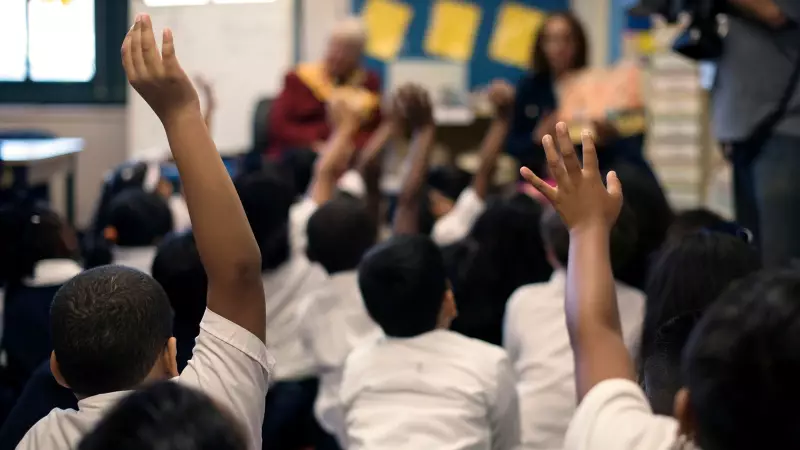
Behind the political battle lies the stark reality of New York City's classroom conditions. Mamdani highlights how funding shortages directly impact students through overcrowded classrooms, reduced arts programs, and inadequate support services. The assemblyman connects these educational deficiencies to broader social justice issues, noting that the students most affected by underfunding often come from low-income families and communities of color.
His proposal comes at a critical moment as New York City schools continue to grapple with the aftermath of pandemic-related learning loss and ongoing resource challenges. The $3 billion in additional funding would represent one of the largest single infusions of education resources in the city's history, potentially transforming everything from classroom sizes to teacher salaries and facility improvements.
As the debate over educational equity intensifies, Mamdani's campaign has become a focal point for broader discussions about resource allocation, political power, and the future of public education in America's largest school system. The outcome of this legislative battle could set precedents for how cities across the United States approach school funding reform in the coming years.