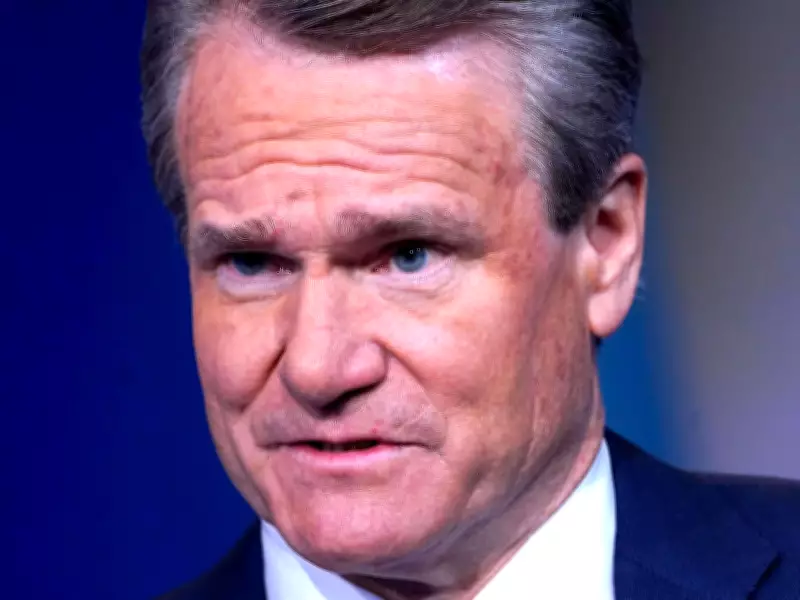
Bank of America CEO Provides Measured Outlook on AI's Labor Market Impact
Bank of America CEO Brian Moynihan has presented a more nuanced perspective regarding widespread anxieties about artificial intelligence fundamentally reshaping the global labor market. Speaking on the This is Working podcast, as reported by Fortune, Moynihan acknowledged that AI will undoubtedly disrupt numerous industries but argued that historical patterns suggest technological waves rarely lead to wholesale employment elimination.
Historical Context: Technology and Job Growth
Moynihan pointed to a specific historical parallel to illustrate his point. He referenced a 1960s-era prediction that the rise of computers would eradicate management and manufacturing roles. "In 1969, there were 80 million people working in the United States. In 2019, there were 160 million people," Moynihan stated. "Think about the amount of technology that applied in America from that time to 2019." His central argument is that despite dire warnings accompanying past technological shifts, total U.S. employment actually doubled over that 50-year period, demonstrating the economy's capacity to adapt and create new roles.
AI as Augmentation, Not Replacement
The banking executive strongly emphasized that artificial intelligence should be viewed primarily as an augmentation of human capabilities, not a direct replacement for workers. He provided concrete examples from within Bank of America, where AI is already actively deployed in trading groups, auditing departments, and legal work.

"This allows flight time to shorten, so the knowledge time picks up," Moynihan explained. "That’s how to help young teammates or junior teammates in that area, and in all areas in our company. By the way, it’s going to affect senior people." His view suggests AI can accelerate learning curves and enhance productivity across all experience levels within an organization.
Alignment with Broader Banking Leadership Views
Moynihan's cautiously optimistic stance finds resonance with other prominent figures in the financial sector. JPMorgan Chase CEO Jamie Dimon has similarly suggested that AI could eventually enable people to work fewer hours while enjoying longer, healthier lives. However, Dimon has also issued a critical caveat, warning that society must proactively prepare for transitional job displacement through comprehensive retraining programs and supportive government policies. He cautioned that failure to do so could risk significant social unrest.
Accelerating AI Adoption in Global Banking
The practical integration of AI within the banking industry is advancing rapidly. According to the Evident AI Index, which was updated in October 2025, Bank of America ranks among the global top 10 institutions for AI talent, innovation, leadership, and transparency. The index currently places JPMorgan Chase at the forefront of the sector, followed by Capital One and the Royal Bank of Canada, highlighting a competitive race towards AI integration among the world's leading financial firms.
This collective movement underscores a strategic industry shift where AI is no longer a speculative future technology but a present-day operational tool being leveraged for efficiency, risk management, and enhanced client services.