Ethanol Blending Myths Debunked by Industry Experts
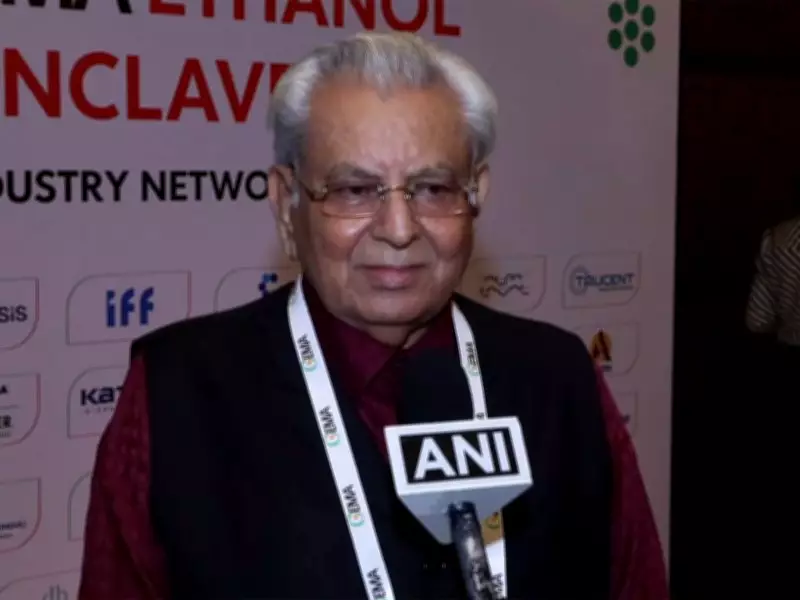
Concerns that ethanol-blended petrol damages vehicle engines are based on myths and not supported by technical evidence, according to Grain Ethanol Manufacturers Association (GEMA) President Chandra Kumar Jain. He asserts that the government's ethanol blending policy was implemented only after four years of detailed research and testing.
Government Research Behind Policy
Speaking with ANI, Jain said people should not believe misconceptions surrounding ethanol-blended fuel, adding that the government adopted the policy only after extensive studies and consultations with experts.
"Government is not foolish. Government is very intelligent. They have done four years of study. Then they executed it. All experts were sitting there. After the studies, research and experiments, it was implemented," Jain said.

No Engine Failure Evidence
Ethanol-blended fuel, he said, does not cause engine failure and cited the experience of vehicles operating at ethanol plants.
"I want to give only one message. Your car can be three years old, five years old or seven years old. Tell me, has there been any defect from the petrol tank to the engine? There can be shock absorber failure or alignment issues, but there is no engine problem. Even 10-year-old cars in my plant are working fine without any engine failure," he said.
Fuel Efficiency Concerns Addressed
He also addressed concerns over fuel efficiency, saying NITI Aayog had estimated that ethanol blending could result in a two to four per cent reduction in mileage. However, he argued that several other factors, including traffic congestion, driving habits and vehicle maintenance, also affect fuel efficiency.
"Why are we counting only the two to four per cent drop? Red lights, traffic jams, driving habits and delayed servicing also reduce mileage. Even if there is a two to four per cent loss, I am saving the country, saving foreign exchange, improving the rural economy and reducing emissions," he said.
Industry Development and Capacity
Jain was speaking on the sidelines of an ethanol industry conclave, which brought together ethanol manufacturers, technology partners and supply chain stakeholders to discuss ways to improve the efficiency of ethanol plants. According to him, India's grain ethanol industry is only three to four years old and has now entered the second phase of its development.
"The first phase was setting up the plants. The second phase is improving efficiency by reducing water consumption, lowering power consumption and improving processing," he said.
Jain said India has already established sufficient ethanol production capacity to meet the country's current demand. "The capacity is already set up at 1,800 crore litres, while current consumption is around 1,200 crore litres. Capacity is more than the requirement and we have enough feedstock to support it," he said.
Future of Higher Ethanol Blends
He added that India now needs to improve plant efficiency to match leading ethanol-producing countries such as Brazil and the United States. Referring to the future of higher ethanol blends, Jain said the rollout of E85 fuel would happen gradually over the next few years as flex-fuel vehicles and dispensing infrastructure expand.
"As in Brazil, petrol pumps will eventually have two nozzles. One will supply the base fuel, while the other will supply E85. But this will happen gradually over the next two, three or four years as vehicles, dispensing infrastructure and production develop," he said.
Cost Benefits and Price Trends
Jain also said E85 is currently available at around Rs 80 per litre, while E20 is available at around Rs 100 per litre. As production efficiency improves over time, ethanol prices are expected to decline further, making higher ethanol blends increasingly cost-effective, he added.