

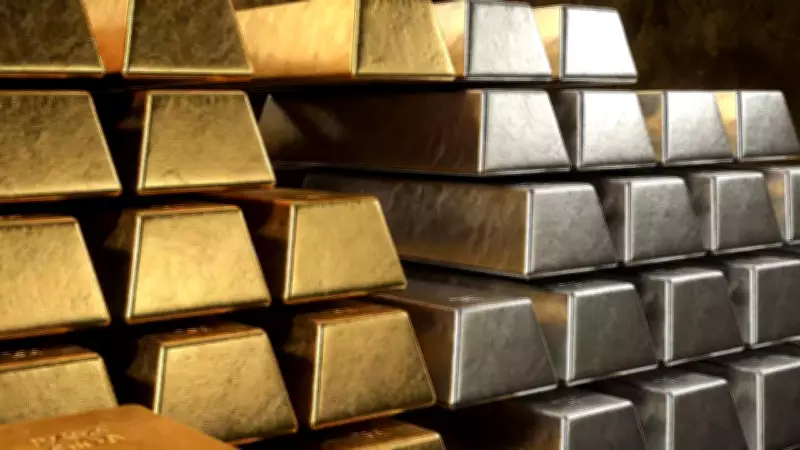
Gold and Silver Prices Experience Sharp Declines in Volatile Trading Session
Precious metals markets witnessed significant downward pressure on Tuesday as gold prices declined 1% and silver prices plunged 2.7% in international trading. This correction comes after both metals had achieved unprecedented record highs earlier this year, with gold surging 101% and silver skyrocketing 167% in dollar terms over the past 18 months.
Market Factors Driving the Precious Metals Sell-Off
The decline in gold and silver values can be attributed to multiple converging factors. The US dollar index advanced 0.2% against major currencies, making dollar-denominated bullion more expensive for international investors. Additionally, several key Asian markets including mainland China, Hong Kong, Singapore, Taiwan and South Korea remained closed for Lunar New Year holidays, while US markets were shut for Presidents' Day, resulting in thinner trading volumes that amplified price movements.
Spot gold slipped 0.9% to $4,947.98 per ounce during the session, while US gold futures for April delivery dropped more sharply by 1.6% to $4,966.80 per ounce. Silver experienced even greater volatility, with spot silver declining 2.7% to $74.51 per ounce after falling more than 3% earlier in the trading day.

Expert Recommendations: Profit Booking and Risk Assessment
Wealth advisors and market strategists are now urging investors who have realized substantial gains from the remarkable rally in precious metals to consider booking profits. After both gold and silver more than doubled in value over the past year and a half, experts believe the current risk-reward balance may no longer justify maintaining large positions at these elevated levels.
"The unprecedented surge in precious metals attracted a flood of new participants to the market," noted one market analyst. "However, with gold now down 7.8% from its January 2026 peak and silver plunging 36.63% from recent records, investors should exercise caution when navigating this volatile environment."
Long-Term Outlook and Federal Reserve Influence
Despite the current correction, most market experts maintain that the bull run for precious metals remains intact for the long term. Gold continues to hold appeal as a safe-haven asset, particularly in uncertain economic climates. According to CME's FedWatch Tool, investors are currently pricing in three quarter-percentage-point interest rate cuts by the US Federal Reserve this year, which typically benefits non-yielding assets like gold.
In rupee terms, the rally has been even more pronounced, with gold rising 116% and silver climbing 198% over the same 18-month period. MCX Gold and MCX Silver futures, along with gold and silver ETFs, have been trending downward for several days as investors take profits at higher levels.
Broader Precious Metals Market Performance
The sell-off extended beyond gold and silver to other precious metals. Spot platinum eased 0.8% to $2,025.05 per ounce, while palladium dropped 1.5% to $1,698.10 per ounce. This broader weakness suggests a sector-wide reassessment of valuations after the extraordinary gains witnessed in recent months.
Market participants are now closely monitoring whether gold and silver will continue to outperform global stock markets this year or if the upside potential has become limited. The critical question facing investors remains: how much additional upside exists for gold and silver prices in 2026?
Financial experts emphasize the importance of making informed decisions in the current environment of uncertainty, particularly for those considering new entries into the volatile precious metals market. While the long-term fundamentals for gold and silver appear strong, near-term volatility requires careful navigation and risk management strategies.






