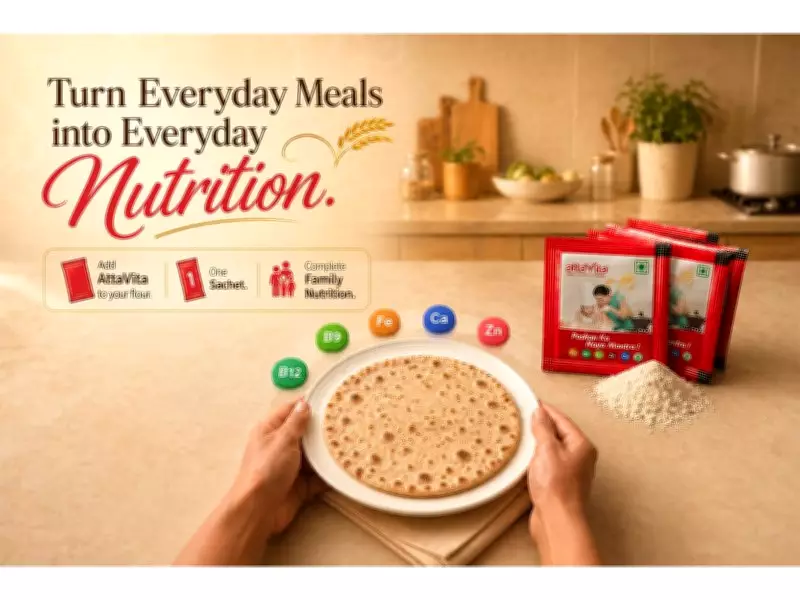
In a country where over 60% of the population consumes roti as a staple, a quiet revolution is underway. Attavita, a startup founded by IIT alumni, is addressing India's hidden hunger—micronutrient deficiency—by fortifying the humble roti. The company's innovative flour blend combines wheat with millets, pulses, and essential vitamins and minerals, offering a complete nutritional profile without altering taste or texture.
The Scale of the Problem
India faces a severe nutrition gap. According to the National Family Health Survey-5, nearly 60% of children under five are anemic, and over 30% are stunted. Micronutrient deficiencies, particularly iron, zinc, and vitamin A, affect cognitive development and productivity. While government programs distribute fortified foods, reaching rural and urban poor remains challenging.
Attavita's Approach
Attavita's product, 'Atta+', is a multi-millet and pulse-based flour that provides 100% of the recommended daily allowance of iron, zinc, and folic acid per serving. The company sources ingredients from local farmers, promoting sustainable agriculture. Unlike other fortified foods, Atta+ requires no change in cooking habits—it is used exactly like regular wheat flour.

- Nutritional Impact: Each roti made from Atta+ delivers 5g of protein, 3mg of iron, and 2mg of zinc.
- Scalability: The flour is priced competitively, making it accessible to low-income households.
- Partnerships: Attavita collaborates with NGOs and government schemes like Mid-Day Meal to reach schools and anganwadis.
Market Response
Since its launch in 2022, Attavita has sold over 50,000 tonnes of flour, impacting 2 million families. The startup has raised seed funding from impact investors and plans to expand to 10 states. Consumer feedback highlights the ease of adoption—mothers report that children eat the rotis without complaint, and families notice improved energy levels.
Challenges and Future
Scaling up faces hurdles: supply chain complexities, consumer awareness, and competition from subsidized wheat. However, Attavita's model aligns with the government's POSHAN Abhiyaan and Eat Right India movement. The company aims to partner with 100,000 retail outlets by 2025 and launch ready-to-eat snacks like fortified biscuits and noodles.
As India grapples with malnutrition, Attavita's roti revolution offers a simple, scalable solution—one that starts at the dinner table. By making everyday food nutritious, it quietly fills the biggest gap in the nation's health.