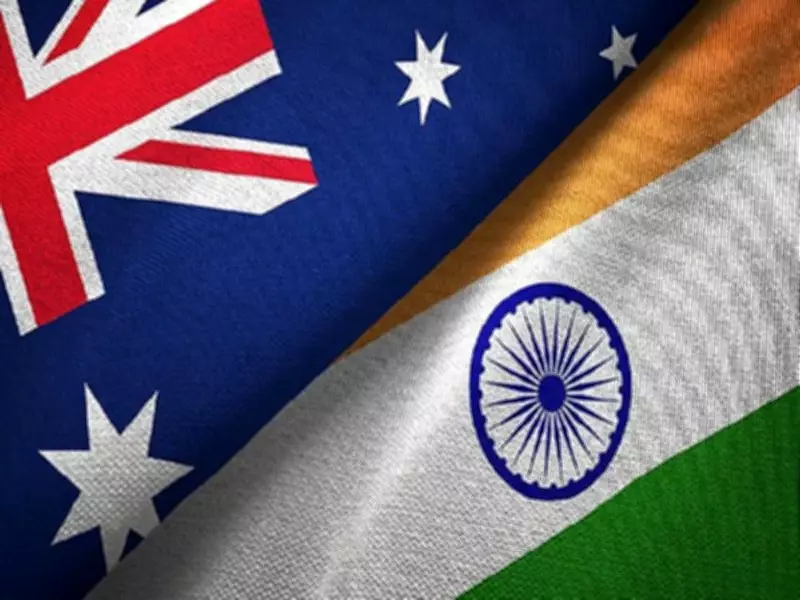
Critical minerals are poised to become the next major pillar of bilateral cooperation under the India-Australia Economic Cooperation and Trade Agreement (ECTA), according to a report by Rubix Data Sciences released ahead of Prime Minister Narendra Modi's visit to Australia this week.
Trade Deficit Narrows as Imports Decline
The report noted that the India-Australia Economic Cooperation and Trade Agreement (ECTA), which came into force in 2022, has significantly improved market access for businesses in both countries, with all Indian exports receiving duty-free access to the Australian market from January 2026. India's trade deficit with Australia narrowed sharply to USD 6.5 billion in FY2026, as imports from Australia declined faster than the growth in exports, reflecting a gradual rebalancing of bilateral trade.
Critical Minerals: A Strategic Opportunity
According to the report, Australia holds 21 of the 49 minerals India has flagged as critical. This positions Australia as an important partner for India's plans to expand electric vehicle manufacturing, renewable energy capacity and semiconductor production. As both countries seek to build resilient supply chains, cooperation in these sectors is expected to gain further momentum.

"What most conversations about India-Australia trade miss is the minerals dependency running through it," said Rubix Data Sciences President Tushar Bhaskar. "Australia holds 21 of the 49 minerals India has flagged as critical, at a time when India's clean energy and semiconductor ambitions need exactly that kind of supply security. We feel that is a bigger long-term story than the trade deficit numbers."
Energy Remains Core, but Diversification Accelerates
Energy remains the main part of trade between India and Australia. India mainly exports refined petroleum products to Australia, while Australia mainly exports coal to India. However, their trade is now expanding into new areas such as defence, advanced manufacturing, and critical technologies. Rubix expects stronger collaboration under ECTA to create new opportunities for businesses in both countries as Australia expands investments in critical minerals, hydrogen and clean energy, while India's growing manufacturing sector drives demand for secure and diversified supply chains.