Creatine is one of the most discussed supplements in fitness, yet it remains widely misunderstood. Gym-goers often hear conflicting claims: that creatine builds muscle, or that it merely inflates muscles with water. The truth involves both mechanisms, and understanding them is key to using creatine effectively.
The Short Answer: Yes, Creatine Increases Muscle Size
Creatine increases muscle size through two distinct mechanisms operating on different timelines. The first is rapid and partly cosmetic—cell volumisation. The second is slower and genuinely structural—hypertrophy driven by improved training performance. Both are real, but only the latter represents true muscle building.
Mechanism One: Cell Volumisation (Fast, Partly Water)
When you start supplementing, muscles store more creatine as creatine phosphate. Creatine is osmotically active, pulling water into muscle cells. This increases intracellular water—not subcutaneous water—making muscles look fuller within one to two weeks.

Critics label this “just water,” and that’s partly fair. However, this intramuscular water is different from bloating; it gives muscles a fuller, not softer, appearance. Importantly, cell volumisation may create a favourable environment for protein synthesis, potentially priming the muscle for real growth.
Mechanism Two: Genuine Muscle Growth (Slow, Structural)
Creatine does not directly build muscle. Instead, it enhances training quality: creatine phosphate rapidly regenerates ATP, the energy currency for intense effort. With more creatine stored, you can perform more reps before failure, lift heavier, and sustain higher volume over sessions. This increased volume and intensity, applied consistently over months, drives hypertrophy—the structural growth of muscle fibres.
As the article states, “Creatine’s real contribution to muscle size is this: it lets you train harder than you otherwise could, and harder training—over time—builds more muscle.” Decades of research confirm that individuals supplementing with creatine while training gain more lean muscle mass than those doing the same training without it.
Why Formulation Matters: Absorption and Consistency
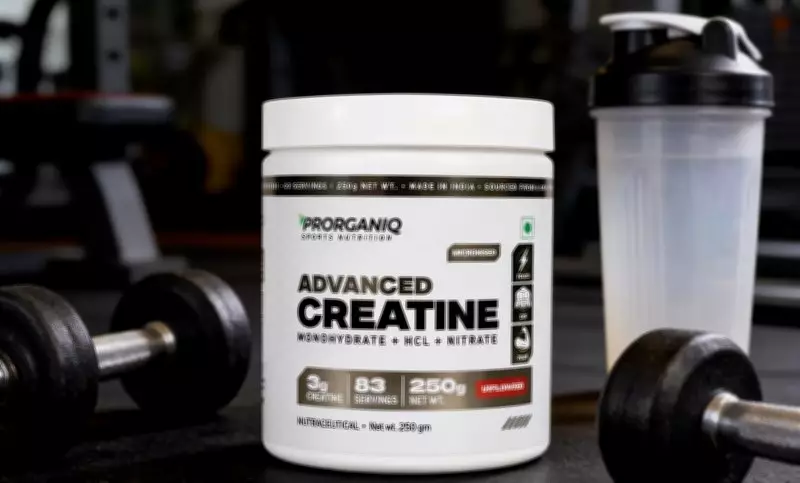
Most research uses creatine monohydrate, the most studied form. However, standard monohydrate can cause incomplete absorption and gut bloating, leading some to quit. Newer formulas combine multiple creatine forms to improve absorption and performance. For example, Prorganiq Advanced Creatine blends monohydrate, HCL, and nitrate: monohydrate provides the proven foundation; HCL improves solubility and reduces bloating; nitrate supports blood flow and nutrient delivery. Better absorption and consistency mean more creatine reaches muscles to support training.
Timeline for Visible Results
- Weeks 1–2: Fuller muscles from cell volumisation (water phase). Real but partly cosmetic.
- Weeks 3–8: Training benefits compound—more quality reps, better recovery, accumulating effective volume.
- Month 2 onwards: Genuine hypertrophy becomes visible—structural growth from improved training. This size stays.
Judging creatine by the two-week water change is a common mistake; the real verdict comes at two to three months.
Who Benefits Most?
People with lower baseline creatine stores see larger effects. This includes vegetarians and vegans, as dietary creatine comes mainly from meat and fish. “If you do not eat meat, your muscles are likely under-saturated to begin with—which makes creatine supplementation more impactful for you,” the article notes. So-called non-responders often have high natural creatine, take insufficient doses, or lack consistency.
The Bottom Line
Creatine increases muscle size in two ways: quickly via cell volumisation (water) and genuinely over months via improved training quality (hypertrophy). The water gives a fuller look in two weeks; the training quality builds actual muscle by month two and beyond. Both are real, but only the latter builds the physique you’re training for—and it requires consistent use with a well-absorbed form. Creatine is not a shortcut but a multiplier on your work. Used correctly, it remains the most researched sports supplement for building muscle.