India's Potential as Global Office Space
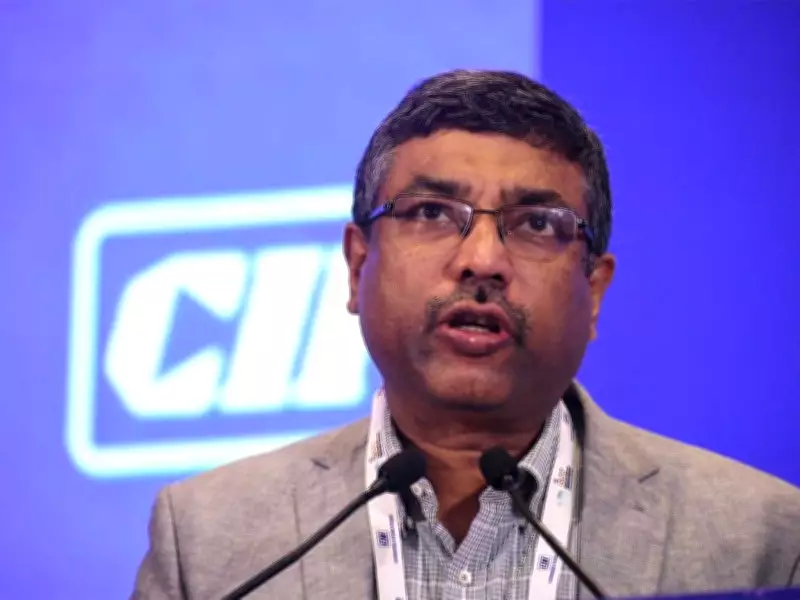
India has the potential to become the office space of the world, expanding its role beyond traditional back-office operations to handling front-end responsibilities, according to S. Krishnan, Secretary of the Ministry of Electronics and Information Technology (MeitY). Speaking at the GCC Business Summit hosted by the Confederation of Indian Industry (CII) on Thursday, Krishnan stated that the domestic ecosystem now hosts roughly half of the total global capability centers (GCCs) and their associated workforce globally.
Krishnan emphasized that recent regulatory updates have streamlined expansion. Government-led interventions in building, labour, and taxation frameworks have resolved long-standing industry demands, setting the stage for accelerated growth in smaller urban centers and higher-value operations.
Taxation and Policy Changes
Krishnan highlighted the significance of taxation changes, particularly safe harbor provisions and operational adjustments. "I think the taxation changes in terms of the safe harbor provisions and in terms of how they operate have been significant and should truly push and encourage how more GCCs can actually come up in the country," he said. "I think it's time to start measuring the kind of impact that these changes have had and what have been the outcomes since so much was promised as an outcome of some of these changes." Competitive policies from various state governments alongside central interventions have also brought much-needed administrative clarity.

Expansion into Tier-II and Tier-III Cities
The pandemic-induced shift in workforce preferences is driving GCC expansion into tier-II and tier-III cities, where lower real estate and talent costs offer functional advantages to global firms. Various states have initiated targeted local policies, such as Karnataka's 'Beyond Bangalore' campaign, Tamil Nadu's 'Neo-TIDEL Parks', and dedicated incentive packages in Madhya Pradesh and Gujarat to catalyze rural and semi-urban growth.
Integration of Artificial Intelligence
A major element of this structural transition is the integration of artificial intelligence (AI), which Krishnan views as an avenue for growth rather than a threat to the IT services export sector, currently valued near USD 250 billion. The automation of lower-level tasks allows local operations to pivot toward complex assignments that demand strict domain knowledge. "How is it that India can adapt AI and what is it that India can contribute in this space? And which is why the thought was that India really needs to become the application and AI-based solution capital of the world," he added. "The deployment of AI can help you in realizing and bringing higher value tasks into the country and making sure that higher value added tasks are also added here."
Academic Reorientation and Skilling Programs
To sustain this trajectory, MeitY and the India AI Mission are advocating for comprehensive academic reorientation. While AI tools are being introduced across educational levels, maintaining deep proficiency in core domain knowledge remains essential for managing automated workflows effectively. The ministry is currently working with industry bodies on targeted skilling programs to adapt the talent pool for higher-order management functions.