

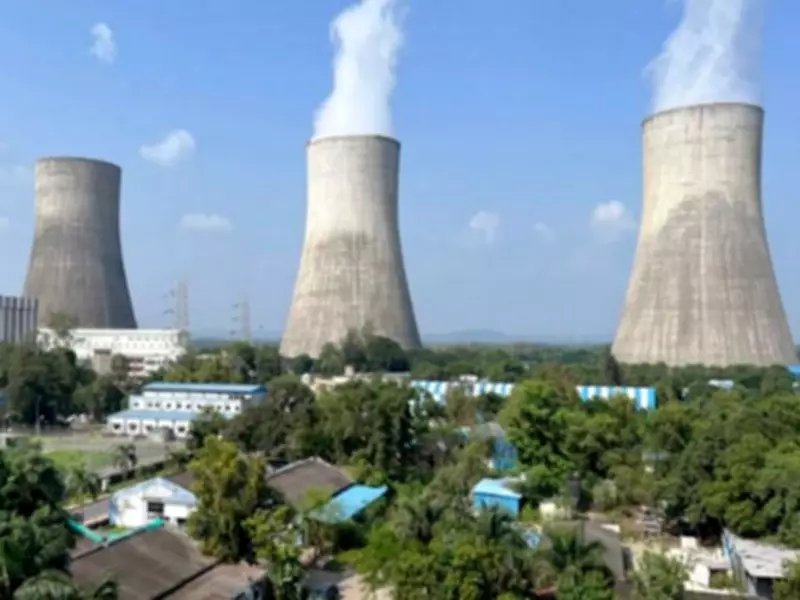
India's ambitious plan to ramp up nuclear power capacity to 100 gigawatts (GW) by 2047 has drawn significant investment interest, but the country's nuclear push faces execution bottlenecks that could derail the target, according to a new report.
Investment Interest High
The report highlights that global and domestic investors have shown keen interest in India's nuclear energy sector, with potential investments worth over $100 billion lined up. However, translating this interest into actual projects remains a challenge due to regulatory hurdles, land acquisition issues, and technology transfer concerns.
Key Bottlenecks
Regulatory Clearances: The nuclear sector is heavily regulated, and obtaining necessary approvals from multiple agencies often leads to delays. Streamlining the regulatory process is crucial for timely project execution.

Land Acquisition: Acquiring land for nuclear plants is contentious, with local opposition and compensation disputes causing setbacks. The government needs to address these issues through transparent policies.
Technology Transfer: India relies on foreign collaborations for advanced reactor technology, but negotiations over intellectual property and local manufacturing requirements can slow down deals.
Government Initiatives
The government has taken steps to boost nuclear energy, including allowing private investment in the sector and setting up a dedicated nuclear energy mission. However, the report suggests that more needs to be done to create a conducive environment for investment.
- Private sector participation is being encouraged through joint ventures with state-owned Nuclear Power Corporation of India Limited (NPCIL).
- Plans to set up small modular reactors (SMRs) are being explored to reduce costs and construction times.
- International cooperation agreements with countries like the US, France, and Russia are being strengthened to facilitate technology transfer.
Way Forward
To overcome execution bottlenecks, the report recommends creating a single-window clearance system for nuclear projects, expediting land acquisition through fair compensation, and fostering indigenous technology development. With the right policy interventions, India can unlock the full potential of its nuclear energy program and achieve its 100 GW target.






