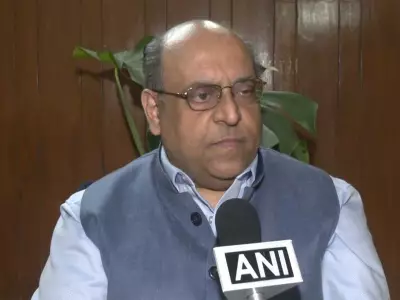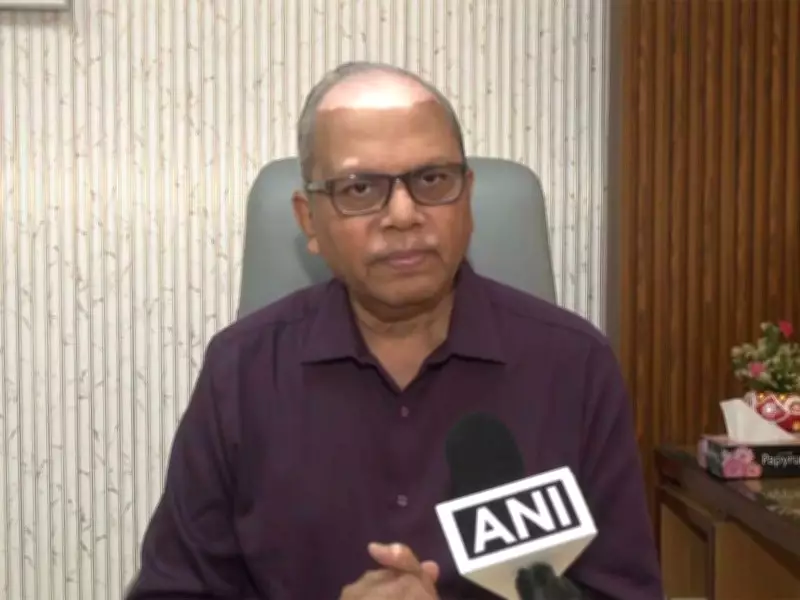
India requires significant policy reforms and increased private investment in the fertiliser sector to reduce its reliance on imported raw materials and intermediates, according to Fertiliser Association of India (FAI) Director General Suresh Kumar Chaudhari. In an exclusive interview with ANI, Chaudhari expressed concern that the private sector has not made major investments in fertiliser production over the past ten years, which poses a challenge to the nation's self-reliance goals.
Lack of private investment a concern
Chaudhari pointed out that the absence of large-scale private investment in the fertiliser sector over the last decade is a worrying trend. "In the last 10 years, not big investment... came from the private side in the fertiliser sector. That is the matter of worry," he said. He emphasised the need for investor-friendly policies to attract substantial capital and support the government's Atmanirbhar Bharat (self-reliant India) initiative.
"We should have very positive and friendly policies so that investors are able to invest largely in the fertiliser sector... Whatever raw material we have, we can use that raw material to manufacture good quality fertiliser," Chaudhari added.

Short-, medium-, and long-term policy interventions needed
When asked about strategies to curb import dependence, Chaudhari outlined the need for policy interventions across different time horizons. "On a short-term basis, we need to bring policy reforms which will encourage domestic production and domestic availability," he said. He noted that even though India has domestic manufacturing capacity for nitrogen and phosphorus fertilisers, the country still relies heavily on imported raw materials and intermediates.
"For nitrogen we are dependent on raw materials, intermediates and gas from other parts of the world," Chaudhari explained. He stressed that policies should promote domestic production wherever feasible, while ensuring that Indian-made fertilisers remain globally competitive and do not harm soil health.
Focus on quality and soil health
Chaudhari underscored the importance of maintaining high quality in domestically produced fertilisers. "When I say quality, certainly we have to be competitive with the global products... At the same time, the products should not impact the soil health adversely," he said. This dual focus on competitiveness and environmental sustainability is critical for the long-term viability of the sector.
Promoting bio-fertilisers and natural farming
The FAI chief highlighted the growing emphasis on sustainable farming practices, including bio-fertilisers and natural farming. "The Government of India has brought Mission Natural Farming. Investment in conservation agriculture and regenerative agriculture is increasing day by day. Bio-fertiliser is yet another important candidate which can be embraced," he said.
Chaudhari proposed expanding bio-fertiliser production to the panchayat level, which could revolutionise the sector. "If we are able to target panchayat-level production of bio-fertilisers, it will bring a revolution in the fertiliser sector," he said. He estimated that replacing even 20 to 35 per cent of conventional fertilisers with bio-fertilisers could improve soil health and benefit farmers significantly.
Limitations of self-reliance
However, Chaudhari acknowledged that complete self-reliance in fertilisers may not be feasible due to India's dependence on imported raw materials, intermediates, acids, and gases that are not available domestically. "Making India's fertiliser sector completely Atmanirbhar may not be possible because our dependence on raw materials, intermediates, acids and gases will remain," he said.
Future prospects: green ammonia and green hydrogen
Looking ahead, Chaudhari identified green ammonia and green hydrogen as promising long-term solutions for the fertiliser industry. Their wider adoption, however, will depend on technological and economic viability and the ability to produce them at scale. These innovations could help reduce the sector's environmental footprint and import dependency over time.