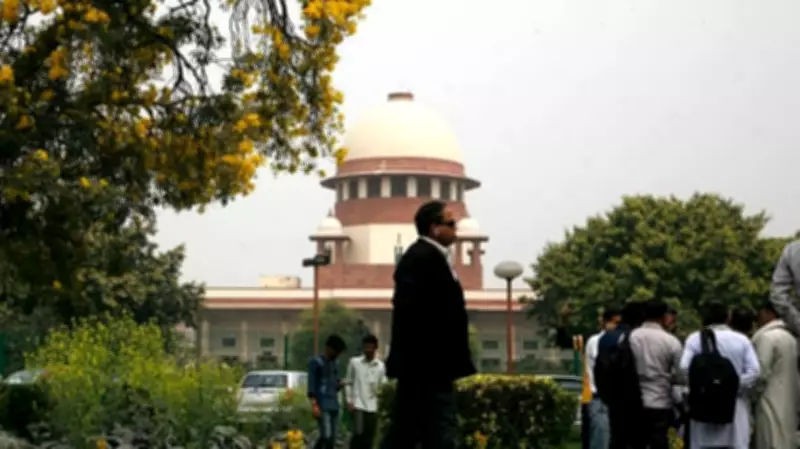
The Supreme Court of India has ruled that once the Committee of Creditors (CoC) approves a resolution plan under the Insolvency and Bankruptcy Code (IBC), there can be no further negotiation or unilateral withdrawal. The court pulled up the appellant, describing his actions as a 'clear subterfuge' and an indirect attempt to renege on the approved plan.
Background of the Case
The case involved a corporate debtor undergoing insolvency proceedings. After the CoC approved the resolution plan submitted by the successful bidder, the appellant—a party to the plan—sought to renegotiate terms or withdraw from the plan altogether. The National Company Law Tribunal (NCLT) and the National Company Law Appellate Tribunal (NCLAT) had earlier rejected these pleas, prompting the appeal to the Supreme Court.
Supreme Court's Observations
A bench of Justices emphasized the finality of the CoC's decision, stating that the IBC framework is designed to ensure timely resolution of stressed assets. The court noted that allowing renegotiation after approval would undermine the credibility of the entire insolvency process and defeat the purpose of the law. The judgment highlighted that the appellant's move was a deliberate attempt to circumvent the approved plan, calling it a 'clear subterfuge'.

The court further observed that the IBC does not permit any party to unilaterally withdraw from a resolution plan once it has been approved by the CoC and submitted to the adjudicating authority. Any such action would not only delay the resolution process but also harm the interests of creditors and other stakeholders.
Legal Implications
This ruling reinforces the principle that the resolution plan, once approved, becomes binding on all parties, including the successful bidder, the corporate debtor, and its creditors. The judgment is expected to provide greater certainty and stability to the insolvency resolution process, discouraging frivolous attempts to reopen settled matters.
Legal experts have welcomed the decision, stating that it strengthens the IBC framework and discourages opportunistic behavior by parties who may try to back out after the plan is approved. The ruling also underscores the importance of the CoC's role in the resolution process and the need for finality in commercial decisions.
Conclusion
The Supreme Court's decision serves as a stern warning to any party attempting to renegotiate or withdraw from a resolution plan post-approval. It reaffirms the sanctity of the IBC process and ensures that the resolution of stressed assets proceeds without unnecessary hurdles. The judgment is a significant step towards enhancing the efficiency and credibility of India's insolvency regime.