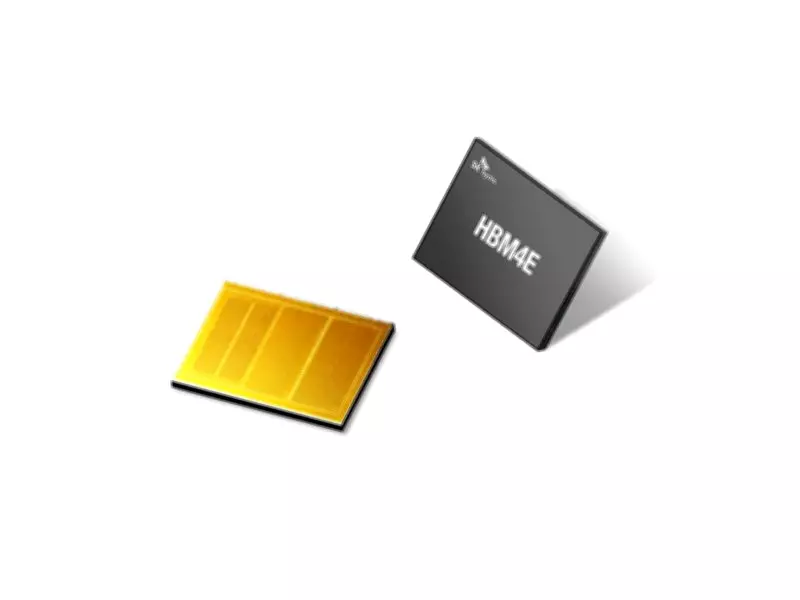
South Korean memory chip giant SK Hynix plans to raise approximately USD 29 billion through the listing of American Depository Receipts (ADRs) on the Nasdaq, as reported by Reuters. The move comes as the company's stock has surged more than 300 percent this year, driven by exploding demand for advanced memory chips used in AI servers.
Funds to Expand Chip Capacity
The capital raised will likely be used to expand SK Hynix's chip manufacturing capacity and widen its investor base. According to the Korea Economic Daily, the company plans to issue shares in South Korea that will be deposited with the Korea Securities Depository, serving as the underlying securities for the ADRs. The US listing process could be completed as soon as next month.
Market Reaction and AI Investment Concerns
SK Hynix shares recovered on Wednesday, rising about 1 percent after a 12 percent drop on Tuesday, which also affected rival Samsung. The slump in AI-related shares stemmed from broader concerns about the rising costs associated with AI advancement, as companies spend hundreds of billions of dollars to ramp up compute infrastructure.

The mammoth spending by hyperscalers like Amazon, Alphabet, and Microsoft has pushed demand for high-bandwidth memory chips to an all-time high, raising prices. Apple CEO Tim Cook told the Wall Street Journal that consumer-facing companies like Apple are likely to raise product prices due to the memory chip crunch.
Partnership with Nvidia
Global chip design giant Nvidia is one of SK Hynix's top partners for memory chips, which are used in Nvidia's advanced AI processors like the Blackwell GPU. Both companies have entered into a multi-year partnership to advance the memory chip ecosystem.
Broader Industry Pressure
Shares of memory chipmakers have come under pressure recently despite strong year-to-date gains. American chipmaker Micron's shares slumped more than 13 percent on Tuesday, its worst single-day fall in a year. Investors are worried about the cash-guzzling nature of the AI industry, as demand for AI chips rises manifold due to the massive buildout of data center capacity. Concerns about prospective revenue generation have made investors cautious.