

Financial Analyst Who Predicted 2008 Collapse Issues Dire Warning About Current Global System
Richard Bookstaber, the veteran financial analyst and author who spent decades working inside hedge funds and the US Treasury before writing the book that foreshadowed the 2008 financial crisis, now says the conditions he observes across private credit, artificial intelligence, stock markets, and geopolitical instability are more dangerous than anything that preceded that historic collapse.
"This time, the system has no way to see it coming," Bookstaber warns, marking a significant escalation from his previous assessments of financial vulnerability.
The Prophet of 2008 Returns With More Ominous Forecast
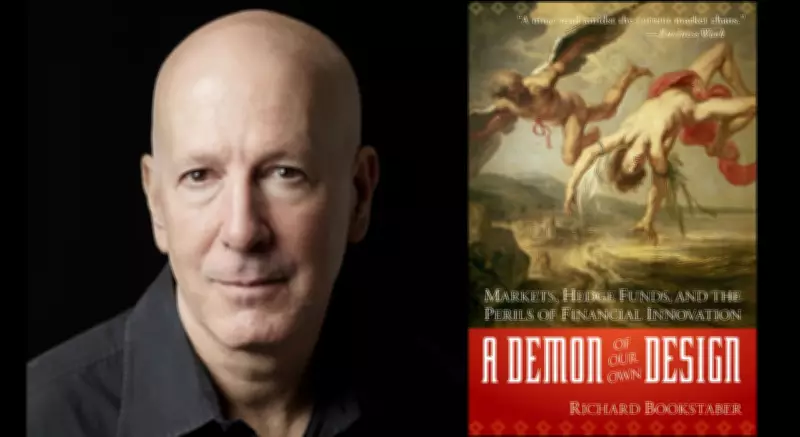
In 2007, Richard Bookstaber published A Demon of Our Own Design, a structural diagnosis arguing that the financial system had been constructed in a manner that made catastrophic failure not merely possible but ultimately inevitable. A year later, the global economy collapsed in the worst financial crisis since the Great Depression. Bookstaber, who had moved from a hedge fund to the US Treasury, witnessed the unfolding disaster from inside the government apparatus.

He told younger colleagues around him, people for whom the drama of 2008 represented the defining event of their professional lives, to pay close attention. "Remember what's happening," he instructed them. "You'll never see anything like this again."
Now, writing in the New York Times, Bookstaber has reversed that prediction. "Maybe they'll see worse," he concedes. The risks he identifies today span artificial intelligence, a roughly two-trillion-dollar private credit industry, extreme stock market concentration, and geopolitical flashpoints including Iran and Taiwan.
Why 2008 Matters Today: Understanding the Domino Effect
The 2008 financial crisis is commonly remembered as a story about irresponsible borrowing, millions of Americans taking mortgages they couldn't afford, and a housing bubble inflated by speculation that eventually burst. When it did, the damage spread far beyond property markets, resulting in:
- The collapse or near-collapse of major global financial institutions
- Emergency government bailouts totaling hundreds of billions of dollars
- A devastating stock market crash
- Record-high unemployment across the United States and Europe
What popular memory often obscures is how a collapsing property market became a near-total collapse of the global financial system. This resulted not from a single failure but from a domino effect across interconnected institutions whose exposure to each other had gone largely unmonitored until it was too late.
"The housing bubble alone was not the reason the crisis became so destructive," Bookstaber explains. "What turned a collapsing property market into a near-total collapse was the architecture constructed around it."
In the years before 2008, Wall Street developed extraordinarily complex financial instruments—mortgage-backed securities, collateralized debt obligations, credit default swaps—that bundled and repackaged mortgage debt and sold it across the financial system in ways that obscured where risk actually resided. When the housing market fell, these instruments proved unable to absorb the shock and transmitted it instantly across every institution that held them.
Private Credit: The $2 Trillion Market Nobody Can See Inside
The first warning sign Bookstaber identifies is the private credit industry, which he values at roughly two trillion dollars—a figure some analysts place closer to three trillion. Private credit refers to loans made not by traditional banks but by institutional investors: private equity firms, asset managers, and hedge funds.
Following the 2008 crisis, traditional banks pulled back from certain lending under tighter regulation, and companies—particularly in technology and software sectors—increasingly turned to these institutional lenders to fill the gap.

"The problem is opacity," Bookstaber writes. Unlike publicly traded bonds or stocks, these loans "rarely exchange hands," leaving investors uncertain about their actual worth or how easily they could be converted to cash if conditions deteriorated. There is no organized exchange, no transparent pricing mechanism, no daily market signal telling investors what their holdings are worth.
Signs of strain are already visible. Investors unsettled by higher interest rates have begun withdrawing money from private credit funds of major firms including Blue Owl, BlackRock, and Blackstone. Blue Owl announced it would sell $1.4 billion in assets to reimburse investors, triggering a sharp fall in its share price and raising fresh questions about investor due diligence.
AI and Private Credit: The Same Money, Going in Circles
The second risk Bookstaber identifies compounds the first in ways that aren't immediately obvious. A significant portion of companies borrowing through private credit markets are software and technology businesses—precisely the kinds of companies whose services are most vulnerable to being replaced or disrupted by artificial intelligence.
If businesses underpinning the private credit market are rendered obsolete by the very technology investors are simultaneously pouring money into, the loans extended to those businesses begin to look considerably less secure.
But the connection runs deeper. Private credit isn't only financing companies that might be displaced by AI—it's also financing the infrastructure AI depends on. The data centers, semiconductor supply chains, and physical computing architecture enabling large-scale AI have been built largely on private loans. The companies doing this building—Google, Microsoft, and a handful of others—are the same companies that now dominate the public stock market.
"The weakening of private credit strains the AI investments of the tech Goliaths," Bookstaber writes, "which in turn threatens the stock portfolios, retirements, and pensions of tens of millions of people."
Stock Market Concentration: When Ten Companies Hold a Third of Everything
The third risk concerns the structure of the stock market itself. The AI boom has driven extraordinary investment into a small group of dominant technology companies, inflating their valuations to produce market concentration Bookstaber describes as historically unprecedented.
Ten competing companies' stocks in the same industry now account for more than a third of the total value of the S&P 500—the index tracking the five hundred largest publicly listed US companies that serves as the primary benchmark for American stock market health and the basis for retirement savings and pension funds of tens of millions.
"That level of concentration is unprecedented and dangerous," Bookstaber warns, "because it means a shock to any one of these companies can ripple across the entire market rather than be absorbed by it."
In a more distributed market, a single company's difficulties are absorbed by diversification. In a market where ten companies represent a third of all value, a serious shock to any one spreads through the entire system.
Bookstaber describes a specific mechanism worth understanding. If conditions deteriorate and investors in private credit funds need to raise cash quickly—to meet redemptions or cover losses elsewhere—they will attempt to sell their private credit holdings. But because those holdings are illiquid and difficult to sell, they will instead sell what they can sell easily: large, publicly traded technology stocks—the very stocks dominating the S&P 500.
The act of raising cash in one part of the system triggers a sell-off in another, and the market falls not because anything has gone wrong with technology companies themselves but because they happen to be the most liquid assets available when someone elsewhere needs money fast.
Geopolitical Disruption: When the Physical World Enters the Financial System
The fourth risk is where Bookstaber's argument moves furthest, and where he believes the current moment is most distinct from 2008. He argues that risks this time stem primarily from the physical world rather than finance, and markets lack reliable tools to read those risks before they cause damage.
Iran represents the immediate example. Conflict involving the United States and Israel has already spiked energy prices. For most industries, higher energy costs are manageable. For AI, they represent a structural vulnerability—data centers consume electricity at enormous scale, and any sustained disruption to energy supply or significant cost increase directly raises operating expenses of technology companies at the market's center.
Those costs then flow through into private credit and stock market valuations. A military conflict in the Middle East becomes, through this chain, a risk to retirement savings of Americans who have never considered the connection.
Taiwan represents a different but related exposure. The island manufactures the most advanced semiconductor chips in the world—the physical hardware without which frontier AI cannot function.
"If China were to invade or blockade Taiwan," Bookstaber writes, "America's access to semiconductors would be severely limited. That would immediately slow AI deployment, weakening companies driving the AI boom, with inevitable knock-on effects."
The entire AI-driven stock market boom rests, at its physical base, on a supply chain running through a strait that two of the world's largest militaries are actively contesting.
Why This Time Could Be Worse
In 2008, the danger lived inside the financial system. It was painful, destructive, and required massive government intervention to contain, but it was ultimately a financial problem with financial tools to address it.
What Bookstaber describes now is fundamentally different. The risks are physical. AI's dependence on energy and semiconductors, Iran's proximity to critical supply chains, Taiwan's chokehold on chips the entire technology industry runs on—none can be resolved by a central bank or bailout package.
"Our current financial system fails not because any one thing goes wrong," he writes. "It fails because different shocks propagate through the same structure in ways that are hard to anticipate. When something eventually goes wrong, it spreads faster than it can be contained."
"I'd take financial risk any day," he concludes. "Financial risk moves prices. Physical risk moves the world."





