

Union Budget 2026-27 Countdown: Historic Sunday Presentation Approaches
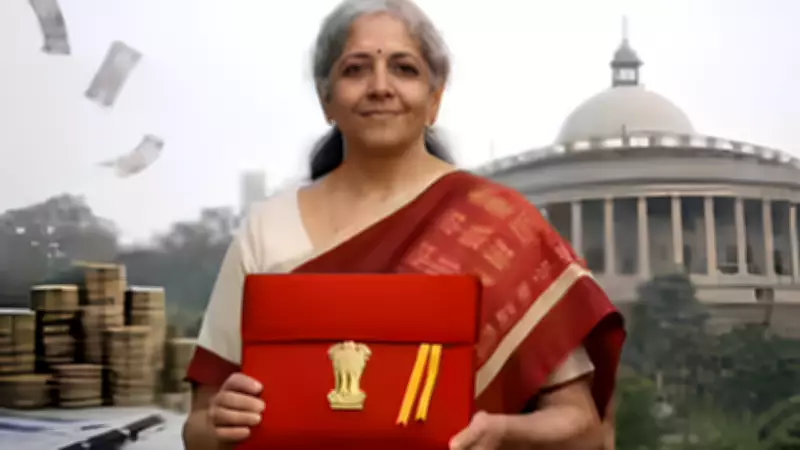
With mere hours remaining, the countdown to the Union Budget 2026–27 has reached its final, intense phase. Across the nation, households, industries, and financial markets are brimming with anticipation, preparing for a financial statement that promises to mark several unprecedented milestones in India's budgetary history. The presentation on a rare Sunday adds a historic twist to this decades-old tradition, further amplifying expectations as Finance Minister Nirmala Sitharaman prepares for a landmark moment in the Lok Sabha.
A Historic Ninth Consecutive Budget
The 2026 Budget will represent Finance Minister Nirmala Sitharaman's ninth consecutive Union Budget, an achievement that makes her the first finance minister in India to reach this remarkable milestone. Expectations from her speech are exceptionally high, with a strong emphasis anticipated on tax reforms, customs duty rationalisation, and strategic measures to sustain economic growth amidst rising geopolitical risks and global trade uncertainties.
Beyond immediate policy announcements, this Sunday Budget is widely viewed as a potential turning point in India's fiscal strategy. The government is expected to outline a clear and actionable roadmap for lowering India's debt-to-GDP ratio, signaling a significant shift from short-term deficit management toward a more durable, long-term approach to fiscal consolidation.

Income Tax Relief Tops Taxpayers' Wishlist
Following major relief in Budget 2025—which included raising the income tax exemption limit to Rs 12 lakh and GST rationalisation—individual taxpayers are eagerly hoping for further easing. A higher standard deduction is particularly sought after. With the new Income Tax Act, 2025, set to come into force from April 1, industry bodies are actively seeking clarity on transition provisions, rules, and FAQs to ensure smoother implementation.
There is also a growing expectation that the government may offer additional incentives to encourage taxpayers to transition to the new tax regime, which features lower rates but fewer exemptions. Rationalisation of TDS categories into fewer slabs stands as another key demand from various stakeholders.
Current Income Tax Slabs and Public Expectations
Under the new tax regime, the current income tax slabs are structured as follows:
- Income up to Rs 4 lakh: Exempt
- Rs 4–8 lakh: 5%
- Rs 8–12 lakh: 10%
- Rs 12–16 lakh: 15%
- Rs 16–20 lakh: 20%
- Rs 20–24 lakh: 25%
- Above Rs 24 lakh: 30%
Salaried taxpayers are advocating for the 30% tax slab threshold to be raised to Rs 30 lakh. Presently, income up to Rs 12 lakh (Rs 12.75 lakh for salaried taxpayers) is tax-free after applying the Section 87A rebate. Tax experts suggest this threshold could potentially be increased to Rs 15 lakh. Additionally, many taxpayers who continue to use the old tax regime are seeking lower rates and a higher basic exemption limit.
Section 80C and Long-Term Savings
Section 80C, one of the most utilised exemptions under the old tax regime, has maintained a Rs 1.5 lakh cap for years without revision. Experts argue that increasing this limit and extending it to the new tax regime could significantly encourage long-term savings and accelerate adoption of the newer system.
Customs Reform and Ease of Doing Business
Customs duty reform is anticipated to be a major theme in Budget 2026, with a potential overhaul similar to the GST rationalisation. This could encompass:
- Fewer duty slabs
- Simplified procedures
- A possible amnesty scheme to resolve disputes worth nearly Rs 1.53 lakh crore
Such measures are considered critical for enhancing ease of doing business and improving India's trade competitiveness on the global stage.
Why the Budget Matters to Households
For households across India, Budget decisions have an immediate and tangible impact through changes in income tax, subsidies, and welfare spending. The relief announced in Budget 2025 boosted disposable income for middle-class families, supporting consumption during periods of financial stress.

Higher disposable income typically stimulates demand across retail, automobiles, housing, and FMCG sectors. Meanwhile, policy support for housing strengthens construction and allied industries, illustrating how tax decisions create ripple effects throughout the wider economy.
Dalal Street's Perspective
For investors, the February 1 Budget will serve as a crucial signal of the government's stance on growth, fiscal discipline, and corporate earnings. In FY26, despite implementing tax relief measures, the government maintained fiscal discipline with a fiscal deficit target of 4.4% of GDP, down from 4.8% previously.
Market volatility observed during the special Budget trading session underscored how sensitively investors react to fiscal cues, with benchmark indices experiencing sharp swings before ending nearly flat.
Fiscal Consolidation and Debt Strategy
Economists expect the Budget to delineate specific steps aimed at reducing the debt-to-GDP ratio from FY27, alongside increased defence spending in response to rising global tensions. A pre-Budget note by Union Bank of India (UBI) anticipates continued fiscal consolidation, projecting a FY27 fiscal deficit of 4.2–4.4% of GDP.
The report also highlights a strategic shift toward debt-to-GDP targeting, with the Centre aiming to reduce debt to approximately 50±1% of GDP by FY31.
Agriculture and MSMEs in Sharp Focus
Agriculture and MSMEs—identified by Finance Minister Sitharaman in Budget 2025 as the first and second growth engines—are expected to remain central to the upcoming Budget. Other key expectations include:
- Provisions linked to the 8th Pay Commission
- Higher tax devolution under the 16th Finance Commission
- Increased allocations for MSMEs
- Support for tariff-sensitive sectors such as gems and jewellery, garments, and leather
- Funding for critical minerals and Viksit Bharat employment schemes
Defence Spending Under Scrutiny
Defence allocation will be closely monitored as the capital expenditure push continues under the Make in India initiative and against the backdrop of Operation Sindoor. FY26 witnessed emergency defence procurement amounting to Rs 40,000 crore and approvals worth Rs 3.3 trillion, nearly double the budgeted defence capital outlay.
FICCI has recommended raising defence capital outlay to 30% of the defence budget, increasing DRDO funding by Rs 10,000 crore, and expanding Defence Industrial Corridors to boost exports, which have grown at a 46% CAGR between FY17 and FY24.
AI, Logistics, Telecom: Industry's Big Bets
Technology firms are optimistic that Budget 2026–27 will accelerate AI adoption, enhance digital infrastructure, and foster innovation. The Economic Survey has described AI as a pivotal economic strategy, advocating a bottom-up, sector-specific approach.
Former Tech Mahindra CEO CP Gurnani remarked that the Survey "brilliantly captures India's AI momentum," emphasising India's potential to leverage engineering strength to create affordable, human-centric AI that addresses local challenges before scaling globally.
Logistics firm FarEye has called for policy support for autonomous logistics and applied AI, while GlobalLogic views the Budget as an opportunity to transition from digital-first to intelligence-first infrastructure.
Balancing Growth, Revenue, and Global Risks
Despite pressure on revenues stemming from tax cuts and the conclusion of the GST compensation cess, capital expenditure is expected to remain the Budget's anchor. UBI projects FY27 capex at Rs 12.4 lakh crore, or 3.2% of GDP, with roads, railways, and defence as key focus areas.
Simultaneously, Finance Minister Sitharaman faces the complex challenge of restoring investor confidence, navigating US trade tensions, managing volatile commodities, and addressing a fragile global recovery—all while identifying new growth drivers for the economy.
Tariff-Hit Sectors Seek Relief
Export-oriented sectors adversely impacted by US tariffs, including textiles, apparel, seafood, gems and jewellery, leather, and footwear, are actively seeking targeted relief and policy support in Budget 2026 to mitigate challenges and sustain competitiveness.





