Government Releases FAQ on Ethanol Blended Petrol
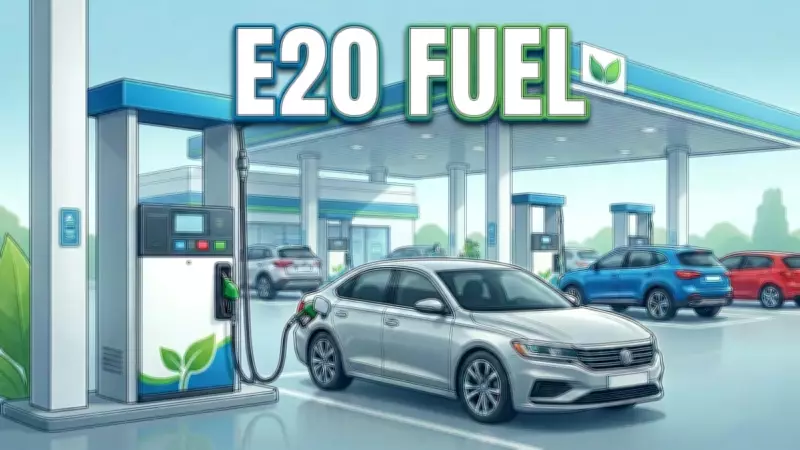
The Indian government has released a detailed FAQ document addressing common questions about ethanol-blended petrol, particularly the E20 blend (20% ethanol, 80% petrol). The document aims to clear misconceptions regarding price, performance, mileage, and safety. According to the Ministry of Petroleum and Natural Gas, E20 fuel will not cause any reduction in mileage compared to normal petrol, and it is safe for use in vehicles.
Key Clarifications on Price and Performance
The government has stated that the price of ethanol-blended petrol will be determined by oil marketing companies based on market conditions. However, it emphasized that blending ethanol reduces dependence on imported crude oil, which can help stabilize fuel prices in the long run. On performance, the FAQ confirms that E20 fuel provides similar engine power and acceleration as regular petrol. Modern vehicles are designed to handle ethanol blends up to 20% without any modifications.
Mileage and Engine Safety
One of the biggest concerns among consumers is the impact on fuel efficiency. The government clarified that E20 fuel does not reduce mileage. In fact, ethanol has a higher octane rating, which can improve engine efficiency. Regarding safety, the FAQ states that ethanol-blended petrol is safe for storage, handling, and use. It has a lower flammability risk compared to pure petrol. The government also assured that all vehicles manufactured after 2023 are compatible with E20 fuel.

Environmental and Economic Benefits
The shift to ethanol blending is part of India's goal to achieve 20% ethanol blending by 2025. This initiative is expected to reduce greenhouse gas emissions by up to 30% and save foreign exchange worth billions of dollars. The government highlighted that ethanol is produced from sugarcane and other biomass, supporting farmers and rural economy. The FAQ also noted that E20 fuel meets stringent emission norms.
Consumer Guidance
For older vehicles, the government recommends checking with manufacturers for compatibility. However, most vehicles manufactured after 2000 can use E10 (10% ethanol) without issues. The FAQ advises consumers to use only authorized fuel stations to ensure quality. The government is also working on a nationwide awareness campaign to educate the public about the benefits of ethanol-blended petrol.
Future Plans
India aims to roll out E20 fuel across the country by 2025. The government is investing in ethanol production capacity and infrastructure for blending and distribution. The FAQ concludes that the transition to ethanol-blended petrol is a crucial step towards energy security and environmental sustainability.