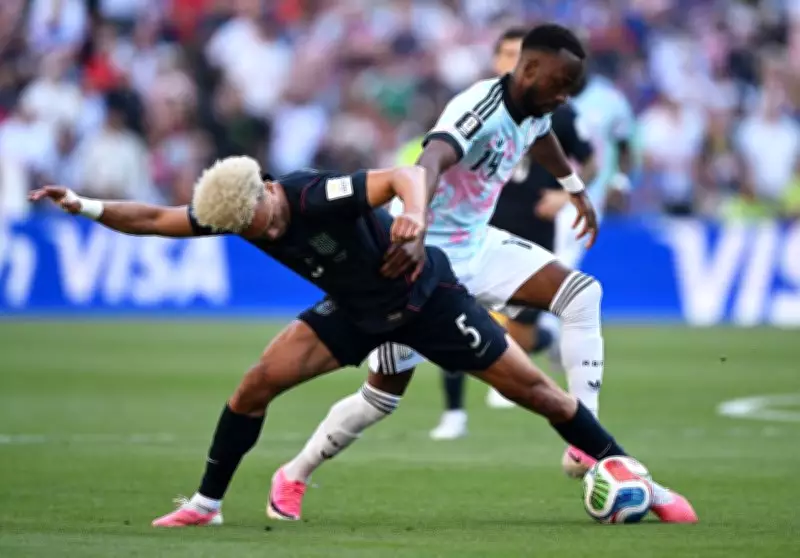
FIFA's World Cup 2026, co-hosted by the US, Canada, and Mexico, is generating an estimated $13 billion in revenue, including $9 billion directly from the tournament. Broadcasting rights alone are expected to bring in $3.9 billion, a significant increase from the $7.6 billion generated by the 2022 Qatar World Cup. However, the soaring revenues come at a cost to ordinary fans, with premium tickets for the final priced at $32,970 each, leading to sparse attendance during group matches.
FIFA's Direct Control and Financial Impact
FIFA's decision to operate the championship directly has drawn criticism for reducing local organizing committees' revenues while boosting FIFA's own inflows. The organization is distributing a record $871 million to participating teams, nearly double the $440 million provided in Qatar. Winners receive $50 million, while teams eliminated in the group stage get $9 million each, plus $12.5 million per team for training and logistics. This support has enabled smaller nations like Curaçao and Cabo Verde to participate, with Cabo Verde nearly forcing Argentina into extra time.
Commercialization and Fan Concerns
The excessive commercialization of football is evident in ticket prices that only the super-wealthy can afford for the final. FIFA's centralized control of sponsorships may lead to losses for host cities. Critics argue that the beautiful game is being sacrificed for revenue, alienating ordinary fans. Despite controversies—such as denied visas for African referees and a red card suspension withdrawn for an American player—the tournament continues to draw millions of viewers worldwide.

Comparison with Indian Cricket and Sports Funding
India, though absent from the FIFA World Cup, excels in cricket, largely due to the financial backing of the Board of Control for Cricket in India (BCCI). The BCCI, with a net worth of $2.25 billion (Rs 18,760 crore), generates annual revenue of around Rs 1,000 crore from investments. The Indian Premier League (IPL) contributes significantly, with BCCI retaining 50% of central pool funds from media rights and sponsorships. While cricket dominates, other sports like hockey, football, and kabaddi are gaining traction through competitive leagues. The Pro Kabaddi League, for instance, is the second-most watched sports league in India, with 300 million viewers.
Need for Infrastructure Investment
Despite the success of leagues, experts emphasize the need for basic infrastructure, including public playgrounds and school sports facilities. Football's popularity stems from its minimal equipment requirements, but space for play is shrinking. Using cricket's vast funds to develop infrastructure for all sports could help India emerge as a future contender in the FIFA World Cup. Investments in hockey have already revived both men's and women's teams, suggesting that similar efforts could benefit other sports.