

Government Slashes Fuel Excise Duties to Insulate Citizens from Global Energy Price Shock
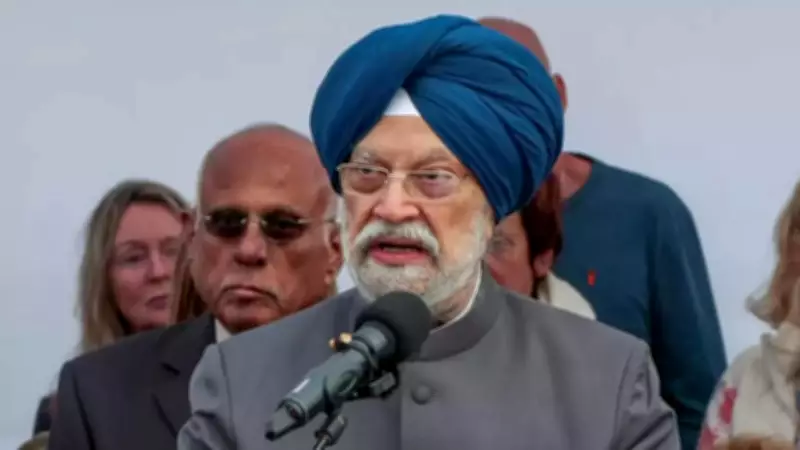
In a significant move aimed at protecting Indian consumers from the escalating turmoil in global energy markets, Union Petroleum and Natural Gas Minister Hardeep Singh Puri declared on Friday that the government has opted to substantially reduce excise duties on petrol and diesel. This decisive action comes as international crude oil prices continue to surge, driven primarily by the ongoing US-Israel-Iran conflict and severe disruptions in the critical Strait of Hormuz shipping lane.
Substantial Duty Cuts Implemented to Ease Financial Burden on Public
The government's intervention involves a sharp reduction in excise duties, with petrol duty being lowered to Rs 3 per litre from the previous Rs 13, and diesel duty being completely eliminated, dropping from Rs 10 to zero. Minister Puri emphasized that this strategic decision was personally overseen by Prime Minister Narendra Modi as part of a conscious policy to absorb the financial impact internally rather than transferring it to the citizens of India.
"The Modi Government had two clear choices: either impose drastic price increases on the people of Bharat, as numerous other nations have done, or shoulder the financial burden itself to insulate Indian citizens from international volatility," Puri stated in a detailed post on the social media platform X. He further elaborated, "Honourable Prime Minister Narendra Modi Ji, in alignment with his administration's steadfast commitment over the past four years since the Russia-Ukraine conflict began, has once again decided to take a hit on its own finances to safeguard the Indian citizen."

Finance Ministry's Role in Mitigating Oil Company Losses and Ensuring Domestic Supply
Puri also extended credit to Finance Minister Nirmala Sitharaman for implementing measures that involve a substantial reduction in taxation revenues. This is intended to offset the very high losses currently faced by oil marketing companies, which are estimated at approximately Rs 24 per litre for petrol and Rs 30 per litre for diesel amidst the sky-high international prices.
Concurrently, the government has imposed an export tax on petrol and diesel to discourage overseas shipments and ensure adequate domestic availability. Refineries exporting these fuels to foreign nations will now be required to pay this levy, a move designed to stabilize supply within the country. "My gratitude to Honourable PM Narendra Modi Ji and Honourable FM Nirmala Sitharaman Ji for this very timely, bold, and visionary decision!" Puri added, highlighting the comprehensive nature of the policy.
Finance Minister Confirms Measures in Response to West Asia Crisis
Echoing Puri's statements, Finance Minister Nirmala Sitharaman also hailed the initiative, confirming that the central excise duty on petrol and diesel for domestic consumption has been reduced by Rs 10 per litre each. "This will provide protection to consumers from rise in prices. Honourable PM Narendra Modi has always ensured that citizens are protected from vagaries of supply and costs of essential goods," she asserted.
Furthermore, Sitharaman detailed that specific duties have been levied on exports of diesel at Rs 21.5 per litre and on Aviation Turbine Fuel (ATF) at Rs 29.5 per litre. "This will ensure adequate availability of these products for domestic consumption. The Parliament has been notified about the same," she clarified, underscoring the procedural transparency of the decision.
The backdrop of this policy shift includes heightened geopolitical tensions in the Middle East, with incidents such as an Indian national being killed and another injured by missile debris in Abu Dhabi, alongside Iran's strategic maneuvering in the Strait of Hormuz that has impacted global oil revenues. These factors have collectively contributed to the volatile energy landscape, prompting the Indian government's proactive steps to shield its economy and populace from external shocks.






