

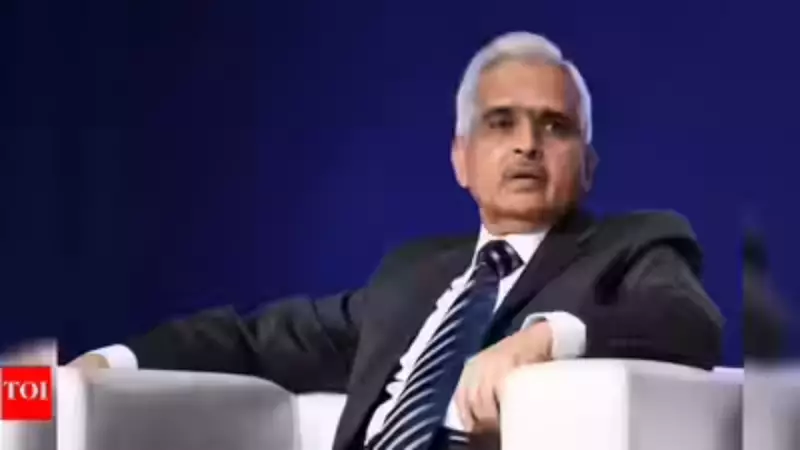
India is positioned at the threshold of a defining economic era, with strategic government policies providing significant momentum even as the world grapples with trade volatilities, stated Principal Secretary to the Prime Minister, Shaktikanta Das, on Friday.
Atmanirbharta: Building Resilience, Not Walls
Delivering the inaugural Bibek Debroy Memorial Lecture, Das elaborated on India's guiding principle of Atmanirbharta (self-reliance). He clarified that this is not a move towards isolationism but a calculated strategy to build core competencies and economic resilience. "Atmanirbharta is not being isolationist, but a strategy to build core competence and resilience," he asserted.
He explained that economic self-reliance focuses on developing domestic capacity to produce critical goods and technologies, thereby reducing excessive dependence on foreign sources. A self-reliant economy, supported by robust domestic capabilities and an autonomous foreign policy, equips India with greater strength to sustain growth and manage external challenges, ensuring its rise is resilient and beneficial globally.

From Perfect Storms to a Favourable Wind
Das highlighted India's remarkable recovery from successive global shocks since the COVID-19 pandemic began in 2020, which he described as "perfect storms." The nation has emerged stronger and is now poised for sustained growth. "And now with the policies that the country has adopted, the wind is in our sails. We are indeed on our path to Viksit Bharat (Developed India)," he proclaimed.
He noted that India is at a crucial inflection point, where changing geopolitical alliances and trade policies are redrawing the global economic map. "India stands today at the cusp of a historic journey — from being an incredible India to a credible India," Das said, while acknowledging that headwinds from known and unknown sources will persist.
Navigating a Fragmenting Global Order
The Principal Secretary pointed to the increasing strain on global institutions and multilateral frameworks, where traditional cooperation is being undermined by geopolitical rivalries, protectionism, and fragmentation. Key international bodies are struggling, and trade networks are now being used as tools for disruption and dominance, he observed.
In this context of reshoring, friend-shoring, and restricted technology flows, Das outlined India's pragmatic and dual approach. India advocates for a cooperative, rules-based global system while simultaneously forging proactive partnerships to secure its national interests in a world of diffused power. "We, of course, acknowledge that the multilateral system must be revitalised, even as we adapt to new alignments," he concluded, underscoring India's strategic response to a complex world order.






