

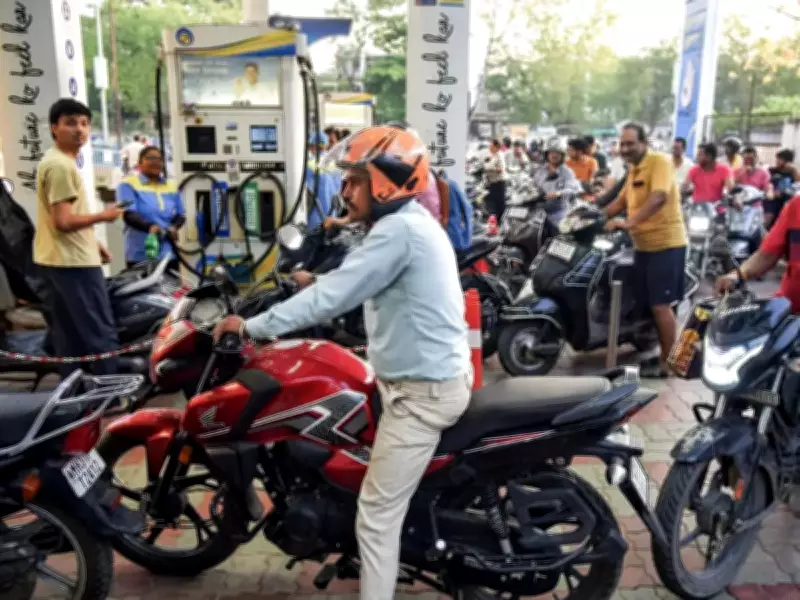
Government Announces Major Fuel Tax Relief and Export Levies
In a significant move to protect consumers and domestic oil marketing companies from the spiraling impact of global crude prices, the Centre has announced a substantial reduction in excise duties on petrol and diesel. Simultaneously, it has imposed new export duties on diesel and aviation turbine fuel (ATF) to prevent windfall gains by refiners. This dual strategy aims to stabilize domestic fuel prices while managing fiscal implications.
Details of the Excise Duty Cut and Export Tax
The government has slashed the special additional excise duty on petrol and diesel by Rs 10 per litre each. This relief comes as fuel retailers, including IndianOil, Hindustan Petroleum, and Bharat Petroleum, were incurring losses of approximately Rs 24 on every litre of petrol and Rs 30 per litre of diesel sold. The excise duty reduction is expected to leave a substantial revenue shortfall of Rs 1.3 lakh crore for the exchequer.
To partially offset this impact, the Centre has levied an export duty of Rs 21.5 per litre on diesel and Rs 29.5 per litre on ATF. This windfall tax targets refiners benefiting from high international prices, especially after China imposed export curbs, creating shortages in global markets. The export tax is projected to generate around Rs 1,500 crore in the first fortnight, while the excise cut will forgo over Rs 7,000 crore in revenue during the same period.

Government Statements and Rationale
Finance Minister Nirmala Sitharaman, addressing the Rajya Sabha, emphasized the government's commitment to providing relief amidst the evolving West Asia situation. She stated, "In view of the ongoing and evolving situation in West Asia, our government has resolved to provide relief in the form of a significant reduction in excise duties on petroleum and diesel to ensure stable prices. We will continue to ramp up efforts in mobilizing additional non-tax revenues and carefully manage the country’s fiscal position."
Petroleum Minister Hardeep Puri highlighted on social media platform X that the government has taken a substantial hit on taxation revenues to mitigate the losses faced by oil companies. He noted, "Export tax has been levied as international prices have skyrocketed, and any refinery exporting to foreign nations will have to pay export tax."
Central Board of Indirect Taxes and Customs chairman Vivek Chaturvedi clarified that the export tax will be reviewed fortnightly, aligning with prevailing rates, similar to the approach in 2022. The levy excludes fuel exported by public sector oil companies to Nepal, Bhutan, Bangladesh, and Sri Lanka, as well as ATF supplied to foreign-going aircraft.
Political Reactions and Criticism
The decision has drawn mixed reactions from political parties. BJP and its allies praised the move, with Home Minister Amit Shah describing it as "people-centric governance and sensitivity-led decision-making." Defence Minister Rajnath Singh called it a timely and decisive step, underscoring the government's proactive approach to public welfare.
In contrast, the Congress party criticized the move, alleging it is a temporary measure ahead of assembly elections. Congress general secretary Jairam Ramesh remarked, "When global crude oil prices fell on multiple occasions in the past 12 years, consumer prices in India were not reduced. Today’s announcement is because of assembly elections." Party MP Manish Tewari and AICC spokesman Pawan Khera echoed similar sentiments, accusing the government of profiting from cheap crude in previous years without passing on benefits to consumers.
Global Context and Economic Impact
The surge in global energy prices has driven the average cost of crude for Indian refiners from $69 in February to $111.93 in March, marking a 62% increase. While many countries have raised pump prices, Indian refiners had been absorbing losses after months of profitability. The government's intervention aims to balance consumer relief with fiscal responsibility, leveraging windfall taxes to cushion revenue losses from excise cuts.
This policy shift reflects broader efforts to navigate the economic challenges posed by international conflicts and market volatility, ensuring stability in domestic fuel supply and pricing.






